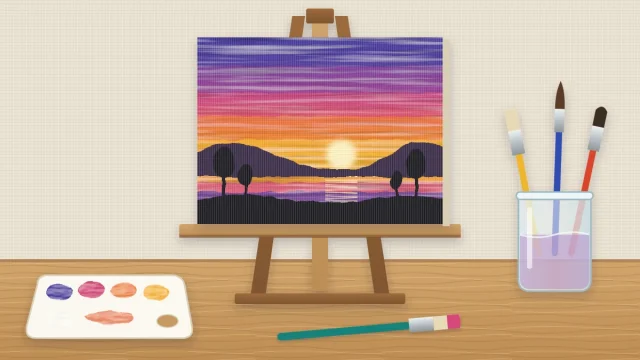
Easy Sunset Painting: A Step-by-Step First Acrylic Canvas
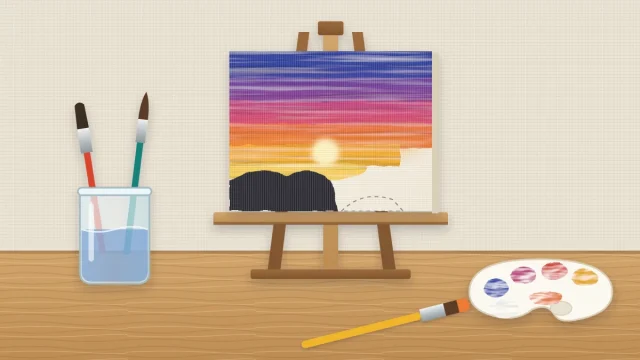
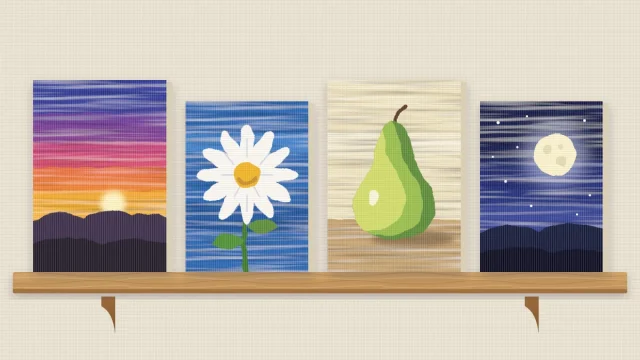
Paint a complete first canvas with four colors plus white: a blended sunset sky from violet to yellow, a pale sun, and dark silhouetted hills with three small trees.
Acrylic Painting for Beginners
Easy Acrylic Painting Lessons and Ideas
30 tutorials published
Paint a complete first canvas with four colors plus white: a blended sunset sky from violet to yellow, a pale sun, and dark silhouetted hills with three small trees.
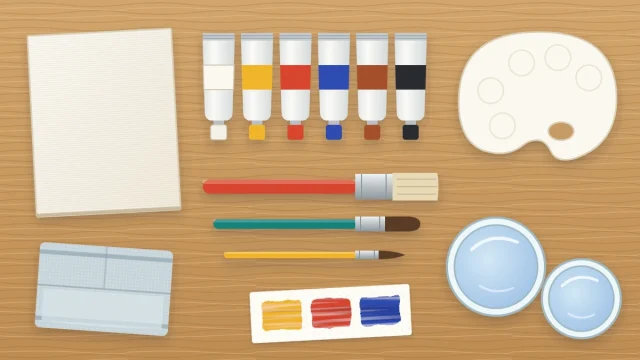
The minimum kit for a first acrylic painting: six tubes, three brushes, a surface, a palette, water jars and rags. Each choice is explained by type, along with what can wait until later.
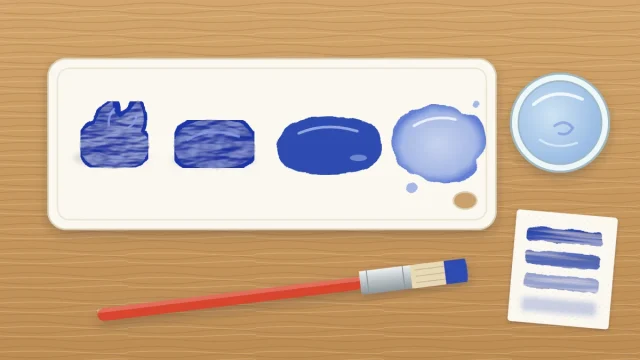
Learn the four working thicknesses of acrylic paint by feel, how to thin a little at a time on the palette, where water stops being helpful and when a medium is the better choice.
A plain orientation to acrylics: what the paint is, why it suits a first-time painter, the few habits it asks of you, a small first setup and a sensible order for your first three sessions.
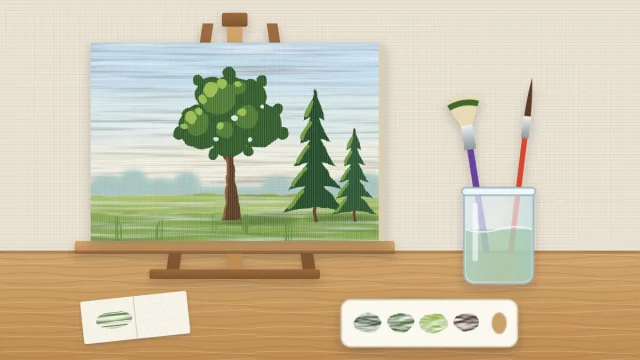
Replace lollipop trees with three believable types: a leafy tree with stippled foliage clusters, a pine with zigzag boughs and soft distant trees. Covers tapering trunks, one light direction and grounding shadows.
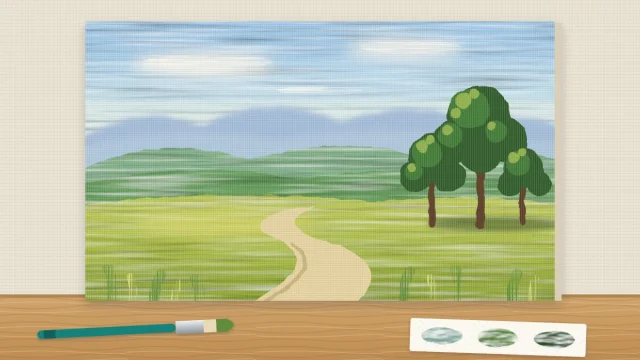
Build a first landscape back to front in five layers: sky, far hills, middle hills, a foreground field and a group of trees. Learn how lighter, bluer distance and darker, warmer foreground create depth.
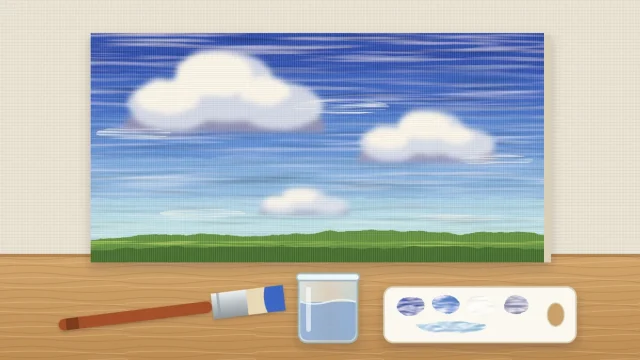
Paint a natural daytime sky: a blue gradient that is deeper at the top and paler near the horizon, then soft clouds with bright tops, flat gray-violet bases and faded edges.
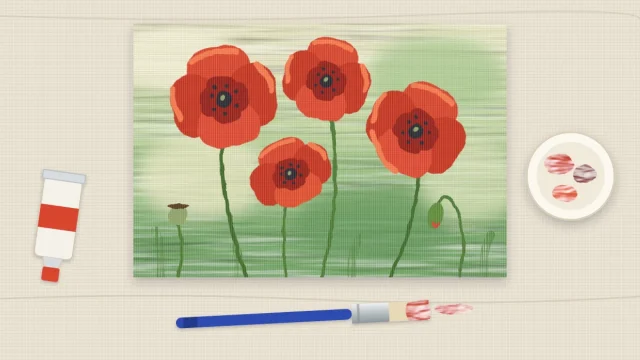
Paint four loose red poppies on a soft green and cream background. Each flower is four broad petals in three reds worked wet, finished with a dark dotted center, curving stems, a bud and seed heads.
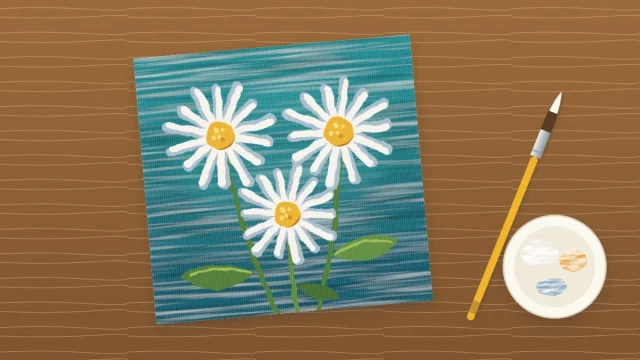
Paint three white daisies on a teal background with one petal stroke and five colors. Each petal goes on twice, gray-blue first and white on top, so the flowers look bright and have depth.
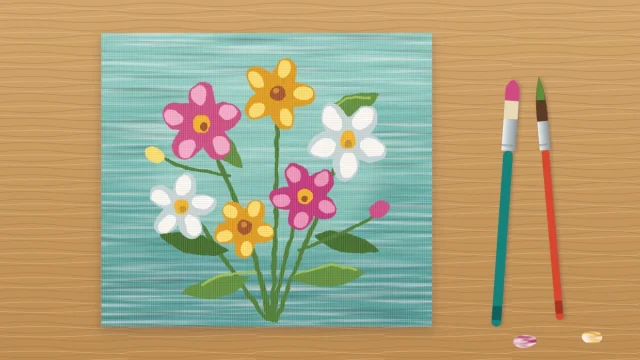
Start each flower as a disc, cup, cone or ball, then add petals and leaves with five simple brushstrokes. Includes a working order, natural green mixes and the two-value trick that stops petals looking flat.
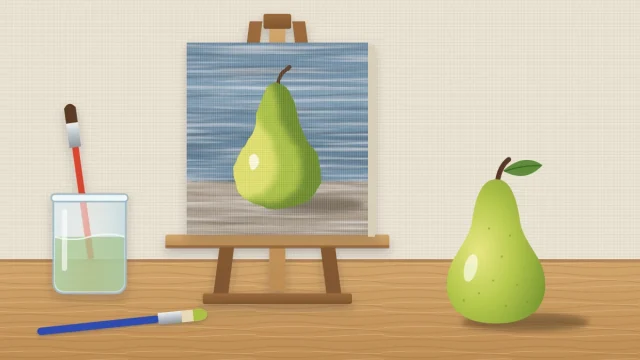
Set up one pear with light from one side and paint it in seven steps: toned ground, sketch, background, three values of green, cast shadow, softened edge and a final highlight.
Twelve simple subjects for a first acrylic canvas, from a sunset over hills to a bowl of lemons, each with the main skill it practices and roughly how long it takes.
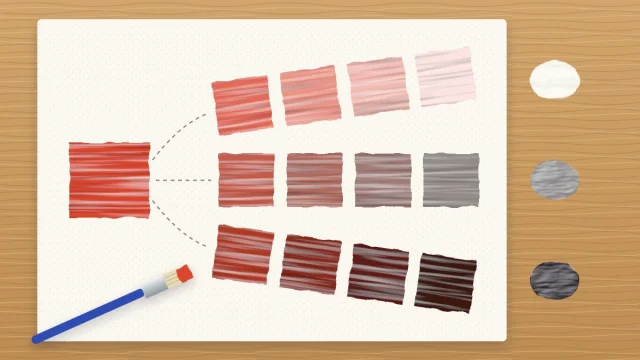
Learn what tints, tones and shades are, why white turns colors chalky and black turns them flat, and how to lighten, darken and mute acrylic colors with neighbors and complements instead.
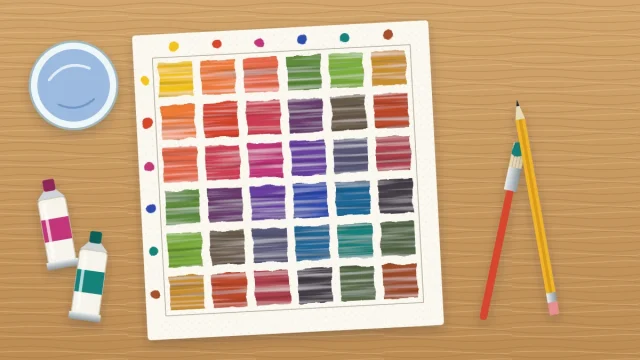
Rule a simple grid, mix every color you own with every other color, and add a second chart stepped with white. The result is a one-page reference showing exactly what your own tubes can do.
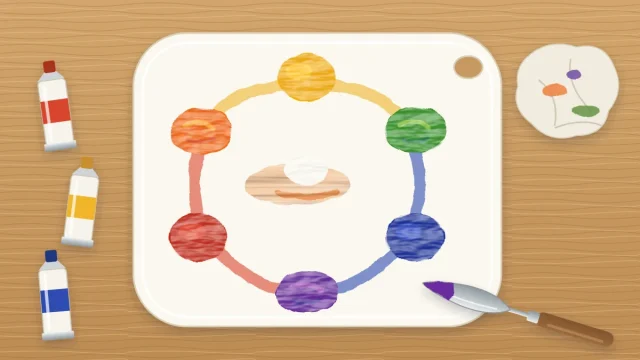
Mix the colors you need from five tubes: white, a yellow, a red, a blue and an earth brown. Learn why some mixes turn dull and how to reach natural greens, soft oranges, browns, grays and a rich dark.