Acrylic Paint Consistency: How Much Water to Add
Learn the four working thicknesses of acrylic paint by feel, how to thin a little at a time on the palette, where water stops being helpful and when a medium is the better choice.
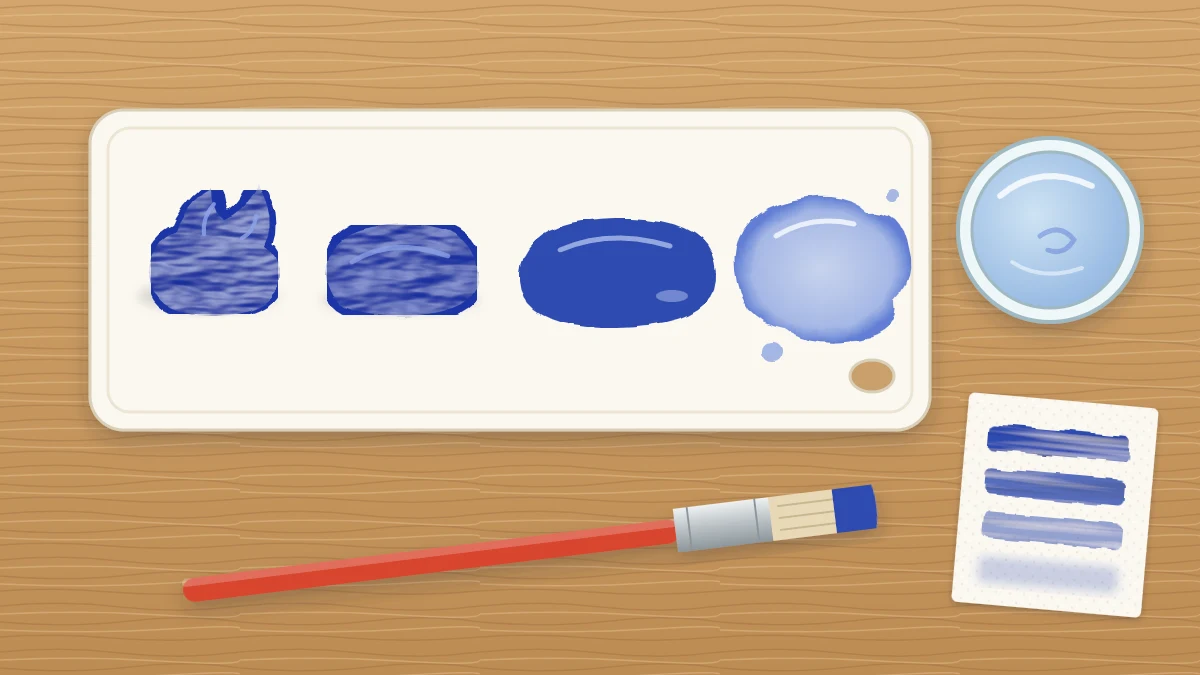
Most early trouble with acrylics has little to do with talent. Paint that drags, leaves streaks or dries in thin patches is usually just at the wrong thickness for the job. Getting acrylic paint consistency right is a small skill, and it changes how every stroke behaves.
There is no single correct thickness. There are about four useful ones, and you choose between them by feel. Here is how each should look on the brush, what it is good for and how to mix it without flooding your paint.
Why consistency matters so much
A brush can only release paint smoothly if the paint flows a little. Too stiff, and the bristles skip over the surface, leaving the weave of the canvas showing through. Too wet, and the color loses its strength, runs and dries unevenly.
Different tasks also need different paint. Covering a background, drawing a thin branch and laying a transparent tint over a dry area cannot all be done well with one thickness. Adjusting the paint before you load the brush is a normal step of painting.
The four working consistencies
Straight from the tube
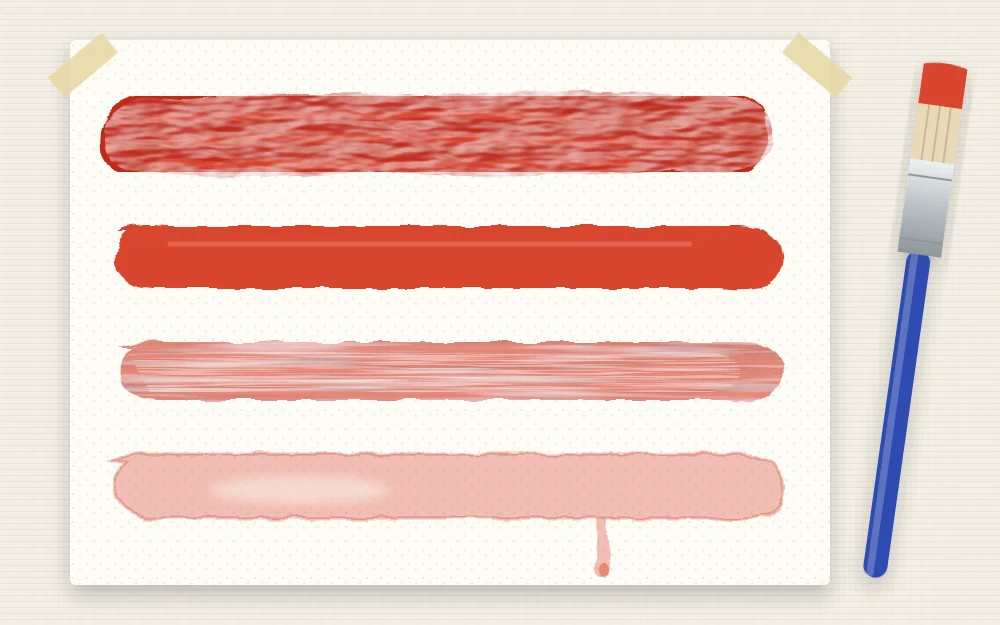
Heavy body paint as it comes out holds soft peaks, like frosting. It keeps the mark of each bristle and suits thick, textured strokes and palette knife work. On its own it is hard to spread evenly over a large area.
Creamy
Add a few drops of water and the paint relaxes to something like soft butter. It slides off the brush, covers in one or two coats and still stays opaque. This is the default for most painting: blocking in shapes, backgrounds and solid color.
Fluid
A little more water brings it to the feel of heavy cream. It levels out, leaves few brush marks and flows off a liner or small round in an unbroken line. Use it for stems, branches, outlines and smooth blends. It covers less in a single coat.
Wash
A wash is paint thinned until it is clearly transparent, like tea or ink. It tints the surface without hiding it. Washes are handy for toning a white canvas and for a loose first sketch.
Consistency at a glance
| Consistency | How it looks on the brush | Good for |
|---|---|---|
| From the tube | Stands in peaks, sits on top of the bristles | Impasto strokes, knife texture, thick highlights |
| Creamy | Smooth and glossy, coats the bristles, no drips | Blocking in, backgrounds, opaque coverage |
| Fluid | Flows to the tip, a drop forms slowly | Fine lines, details, smooth blends |
| Wash | Runs freely, bristles show through the color | Toning a surface, loose sketching, pale tints |
How to thin paint a little at a time
The usual mistake is dipping a dripping brush straight into the paint. The paint at the edge of the blob turns to soup while the middle stays stiff. Thin on the palette instead, where you can see what you are doing.
- Pull a portion of paint away from the main blob into a clear spot on the palette.
- Dip just the tip of a clean brush in water and touch it to the jar rim to shed the excess.
- Mix the water into the pulled portion with small circular strokes until it is even.
- Test a stroke on scrap paper. If it drags, add another touch of water and test again.
- If you go too far, fold in a little fresh paint from the blob.
Keeping the main blob untouched means you always have full-strength paint to go back to. A tidy layout helps here; the guide to setting up a palette and keeping paint wet shows how to leave yourself mixing room.
Tip
After rinsing, blot the brush on a paper towel before you pick up paint. A brush full of rinse water thins every stroke without you noticing, and it is the most common cause of weak, streaky color.
The limit of water
Water thins acrylic, but it also dilutes the binder that holds the pigment together. Up to roughly equal parts water and paint, the film usually stays sound. Go far beyond that on canvas and the paint can dry weak and patchy, with a chalky look and uneven color where the water pooled.
So for a quick tint or an underpainting sketch, water alone is fine. For very thin, transparent color on canvas, reach for a medium instead.
When to use a medium instead
A medium is essentially acrylic binder without pigment. Mixing it into paint makes the color thinner or more transparent while keeping the film strong.
- Glazing medium makes paint transparent and slightly slower to dry. Use it for thin colored layers over dry paint, as explained in the guide to building a painting in layers.
- Flow medium (sometimes called flow improver) helps paint spread and level without much water. It is useful for long, even lines and flat areas. A few drops are usually plenty; follow the label.
Neither is needed in your first weeks. They become useful once you want glazes or very smooth passages. For soft transitions between two colors, creamy-to-fluid paint and good timing matter more than any additive, as the lesson on blending acrylics before they dry explains.
Heavy body, soft body and fluid paints
Paint is sold in different thicknesses, so your starting point depends on what you bought.
- Heavy body is the thick, buttery tube paint. It holds texture and needs a little water for smooth coverage.
- Soft body comes in tubes, jars or bottles and is already close to creamy. It often needs no water for blocking in.
- Fluid acrylic pours like cream but carries a strong pigment load, so it stays intense where watered-down tube paint would look pale.
Student-grade paints vary a good deal, and some colors in the same range are runnier than others. Judge each one by how it feels on the brush.
Reading the signs on your painting
- Streaks with canvas showing through: paint too stiff or too little on the brush. Loosen it slightly and load more.
- Brush drags and skips: the paint is drying as you work. Add a touch of water and work a smaller area.
- Drips and runs: too much water. Blot the brush and mix in fresh paint.
- Patchy, pale areas after drying: the mix was too watery for the surface. Repaint with creamy paint.
- Ridges you did not want: paint too thick. Thin it to creamy and smooth it with light strokes.
Frequently asked questions
How much water can I add to acrylic paint?
As a rough guide, stay at or below about equal parts water and paint when working on canvas. Past that point the binder is stretched thin and the color may dry patchy or weak. On absorbent paper you can go thinner, since the fibers help hold the pigment in place.
Why is my acrylic paint streaky?
Streaks usually mean the paint is too stiff, the brush is underloaded, or the brush is carrying rinse water that thins the stroke unevenly. Loosen the paint to a creamy feel, load the brush generously, and apply a second coat once the first is dry rather than scrubbing at wet paint.
Should I wet my brush before using acrylic paint?
A damp brush works better than a bone-dry one, because the paint moves through the bristles more easily. Dip it, then blot it on a paper towel so it is moist but not dripping. A soaked brush floods the paint and makes the color weak and runny.