Acrylic Paint Palettes: Types, Setup and Keeping Paint Wet
Compare five palette types, build a stay-wet palette from a lidded container and baking parchment, and set out your colors so the paint stays workable for the whole session.

Paint that skins over before you have used it is one of the most common frustrations with acrylics. The paint is only doing what it is made to do: the water evaporates, the binder sets, and a thin layer is touch-dry in roughly 10 to 20 minutes. On an open palette in a warm room, small blobs can turn rubbery even sooner.
A better acrylic paint palette will not stop that process, but it can slow it down a great deal. The surface you choose, the way you lay out your colors and a few small habits decide whether you spend a session painting or scraping.
Palette types compared
Almost any flat, non-absorbent surface works. White is the most useful color for it, because you can judge a mix against something close to a blank canvas.
| Palette | What it is like | Best for |
|---|---|---|
| White plastic palette | Light and inexpensive, often with wells; some plastics stain over time | A first palette and short sessions |
| Ceramic plate or tile | Heavy, stable and very smooth; dried paint soaks off cleanly | Table work at home |
| Disposable palette paper | A pad of coated sheets that you tear off and throw away | Quick sessions with almost no cleanup |
| Glass sheet with taped edges | Perfectly smooth and scrapes clean; lay white paper underneath | A permanent painting table |
| Stay-wet palette | A lidded tray with a damp layer under the paint | Long sessions and saving mixes |
If you choose glass, use a sheet with smooth edges and wrap them in tape so nothing sharp is exposed. If you are still gathering your kit, a white plate from the cupboard is enough, and the starter supply list covers the rest. Keep that plate for painting from then on and do not eat from it again.
How to make a stay-wet palette at home
A stay-wet palette keeps paint workable by feeding it moisture from below. You can build one in a few minutes from ordinary kitchen items.
- Find a shallow container with a tight lid, roughly 8 x 10 in (20 x 25 cm) or whatever fits your table.
- Line the bottom with a thin sponge cloth, or with two or three paper towels folded flat.
- Pour in clean water until the layer is soaked, then tip out the extra. It should be thoroughly damp with no standing water.
- Cut a sheet of baking parchment to fit and smooth it down onto the damp layer.
- Squeeze your paint onto the parchment and mix on it as you would on any palette.
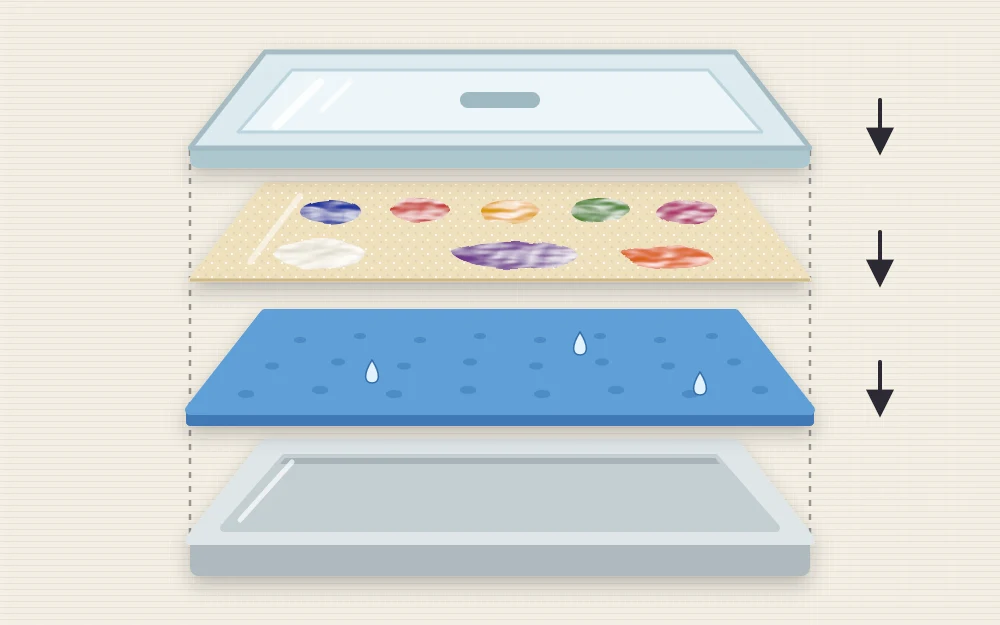
The parchment lets a little moisture through, enough to replace what evaporates from the paint. Use baking parchment and not waxed paper, which blocks the water completely. If the paint starts to run or turn soupy, the layer underneath is too wet: lift the parchment, press out some water and lay it back.
With the lid on, paint in a stay-wet palette often stays usable for several days. Replace the parchment when it gets crowded. Wash the tray and change the damp layer about once a week, or sooner if it starts to smell musty.
Lay out your colors in the same order every time
When each color always lives in the same place, your brush goes there without you looking.
- Colors around the edge. Place them along the top and down one side in a consistent sequence. One simple order runs yellow, red, blue, then the earth browns, then black if you use it.
- White on its own, and larger. Give white a corner to itself and squeeze out about twice as much as any other color, because it goes into most mixes.
- Mixing space in the middle. Keep the center clear. Most of a palette should be empty room for mixing, not storage for paint.
Pull a little of each color into the middle to mix instead of mixing at the blob itself. The source colors stay clean, which matters a great deal once you start mixing the colors you need from a few tubes.
How much paint to squeeze out
Tiny dabs dry fastest and run out halfway across a sky. For a small painting, a blob about the size of a large coin for each color is a reasonable start, with roughly double for white. Tall, compact blobs stay wet longer than flat smears, so resist spreading them out.
When you thin paint, do it in the mixing area and never in the blob. Draw some paint aside and add water to that portion a few drops at a time. How thin to go is a subject of its own, covered in the guide to how much water to add to acrylic paint.
Keeping paint wet while you work
On an ordinary palette, three habits make the biggest difference.
- Mist lightly. Keep a small spray bottle of clean water nearby and give the paint a fine mist every 10 to 15 minutes or so, from about 12 in (30 cm) away. You want a light dew, not puddles.
- Mind the air. Fans, heaters, open windows and direct sun all speed up drying. Move the palette out of the draft.
- Cover it during breaks. If you stop for a few minutes, mist the paint and rest an upturned tray or a second plate over the palette.
Tip
If a blob has formed a skin but is still soft underneath, lift the skin off with a palette knife and throw it away. Do not stir it in, because the rubbery bits end up as lumps on your painting.
Covering paint between sessions
Leftover paint on an ordinary palette can sometimes be kept overnight. Mist it, lay a sheet of damp paper towel loosely over the top without pressing it into the paint, and seal the palette inside a lidded container or under plastic wrap. Expect it to last a day or so, not a week.
Cleaning the palette
Wet paint is easy. Wipe it off with a paper towel or rag, put that in the trash, then wash the palette with water and a little soap. Wiping first means far less paint goes down the drain.
Dried paint depends on the surface. On glass, ceramic and many smooth plastics, a thick dried layer often peels away in one piece, especially after a short soak in warm water. A plastic scraper or the edge of a palette knife lifts what is left. Do this over a trash can, not the sink, so the peelings stay out of the drain.
Frequently asked questions
Can I use a paper plate as a palette for acrylic paint?
A coated paper plate works for a short session, but an uncoated one soaks up water from the paint and makes it dry faster. For regular painting, a ceramic plate, a plastic palette or a pad of disposable palette paper gives you a smoother mixing surface and keeps the paint workable for longer.
How long does acrylic paint stay wet in a stay-wet palette?
With the lid closed and the bottom layer kept damp, paint often stays usable for several days, and sometimes about a week. It depends on room temperature, how thick the blobs are and how often the lid is open. Check the paint before each session and discard anything stringy, lumpy or musty.
Why does my acrylic paint go watery on a stay-wet palette?
The damp layer under the parchment is holding too much water, so the paint keeps absorbing it. Lift the parchment, squeeze or pour off the extra water until the layer is damp but not pooling, and lay the sheet back. Thick blobs cope with moisture better than thin smears.