Acrylic Painting Supplies: A Simple Starter Kit
The minimum kit for a first acrylic painting: six tubes, three brushes, a surface, a palette, water jars and rags. Each choice is explained by type, along with what can wait until later.
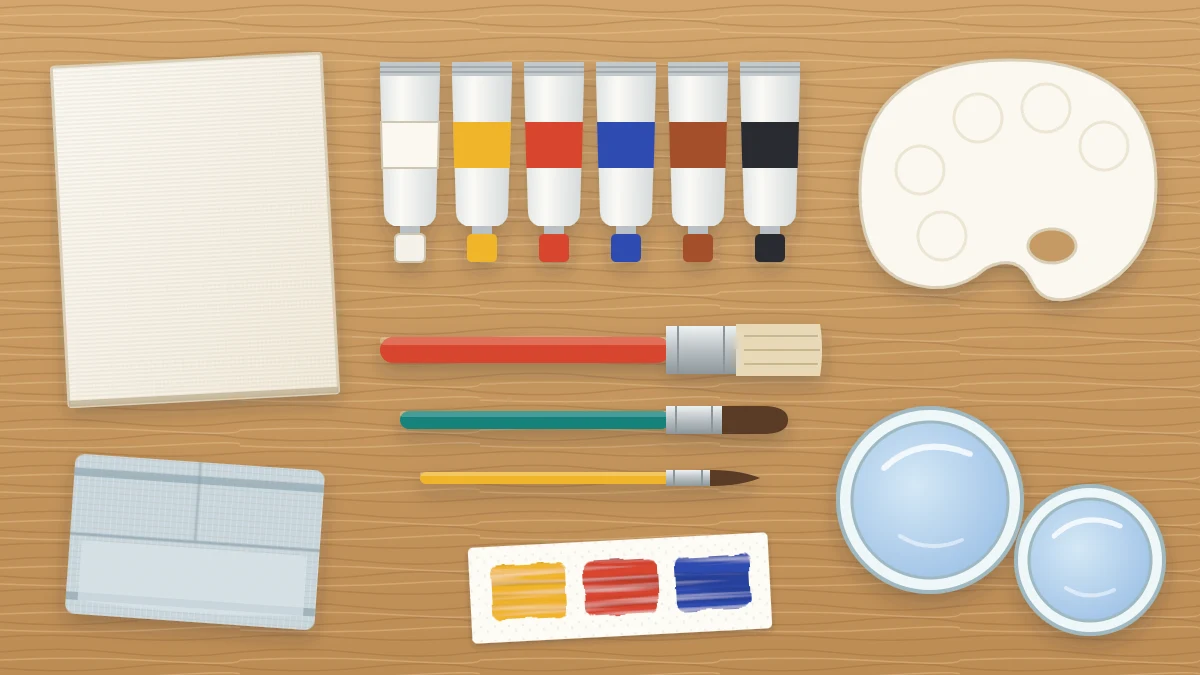
An art supply aisle can make painting look expensive and complicated before you have touched a brush. It does not need to be either. A short list of acrylic painting supplies is enough for your first dozen paintings, and it fits in a shoebox.
This starter kit covers paint, brushes, something to paint on and a few household items. Everything is described by type, so you can choose whatever fits your budget, and the last sections list what can safely wait.
The starter kit in one list
- Six tubes of student-grade acrylic paint
- Three synthetic brushes
- A pad of acrylic paper or two small canvas panels
- A palette or a white plate
- Two water jars
- Paper towels or a cotton rag
That is the whole kit. The rest of this guide explains each choice so you buy the right version of each item once.
Paint: six tubes
You can mix a wide range of colors from a few tubes, and doing so teaches you more than a large boxed set would. Start with these:
- Titanium white. You will use more of it than anything else, so buy a larger tube if you can.
- A warm yellow. Primary yellow, or a hue version of a warm yellow.
- A red. Primary red is a good all-rounder.
- Ultramarine blue. A deep, slightly warm blue that mixes clean purples and soft greens.
- Burnt sienna or burnt umber. An earth brown for natural colors, and for mixing a rich dark with blue.
- Black (optional). Useful in small amounts, but blue and brown together make a livelier dark.
Student grade or artist grade?
Student-grade paint has less pigment and more filler than artist-grade paint, so colors are a little weaker and may need a second coat. It is perfectly good for learning, and you will use paint more freely when you are not worried about waste. Choose heavy body or soft body tubes; either works. Small craft bottles are thinner and often cover poorly.
Brushes: three shapes
Pick synthetic bristles. They hold up to water and to the scrubbing acrylics involve, and they spring back into shape.
- A 1 in (2.5 cm) flat for backgrounds, skies and blocking in large shapes.
- A medium filbert or round, about 3/8 in (1 cm) across, for general painting: petals, hills, fruit, clouds.
- A small round for stems, edges and final details.
Avoid the very cheapest multipacks if the bristles feel limp or shed when you tug them gently. Three decent brushes beat fifteen floppy ones. The guide to brush shapes, sizes and what each one does goes through the options in detail.
Something to paint on
You have two easy choices to begin with:
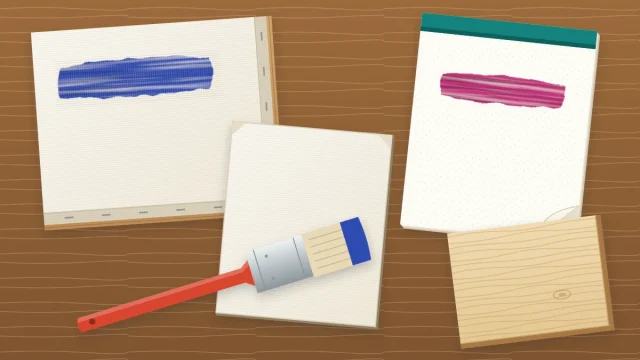
- A pad of acrylic paper, or heavy mixed-media paper. It is economical, stores flat and is ideal for exercises and small studies.
- Two small canvas panels, about 8 x 10 in (20 x 25 cm). They are rigid, already primed and feel like a real painting surface.
Buying both is reasonable: paper for practice, panels for a painting you want to keep. Small sizes are kinder at first because you can finish them in one sitting. To see how these compare with stretched canvas and wood, read the comparison of canvas, panels and paper.
Palette, water and rags
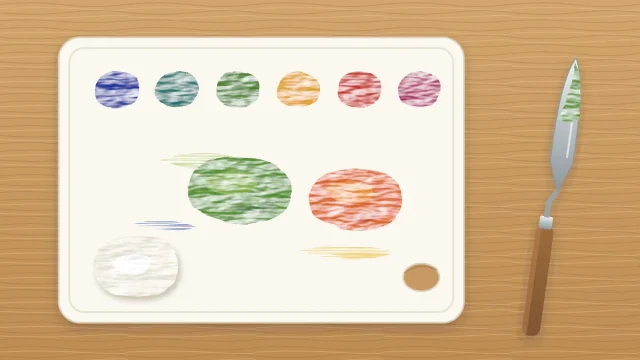
Palette. A flat white plastic palette works well, and so does an old white ceramic plate. White lets you judge colors accurately. Avoid palettes with only small wells, because you need open space for mixing. For layouts and ways to slow drying, see the guide to choosing and setting up a palette.
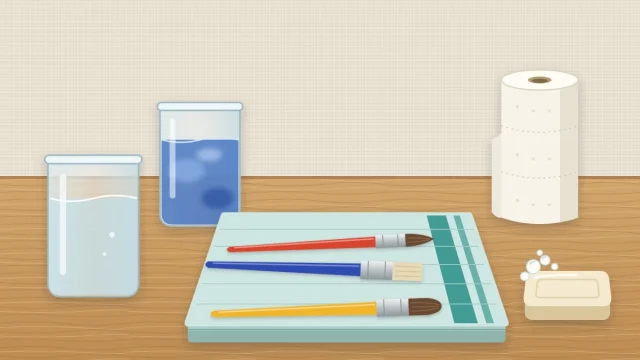
Two water jars. Use one for rinsing brushes and keep the other clean for thinning paint. Wide, heavy jars are harder to knock over than tall thin ones.
Paper towels or a cotton rag. You will wipe your brush constantly: after rinsing, between colors and to remove excess paint. An old cotton T-shirt cut into squares is ideal.
Tip
Wipe leftover paint from brushes and the palette onto a paper towel or rag before rinsing, and put it in the trash. Less paint goes down the drain, and your rinse water stays clean longer.
Useful extras from around the house
- An old shirt or apron, because dried acrylic does not wash out of fabric
- Newspaper or a plastic sheet to protect the table
- A pencil for light guide marks
- A small spray bottle of water to mist the palette
- A board and low-tack painter’s tape for holding paper flat
- A bar of mild soap for washing brushes
What can wait
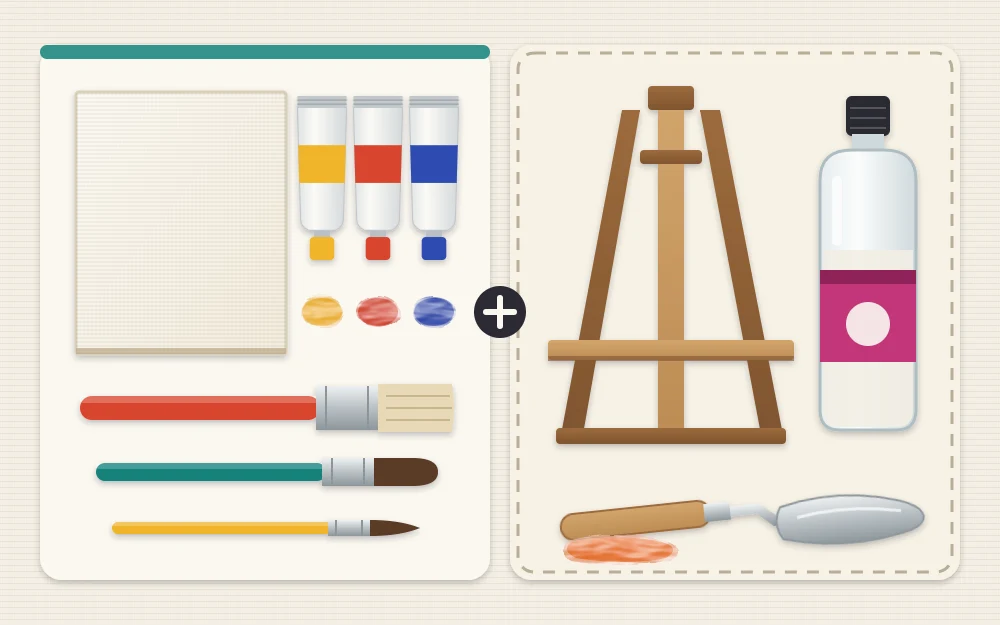
None of the following is needed for a first painting. Add each one when you notice a real use for it.
- An easel. Painting flat on a table, or with a panel propped against a stack of books, works fine at small sizes.
- Mediums. Glazing medium, slow-drying medium, gel medium and modeling paste all solve specific problems you may not have yet. Water handles everyday thinning.
- Palette knives. Handy for mixing and texture, but an old brush mixes paint well enough to begin with.
- More colors. Add a second blue, a magenta or a ready-made green once you find mixes you cannot reach.
- Varnish. A protective final coat for finished paintings you want to keep on display. Practice pieces do not need it.
Good to know
If you do add varnish or a slow-drying medium later, read the product label first. Apply varnish with good ventilation, and add only a small amount of slow-drying medium to your paint.
Buying sensibly on a modest budget
- Spend on white and brushes first. A good-covering white and brushes that keep their shape make the biggest difference.
- Buy single tubes instead of large sets. Sets often include colors you rarely touch.
- Check paper weight. Thin paper buckles when wet. Look for paper sold for acrylics or heavy mixed media.
- Use what you own. Plates, jars, rags and soap are already in your kitchen.
With the kit assembled, the next step is using it. The orientation guide on where to start with acrylics lays out a simple plan for your first three sessions.
Frequently asked questions
What is the minimum I need to start acrylic painting?
A handful of paint tubes including white, two or three synthetic brushes, a surface such as acrylic paper or a canvas panel, a plate for a palette, water and something to wipe brushes on. With those items you can complete exercises and small finished paintings.
Is student-grade acrylic paint good enough for beginners?
Yes. It contains less pigment than artist-grade paint, so some colors are less intense and may need two coats, but it handles the same way. Learning with student-grade paint lets you practice freely, and you can replace individual colors with artist-grade tubes later if you want stronger color.
Do I need an easel to paint with acrylics?
Not at first. Small panels and paper are comfortable to paint flat on a table or tilted against a few books. An easel becomes helpful when you work larger or want to step back often, and a small tabletop model is a sensible first choice then.