How to Clean Acrylic Paint Brushes and Make Them Last
A simple routine for keeping brushes soft: what to do while you paint, a seven-step wash with water and mild soap, and how to rescue a brush with dried acrylic in it.
At a glance
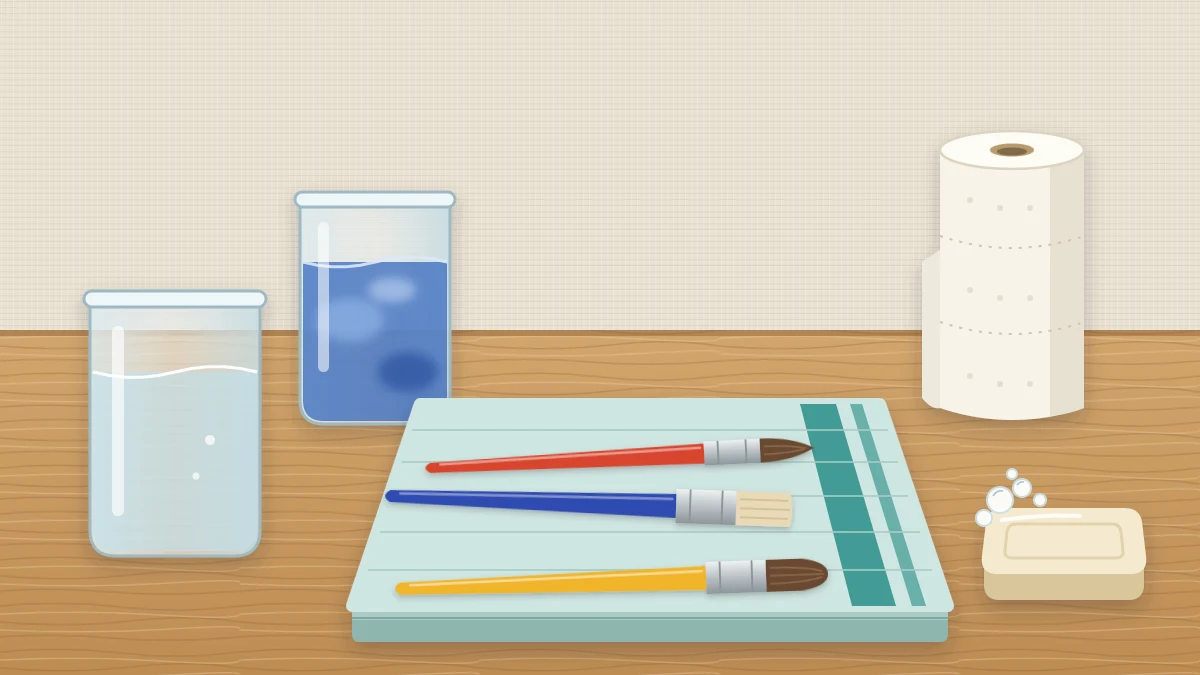
Brushes and materials
- Two water jars
- Cotton rag or paper towels
- Mild bar soap or gentle dish soap
- Lukewarm running water
- Towel for drying
- Old fine-toothed comb for dried paint
Acrylic paint is kind to beginners in most ways, but it is hard on brushes. Once it dries in the bristles it becomes a tough, water-resistant film, and paint dried in a brush is very hard to remove. A brush that was soft on Monday can be a stiff, splayed stub by Friday.
Learning how to clean acrylic paint brushes properly takes about five minutes per session and needs nothing more than water, mild soap and a rag. Most of the work is done by small habits while you paint, not by scrubbing afterward.
What you need
- Two water jars: one for the first dirty rinse and one kept cleaner for the second
- A cotton rag or paper towels
- Mild soap: a plain bar of soap, gentle dish soap or a brush soap made for artists
- Lukewarm running water
- A towel to dry the brushes on
Skip hot water. It can soften the glue that holds the bristles inside the ferrule, the metal band, and it can bend synthetic bristles out of shape.
Habits that protect brushes while you paint
Most ruined brushes are damaged during the session, not after it. Three habits prevent nearly all of that.
- Keep working brushes damp. A brush set down with paint in it starts drying within minutes. Rinse it, wipe it and lay it flat before you pick up another.
- Never rest a brush on its bristles in the jar. The tip bends, and after a while it stays bent. Long soaks also swell wooden handles, crack the lacquer and loosen the ferrule.
- Wipe before you rinse. Squeeze the paint out on a rag first, then rinse. The water stays cleaner, your colors stay cleaner and less paint ends up down the drain.
Try also to load only the lower half to two thirds of the bristles. Paint pushed up into the ferrule is the hardest to wash out, and it is what makes a brush splay. A palette laid out with room to mix helps here, because you can load from the edge of a puddle instead of digging into a blob.
Cleaning brushes after painting, step by step
Clean your brushes as soon as you finish, before you tidy anything else.
- Wipe off the excess. Pinch the bristles in a rag or paper towel and pull from the ferrule toward the tip until little color comes off. Paper towels go in the trash.
- Swirl in the jar. Move the brush around in the dirty-water jar and press it gently against the side, not hard against the bottom. Wipe again.
- Rinse under lukewarm water. Let the water run from ferrule to tip while you fan the bristles with your fingers.
- Work in soap. Stroke the wet brush across a bar of soap, or put a drop of liquid soap in your palm, and build a lather with a gentle circular motion. Massage it in right up to the ferrule, where paint hides.
- Rinse until clear. Rinse and squeeze. If the lather or the water shows any color, soap again. Two or three rounds are normal for strong colors such as phthalo blue.
- Reshape. Press out the water with a clean part of the rag, then shape the tip with your fingers: a point for rounds, a crisp straight edge for flats and brights.
- Dry. Lay the brushes flat on a towel, or hang them bristles-down if you have a holder for that.

Do not stand wet brushes upright with the bristles pointing up. Water runs down into the ferrule, where it loosens the glue and swells the handle. Once the brushes are completely dry, storing them upright in a jar is fine.
Good to know
Wipe as much paint as you can into the trash before any brush goes under the tap, and let a jar of very cloudy water settle before you pour off the clearer water on top. The less acrylic that goes down the drain, the better for your pipes.
How to tell a brush is really clean
Press the damp bristles onto a white paper towel, close to the ferrule. A clean brush leaves only a water mark. Then bend the bristles gently. They should spring back together and feel as flexible at the base as at the tip. Stiffness near the metal means paint is still in there, so go back to the soap.
Some strong pigments stain synthetic bristles. A tinted brush that is soft and springy is still clean.
Rescuing a brush with dried paint
A neglected brush is easy to recognize. The bristles are stiff, they fan outward instead of meeting at the tip, and there is often a hard crust of color where they enter the ferrule.

It is worth one rescue attempt before you give up on it.
- Soak only the bristles in warm, soapy water for roughly 15 to 30 minutes. Prop the brush at a shallow angle so the tip is not carrying its weight.
- Work more soap in with your fingers and flex the bristles back and forth to crack the dried film.
- Comb gently from the ferrule toward the tip with an old fine-toothed comb or a soft toothbrush. Pulling hard just tears bristles out.
- Rinse and repeat. Stubborn paint may need three or four rounds.
If soap is not enough, a brush cleaner made for acrylics is the next step. These products vary, so follow the label for soaking time, handling and ventilation, then wash the brush with soap and water afterward. Expect an improvement, not a new brush: paint that has set deep inside the ferrule rarely comes out completely.
When to retire a brush to texture work
A brush that stays splayed after a rescue attempt has lost its point, but it still has uses. Old, rough brushes are good for dry brush grass and bark, stippled foliage, scrubbing in soft clouds, spattering and mixing paint on the palette, all jobs that would wear out a good brush quickly.
When you replace it, a modest synthetic brush that is cleaned every time outlasts a fine one that is not, and the guide to brush shapes and sizes will help you pick the right replacement.
Stiff brushes are also one of the easiest problems to prevent. If the same thing keeps happening with muddy color or streaky coverage, the list of common acrylic painting problems and fixes works through those in the same cause-and-cure way.
Frequently asked questions
Can I leave acrylic brushes in water overnight?
It is better not to. Standing on its bristles for hours bends the tip permanently, and long soaking swells a wooden handle and loosens the ferrule. If you must pause, rinse the brush, wipe it and lay it flat. A full wash with soap takes only a few minutes.
What soap is best for cleaning acrylic paint brushes?
Any mild soap does the job: a plain bar of soap, a gentle dish soap or a brush soap made for artists. A bar is handy because you can stroke the brush across it to build a lather. Avoid harsh household cleaners, which can dry out and roughen the bristles.
Can dried acrylic paint be removed from a brush?
Sometimes, and usually only partly. Soaking the bristles in warm soapy water, flexing them and combing gently loosens a lot of dried paint, and a brush cleaner made for acrylics can help further if you follow its label. Paint set deep in the ferrule tends to stay, so the brush may remain a little splayed.