Acrylic Painting Surfaces: Canvas, Panels and Paper Compared
Stretched canvas, canvas panels, paper and wood panels compared by feel, cost and storage, with a plain explanation of priming and gesso, how to tape paper flat and which sizes to start on.
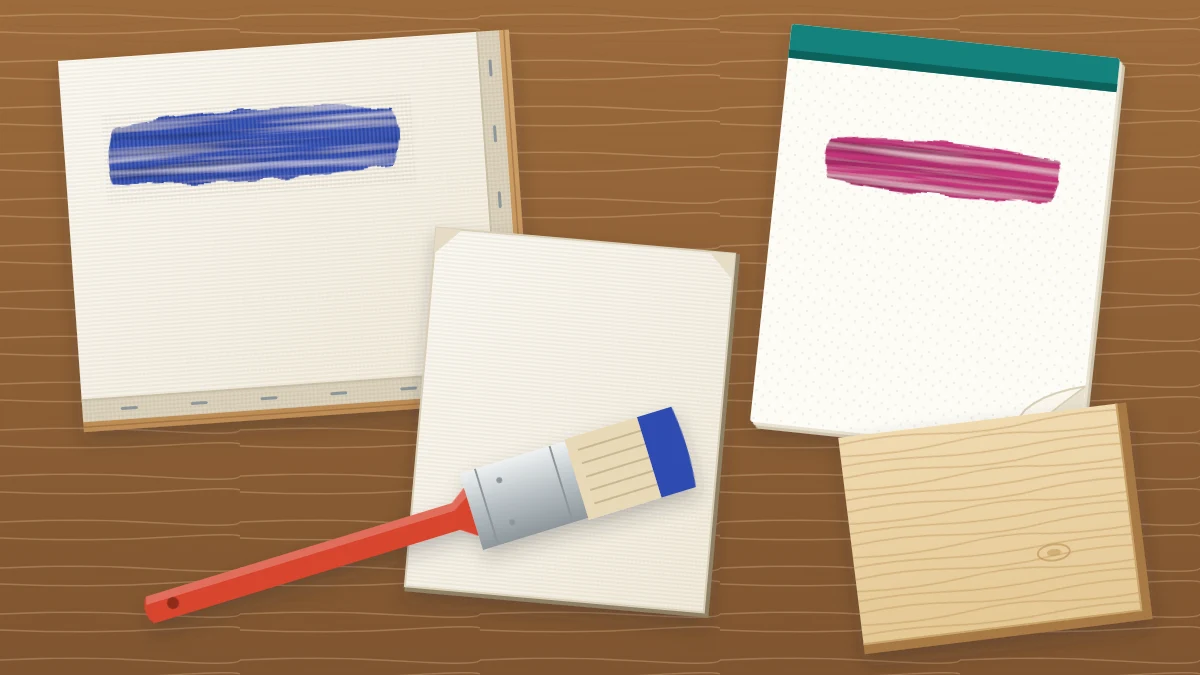
Acrylic paint sticks to almost anything that is not greasy or glossy, which is freeing and slightly unhelpful when you are standing in a store deciding what to buy. The common acrylic painting surfaces each feel different under the brush, cost different amounts and store differently.
This comparison covers stretched canvas, canvas panels, paper and wood panels, explains what priming means and suggests good first sizes, so you can match the surface to what you are painting.
Stretched canvas
A stretched canvas is cotton or linen fabric pulled tight over a wooden frame and stapled at the back or sides. It is light for its size, hangs on a wall without framing and has a slight bounce under the brush that many painters enjoy.
The woven texture, called the tooth, grips paint well and breaks up strokes a little, which suits loose, painterly work. Fine detail is harder on a coarse weave.
The drawbacks are cost and bulk. Stretched canvases are the most expensive option here and take up real space once you have a few. Choose one when you plan a painting you want to hang.
Canvas panels
A canvas panel, also sold as a canvas board, is primed canvas glued to a stiff backing board. It has the same woven texture as stretched canvas but is rigid, thin and noticeably cheaper.
The firm surface is easy to control. There is no bounce, so pressure from the brush translates directly into the mark, which is helpful while you are learning. Panels stack flat on a shelf and slip into a standard frame.
Large panels can bow slightly if one side gets very wet, so they are best at small and medium sizes. For first finished paintings, they are hard to beat.
Acrylic paper and other heavy papers
Acrylic paper is heavy paper made for acrylics, often embossed with a canvas-like texture and sold in pads. It is the most economical surface, stores in a drawer and takes away the pressure of “using up” a canvas.
Heavy mixed-media paper and watercolor paper also work well. Look for thick sheets; thin drawing or printer paper buckles and wrinkles as soon as it gets wet. Watercolor paper is absorbent, so the first layer sinks in and dries quickly, and thin washes behave nicely on it.
Paper is the natural choice for swatches, exercises, color charts and quick studies. A painting on paper can still be kept; it simply needs a mat and frame, or a sketchbook, to protect it.
Taping paper to a board
Wet paint makes paper swell and curl. Taping it down keeps it flat and leaves a clean border.
- Lay the sheet on a rigid board, such as a drawing board or a piece of smooth hardboard.
- Run low-tack painter’s tape along all four edges, overlapping the paper by about 1/4 in (6 mm).
- Press the inner edge of the tape down firmly with a fingernail so paint cannot creep under it.
- Paint, then let the sheet dry completely while still taped.
- Peel the tape back slowly at a low angle, pulling away from the painting.
Wood panels
Wood panels are sheets of smooth plywood or hardboard, sometimes with a supporting frame on the back. They are rigid, durable and very smooth, with no weave at all.
On that smooth surface the brush glides, strokes stay crisp and fine detail is easy. Paint also slides around more, and brush marks show clearly, so the feel takes some getting used to.
Bare wood must be primed before painting. Panels cost more than canvas boards and are heavier, so they are a surface to explore later.
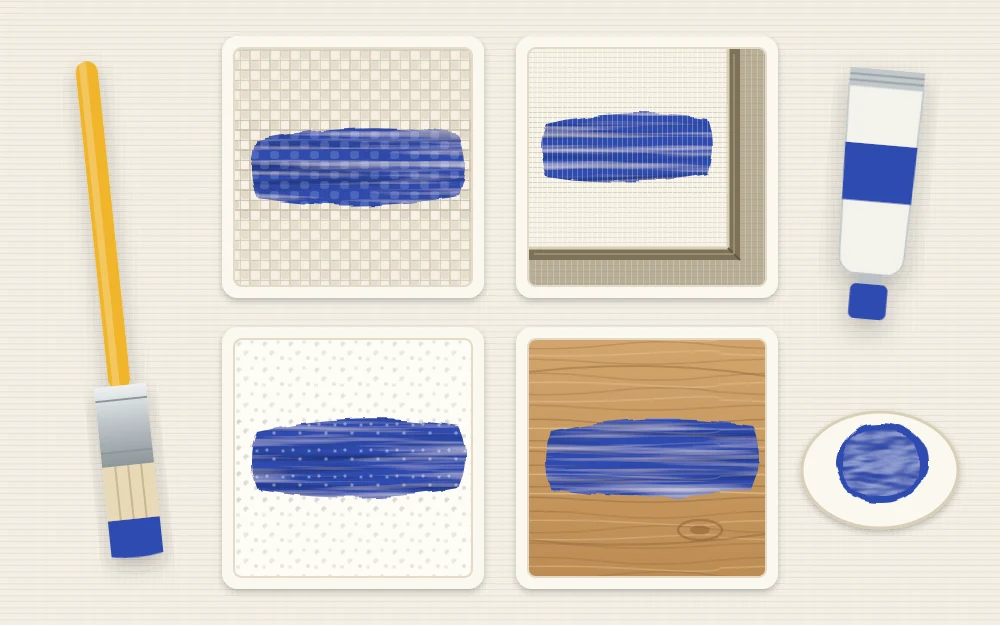
Surfaces at a glance
| Surface | Feel under the brush | Best for |
|---|---|---|
| Stretched canvas | Textured weave with a slight bounce | Finished paintings to hang, larger sizes |
| Canvas panel | Textured weave, firm and steady | First finished paintings, small to medium sizes |
| Acrylic or heavy paper | Light texture, slightly absorbent | Exercises, studies, color charts |
| Wood panel | Very smooth and rigid | Fine detail, crisp edges, later projects |
Priming and gesso
Priming means coating a raw surface so it is ready to take paint. The usual primer for acrylics is acrylic gesso, a white, slightly gritty coating that seals the surface, stops it soaking up paint unevenly and gives the paint something to grip.
Most bought canvases and canvas panels are already primed with acrylic gesso, so you can paint on them straight from the wrapper. Acrylic paper needs no priming either.
You would apply gesso yourself in three situations:
- Raw wood, bare board or unprimed fabric needs two or three thin coats, each dried before the next.
- A canvas that feels thin or very absorbent benefits from one extra coat.
- An old painting you want to reuse can be covered with gesso to give a fresh white ground.
Brush gesso on in thin, even coats with a wide flat brush, and wash the brush promptly, because gesso dries as hard as paint.
Tip
White can feel stark to begin on. A thin coat of diluted burnt sienna or yellow ochre, left to dry, gives a warm toned ground that makes values easier to judge.
That toned coat is the first step of the method described in the guide to layering acrylic paint from background to detail.
Good first sizes
Small surfaces are finished in one session, cost less and make mistakes cheap. Two sizes work especially well:
- About 8 x 10 in (20 x 25 cm) for canvas panels and small stretched canvases
- About 9 x 12 in (23 x 30 cm) for pads of acrylic paper
Both are standard sizes, so ready-made frames are easy to find. Very small surfaces demand fine brush control, and very large ones use a lot of paint and dry in patches before you can blend.
Which surface to choose
- For practice and exercises: a pad of acrylic paper.
- For a first painting to keep: a canvas panel.
- For a gift or something to hang: a small stretched canvas.
- For detailed work later on: a primed wood panel.
A pad of paper and two or three panels cover everything a beginner needs, and they are the surfaces suggested in the simple starter kit of supplies. When the surface is ready and you need a subject, browse these easy painting ideas for a first canvas.
Frequently asked questions
Do I need to prime a canvas before painting with acrylics?
Usually not. Canvases and canvas panels sold for painting are normally primed with acrylic gesso already and can be used as they are. Priming is only necessary for raw materials such as bare wood, bare board or unprimed fabric, or when you want a smoother or less absorbent ground.
Can I use acrylic paint on regular paper?
You can for quick color tests, but thin paper wrinkles and may tear when wet. Heavier paper made for acrylics, mixed media or watercolor stays flatter and takes several layers. Taping the sheet to a board while you work helps any paper dry flat.
Is it better to start on canvas or paper?
Both have a place. Paper is inexpensive and ideal for exercises, where you want to paint freely without worrying about waste. A canvas panel feels more substantial and suits a painting you intend to keep. Many beginners use paper for practice and panels for finished pieces.