Easy Acrylic Painting Ideas: 12 Simple Subjects for a First Canvas
Twelve simple subjects for a first acrylic canvas, from a sunset over hills to a bowl of lemons, each with the main skill it practices and roughly how long it takes.
A blank canvas is easier to face when you already know what is going on it. The best first subjects have a few large shapes, forgiving edges and no need for accurate drawing, so the paint handling can have your full attention.
These twelve easy acrylic painting ideas all fit that description. Each one lists the main skill it practices and roughly how long it takes, not counting final drying. Pick the one that appeals to you most and start today.
How to choose a first subject
Look for a subject you could describe in one sentence: “an orange sky over dark hills” or “a pear on a table”. If the description needs three sentences, save it for later.
It also helps to choose by skill. If you want to practice blending, paint a sky. If you want to practice shapes and edges, paint a plant or a piece of fruit. Every idea here teaches something that carries over to the next painting.
Skies and water
1. A sunset with silhouetted hills
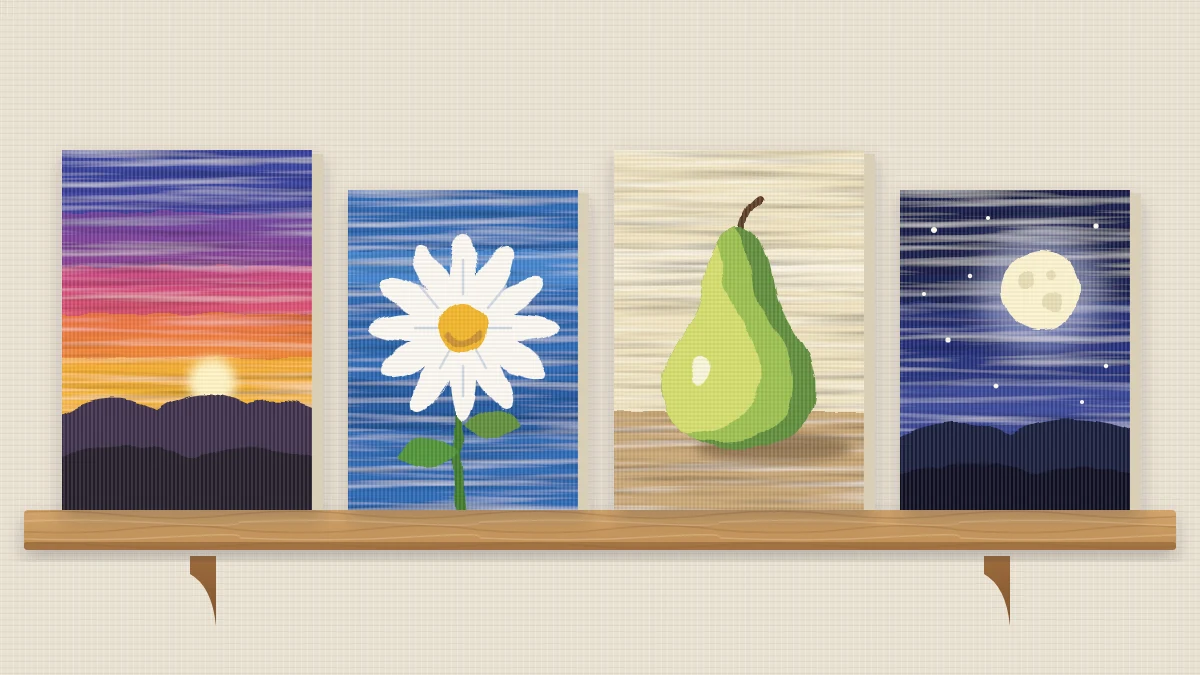
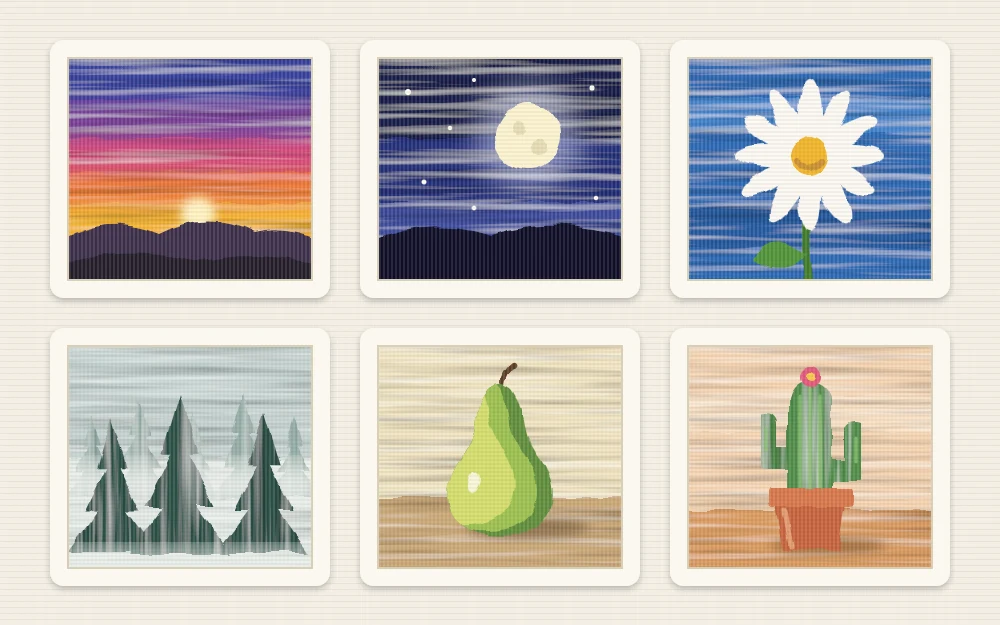
Blended bands of color from violet down to yellow, with dark hills painted over the dry sky. It practices smooth blending and takes about an hour. The dark shapes hide any unevenness along the bottom, which makes it one of the most forgiving first paintings. The full easy sunset painting tutorial walks through every step.
2. A night sky with a moon
A deep blue ground that lightens slightly around a pale disc, with a few stars dotted in last. It practices working from dark to light and takes about 45 minutes.
3. Clouds over water
A soft blue sky, loose white clouds and a calm strip of water that repeats the sky colors. It practices soft edges and takes about an hour.
4. Sky and waves
A simple seascape with nothing on the horizon: sky above, sea below, and a few lines of white foam. It practices horizontal brushstrokes and dry brush for the foam, and takes about an hour.
Land and trees
5. A misty row of pine trees
Pale gray-green trees in the distance and darker ones in front, on a light background. It practices value, since the mist is nothing more than lighter mixes for the trees farther away. Allow about an hour.
6. A field with a horizon
Sky, a distant line of hills and a wide field that grows warmer and brighter toward the bottom edge. It practices dividing the canvas into three clear areas and takes about an hour. The simple acrylic landscape tutorial builds this kind of scene in layers.
Plants and flowers
7. A single daisy
White petals around a yellow center on a plain colored background. It practices single, confident strokes with a round or filbert brush, and takes about 45 minutes. For a step-by-step version, see the tutorial on painting easy acrylic daisies.
8. A cactus in a pot
A rounded green shape in a terracotta pot against a flat background. It practices a light side and a shadow side on a simple form, and takes about an hour.
9. A leafy branch
One curving stem with leaves on either side, each leaf made with a press and lift of the brush. It practices brush control and mixing several greens, and takes 30 to 45 minutes.
Objects and shapes
10. A simple pear
One piece of fruit lit from the side, with a shadow on the table. It practices seeing light, middle and dark values, and takes about an hour to an hour and a half. The simple still life painting of one pear covers the setup and each stage.
11. A bowl of lemons
Three or four lemons in a plain bowl. It practices overlapping shapes and keeping yellow clean in the shadows, and takes about an hour and a half. Try it after the pear, since it uses the same idea several times over.
12. An abstract color-block piece
Divide the canvas into five to seven large shapes with light pencil lines and fill each with a flat, opaque color. It practices mixing, even coverage and neat edges, with no drawing at all. Allow about an hour, including a second coat where the first looks thin.
All twelve ideas at a glance
| Subject | Main skill | Rough time |
|---|---|---|
| Sunset with hills | Blending | About 1 hour |
| Night sky with a moon | Dark to light | About 45 minutes |
| Clouds over water | Soft edges | About 1 hour |
| Sky and waves | Dry brush | About 1 hour |
| Misty pine trees | Value | About 1 hour |
| Field with a horizon | Composition | About 1 hour |
| Single daisy | Brushstrokes | About 45 minutes |
| Cactus in a pot | Light and shadow | About 1 hour |
| Leafy branch | Brush control | 30 to 45 minutes |
| Simple pear | Three values | 1 to 1.5 hours |
| Bowl of lemons | Overlapping shapes | About 1.5 hours |
| Abstract color blocks | Mixing and edges | About 1 hour |
The times are rough guides for a small canvas. Thin layers are touch-dry in roughly 10 to 20 minutes, so most of these can be finished in one sitting.
Keep the first canvas small
A canvas panel of about 8 x 10 in (20 x 25 cm) is large enough to move a brush freely and small enough to cover before the paint dries on you. A large canvas takes more paint, more time and more nerve, none of which helps on a first attempt.
Limit your colors as well. White plus three or four tubes is enough for any subject on this list, and fewer colors means fewer decisions.
Tip
Paint the same subject twice. The second version is nearly always better, because the first one has already shown you where the difficult parts are.
Paint from your own reference or imagination
All twelve subjects are things you can observe yourself. Put a real pear or lemon on the table. Look out of the window at the evening sky. Take your own photo of a houseplant or a line of trees and work from that.
Skies, moons and color blocks can come entirely from imagination. Your version does not need to match anything, which removes the pressure of getting a likeness and leaves you free to concentrate on the paint.
Frequently asked questions
What is the easiest thing to paint with acrylics?
A sunset sky with dark silhouetted hills is one of the easiest. The sky is a few blended bands of color, the hills are flat dark shapes, and no accurate drawing is needed. An abstract color-block painting is another gentle start, since it only asks for mixing and even coverage.
What size canvas should a beginner start with?
Something around 8 x 10 in (20 x 25 cm) works well. It is big enough for comfortable brushstrokes and small enough to cover before acrylic paint dries. Canvas panels in that size are inexpensive and easy to store, so you can paint several without worrying about wasting materials.
Do I need to be able to draw to paint these subjects?
No. These subjects were chosen because they are made of large, simple shapes. A few light pencil marks or lines of thinned paint to place the horizon or the outline of a pear are enough. Your drawing will improve naturally as you paint more.