Acrylic Color Mixing for Beginners: A Limited Palette That Works
Mix the colors you need from five tubes: white, a yellow, a red, a blue and an earth brown. Learn why some mixes turn dull and how to reach natural greens, soft oranges, browns, grays and a rich dark.
Most beginners assume that better color comes from owning more tubes. It usually works the other way around. Acrylic color mixing gets easier with fewer paints on the palette, because you learn exactly what each one does, and the colors in your painting start to agree with one another.
Five tubes are enough to mix nearly everything your first paintings will ask for. Here is which five to use, why some mixes turn dull, and how to reach the greens, oranges, purples, browns and grays you actually need.
The five-tube limited palette
A limited palette is simply a short, fixed list of paints that you use for everything. This one covers a wide range:
- Titanium white: opaque and strong, and part of most mixes.
- A yellow: primary yellow or lemon yellow.
- A red: primary red or crimson.
- A blue: ultramarine blue.
- An earth brown: burnt sienna or burnt umber.
Student-grade paint is fine for learning. Squeeze the colors out in the same order every time so your hand finds them without searching, and leave the middle of the palette empty for mixing. If you are not sure how to arrange things, the guide to setting up an acrylic paint palette covers the layout and how to keep paint workable.
Primaries, secondaries and the colors between
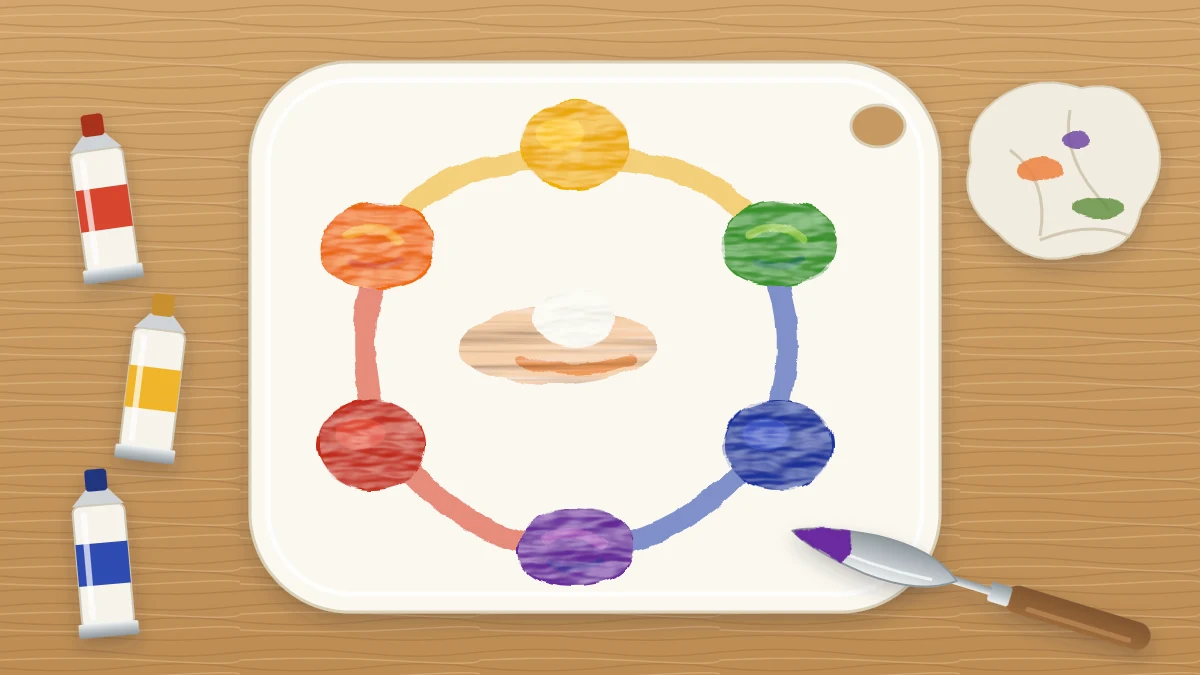
Yellow, red and blue are the primaries: you cannot mix them from other colors. Mix any two and you get a secondary. Yellow and red make orange, yellow and blue make green, and red and blue make purple.
Between each primary and its neighboring secondary sits an in-between color such as yellow-orange or blue-green. You reach it by letting one primary dominate the mix. That gives twelve colors in a ring, the classic color wheel. Painting your own wheel as twelve dabs is a useful first exercise, because it shows what your particular tubes can and cannot do.

Why some mixes come out dull
No tube is a perfectly pure primary. Each one leans a little toward one of its neighbors on the wheel. Ultramarine blue leans toward red. Lemon yellow leans toward green. A crimson leans toward blue, while a warm red leans toward orange.
That lean matters because all three primaries together make brown or gray. When you mix two paints that lean toward each other, the result is bright. When one of them carries a trace of the third primary, the result is muted.
Two examples make this concrete. Ultramarine and yellow give a natural, slightly olive green, because the hint of red in the blue quiets it. Crimson and ultramarine give a clear purple, while a warm, orange-leaning red with the same blue gives a brownish one.
Neither result is a mistake. Most of what you will paint, from foliage to shadows to skin, is muted rather than bright. Knowing the reason simply lets you choose which kind of mix you get.
Four mixing habits that save paint
- Add dark to light, a little at a time. A speck of blue changes a pile of yellow, but it takes a great deal of yellow to change blue. Start with the lighter color and creep up on the mix.
- Mix more than you think you need. Matching a color exactly a second time is hard, and acrylic dries too fast to make running out halfway through an area pleasant.
- Mix with a palette knife or an old brush. A palette knife blends the pile evenly and wipes clean in one pass. Scrubbing paint together with a good brush pushes it up into the ferrule.
- Wipe between colors. Wipe the knife or brush on a paper towel before you rinse it. The next mix stays clean, and less paint goes down the drain.
Mixing recipes by description
Exact ratios do not travel well from one tube to another, so treat these as directions rather than formulas. Start with the first color and add the second in small touches.
| Color you want | Start with | Add a little |
|---|---|---|
| Natural green | Yellow | Ultramarine, then a touch of red or brown |
| Soft orange | Yellow | Red, then white |
| Muted purple | Red | Ultramarine, then a touch of yellow or brown |
| Brown | Orange (yellow plus red) | Ultramarine |
| Gray | White | Ultramarine and burnt sienna |
| Mixed dark | Ultramarine | Burnt umber or burnt sienna |
For greens, make the bright version first, then calm it down. A touch of red turns a harsh green into a leaf green, and more yellow pulls it toward sunlit grass. For browns, change the balance: more red gives a warm brick color, more blue gives a cool dark brown.
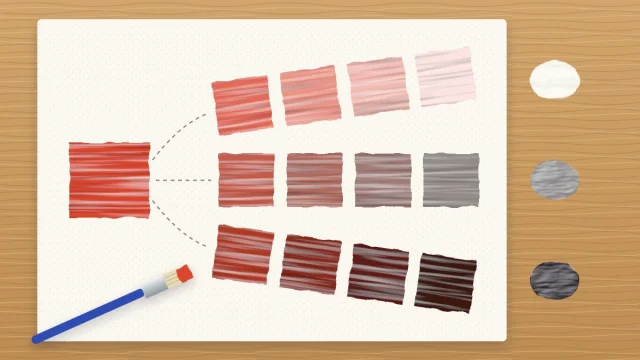
Grays mixed from blue and brown are more interesting than black plus white, because you can steer them. Extra blue makes a cool gray for distant hills, and extra brown makes a warm gray for stone or a tabletop.
A mixed dark instead of black
Ultramarine blue with burnt umber makes a deep dark that reads as black on the canvas but sits more comfortably beside your other colors, since it is made from them. Lean it toward blue for night skies and cool shadows, or toward brown for tree trunks and soil.
Lightening and darkening have their own pitfalls. White cools and dulls a color as it lightens it, and black can deaden one. The guide to tints, tones and shades explains how to change value without losing the color.
Tip
If a mix has gone muddy, stop adding to it. Scrape it to the side to use later as a gray or brown, wipe the knife, and start again with fresh paint.
Allow for acrylics drying darker
Acrylics usually dry slightly darker than they look wet. The shift is small, but it is enough to make a touched-up patch show against paint that has already dried.
Before you commit to an important color, brush a little onto scrap paper and give it roughly 10 to 20 minutes. If it has dried too dark, add a touch of the lighter color to the pile. With practice you will mix a shade lighter without thinking about it.
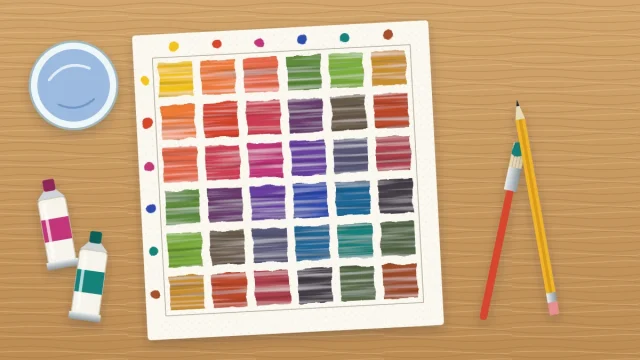
To see everything your five tubes can do side by side, make a color mixing chart with your own paints and keep it near your painting table as a reference.
Frequently asked questions
What colors do I need to start mixing acrylics?
Titanium white, one yellow, one red, ultramarine blue and an earth brown such as burnt sienna or burnt umber will take you a long way. From those five you can mix oranges, greens, purples, browns, grays and a deep dark, which is plenty for most beginner subjects.
Why do my mixed acrylic colors look muddy?
Mud usually means all three primaries have ended up in one mix. It happens when a tube leans toward the third primary, when a brush was not wiped between colors, or when you keep adding paint to correct a mix. Start again with fresh paint and only two colors.
Can I mix black instead of buying it?
Yes. Ultramarine blue mixed with burnt umber or burnt sienna gives a very dark color that reads as black in a painting. You can lean it cooler with more blue or warmer with more brown, which makes it easier to fit with the rest of your colors.