
Growing microgreens for beginners is easier than you think
Growing Microgreens for Beginners: Fresh, Nutritious Greens in Under Two Weeks
Growing microgreens for beginners is one of the fastest and easiest ways to add fresh, nutrient-dense food to your daily meals — no garden, no experience, and no green thumb required.
Here is what you need to know right away:
- What they are: Microgreens are young seedlings of vegetables and herbs, harvested when just 1-3 inches tall, after the first leaves (cotyledons) appear.
- How fast they grow: Most varieties are ready to harvest in 7-14 days from planting. Some, like radish, can be ready in as little as 5-6 days.
- What you need to start: A shallow tray, potting mix or coco coir, seeds, a spray bottle, and a bright window or basic LED grow light.
- Why they are worth it: Microgreens can contain up to 40 times the concentration of vitamins and antioxidants found in their mature counterparts — and they cost a fraction of store-bought versions to grow at home.
- How much daily effort: About 10 minutes per day — mostly just checking moisture and light.
Think of microgreens as the “fast food” of home gardening — but the genuinely healthy kind. A small space, like a kitchen counter or windowsill, is all you need. Store-bought microgreens often run $5-$10 for a small tray. Growing that same amount at home costs just a dollar or two in seeds and soil.
In April 2026, interest in home-grown, nutrient-dense food continues to grow rapidly — and microgreens remain one of the most beginner-friendly entry points into that world.
This guide walks you through everything: the best varieties to start with, the exact steps to grow them, how to avoid common mistakes, and simple ways to use them in everyday meals.
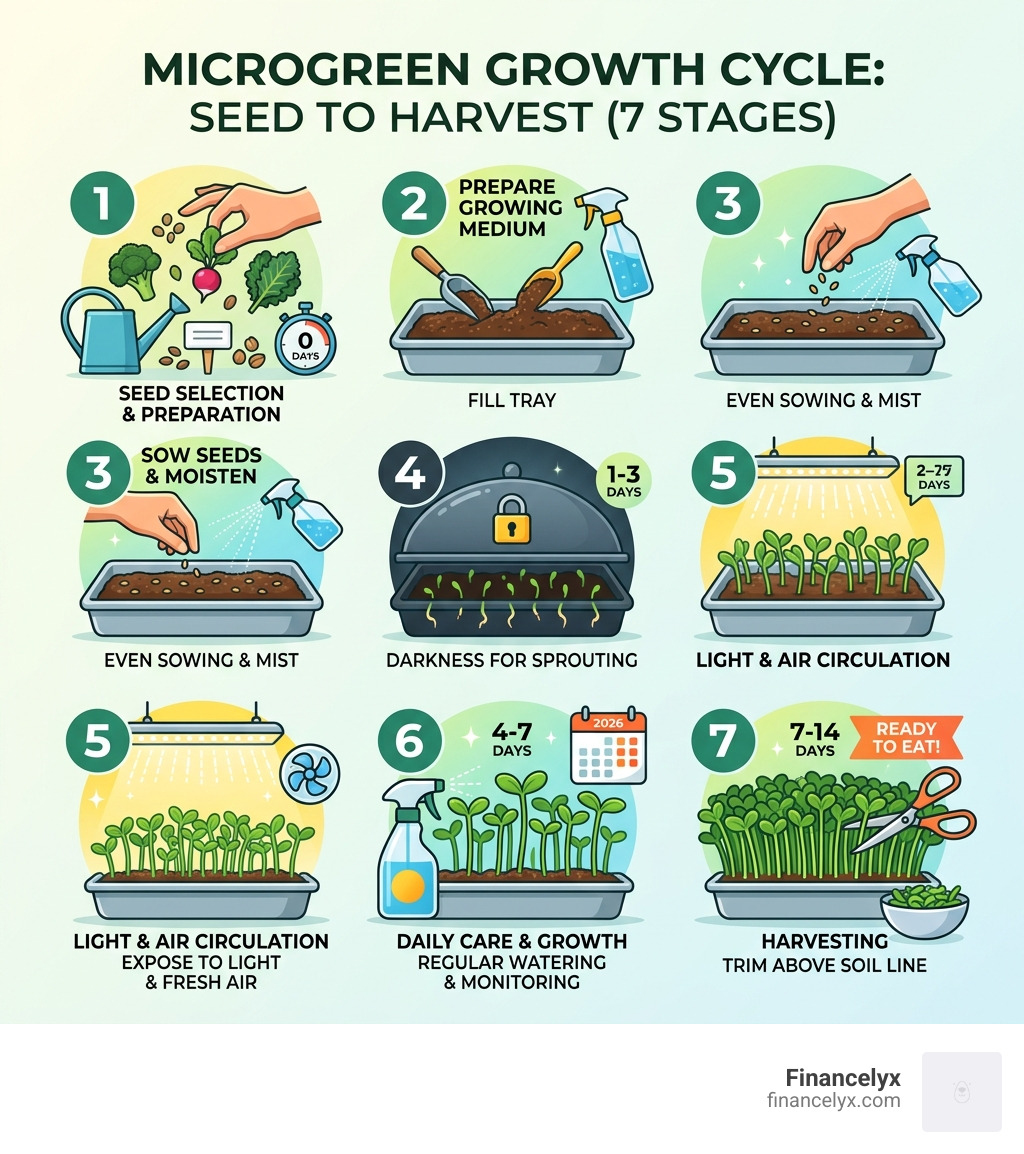
Growing microgreens for beginners terms simplified:
Why growing microgreens for beginners is the ultimate health hack
If you are looking for a way to supercharge your diet without spending a fortune on supplements, growing microgreens for beginners is the answer. We often call these tiny plants “nutritional powerhouses” because they pack a massive punch in a very small package.
Research into microgreen nutrient density has shown that these seedlings often contain significantly higher concentrations of vitamins (like C, E, and K) and antioxidants than the full-grown plant. For example, broccoli microgreens are famous for their high levels of sulforaphane, a compound studied for its anti-inflammatory and cancer-fighting properties. In some cases, you would have to eat an entire head of mature broccoli to get the same nutrients found in a small handful of micro-broccoli!
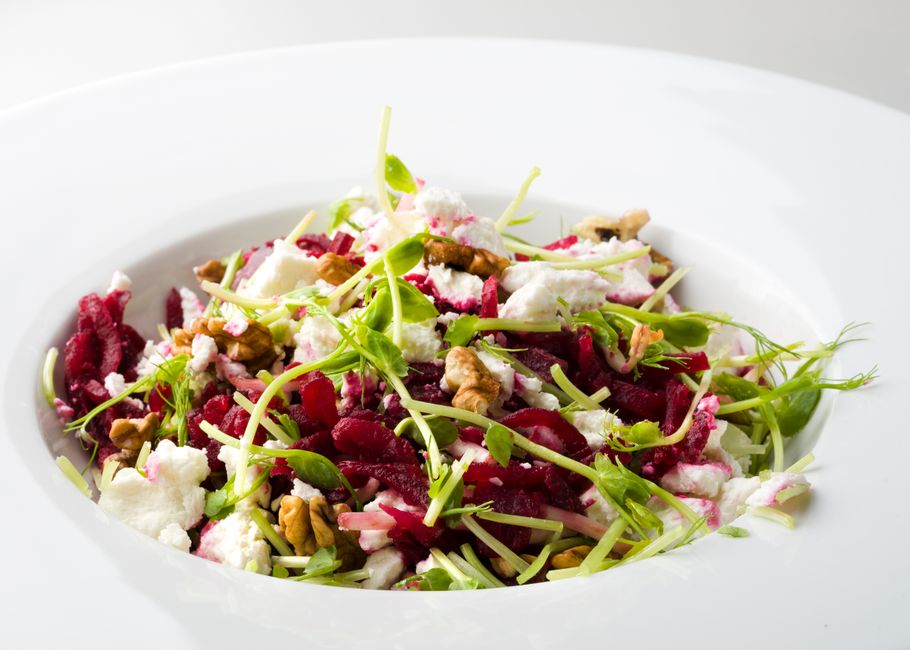
This incredible density comes from something called “juvenile vigor.” A seed contains all the energy and nutrients required to start a new life. When we harvest the plant at the microgreen stage, we are catching it at its absolute peak of vitality.
Beyond the health benefits, the cost savings are undeniable. At Financelyx, we focus on making healthy eating accessible. When you grow at home, a single 10×20-inch tray can produce the equivalent of three or four store-bought containers. You are essentially turning $2 worth of seeds and soil into $30 worth of gourmet produce.
To help you understand exactly what you are growing, we’ve put together this comparison:
| Feature | Sprouts | Microgreens | Baby Greens |
|---|---|---|---|
| Growth Medium | Water only | Soil, coir, or mats | Soil |
| Light Needed | None (grown in dark) | High (sun or LED) | High (sun or LED) |
| Harvest Time | 2–5 days | 7–21 days | 25–40 days |
| What is eaten | Seed, root, and stem | Stem and first leaves | Full leaves and stems |
| Flavor | Mild, crunchy | Intense, varied | Mild to bold |
For more detailed scientific insights, you can explore this Step-By-Step Guide for Growing Microgreens at Home.
Best varieties for growing microgreens for beginners
When you are just starting out, we always recommend beginning with “the big four.” These varieties are forgiving, grow quickly, and have a high success rate.
- Radish: This is the undisputed king of growing microgreens for beginners. Radishes germinate in 24 hours and can be ready to eat in 5-6 days. They have a spicy, peppery kick that wakes up any sandwich or taco.
- Broccoli: If you want the most “bang for your buck” nutritionally, broccoli is it. It has a mild, slightly cabbage-like flavor that blends easily into smoothies or salads.
- Kale: Much like broccoli, kale microgreens are mild and easy to grow. They are perfect for kids because they aren’t bitter like the mature leaves can be.
- Peas: These are favorites because they taste exactly like fresh sugar snap peas. They are crunchy, sweet, and produce heavy yields. Check out our guide on Top Rated Pea Seeds For Microgreens For High Yields/ to get the best results.
- Sunflower: These have a wonderful nutty flavor and a satisfying crunch. They are a bit heartier than other greens. We recommend using Top Rated Sunflower Black Oil Organic Microgreens Seeds For Beginners/ for the most robust growth.
- Arugula: For those who love a sophisticated, nutty, and sharp flavor, arugula is a must. It’s a slightly slower grower than radish but well worth the wait. Learn Why Arugula Microgreens Are The Tiny Superheroes Your Salad Needs/ to see why we love them so much.
Essential supplies for an indoor setup
One of the best things about growing microgreens for beginners is that you don’t need a massive greenhouse. You can grow these on a bookshelf, a kitchen counter, or even a dedicated rack in your basement.
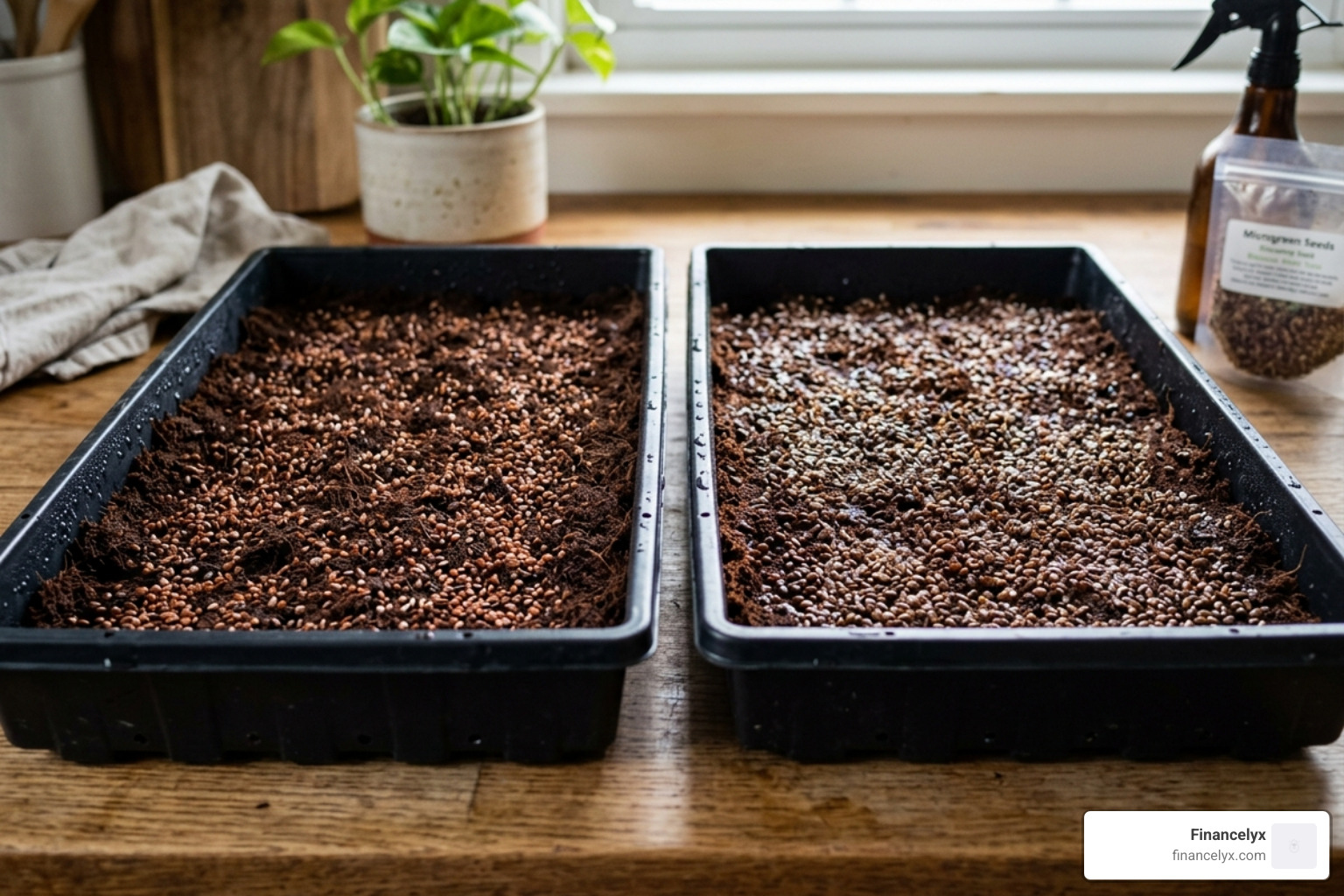
Here is the basic checklist of supplies we recommend:
- 1020 Trays: These are the industry standard (measuring roughly 10×20 inches). You will need two types: one with drainage holes for the plants and one without holes to act as a reservoir for bottom watering. For a deeper dive, see our reviews on 1020 Shallow Germination Trays For Serious Growers/ and Top Rated Trays To Grow Microgreens Like A Pro/.
- Growing Medium: Most beginners start with a high-quality organic potting soil or coconut coir (made from coconut husks). If you want a cleaner, soil-free experience, you can use hemp mats. These are compostable and much less messy for indoor use.
- LED Grow Lights: While a sunny south-facing window can work, it often leads to “leggy” (tall and weak) plants. A simple LED shop light or dedicated grow light positioned 6-12 inches above the tray will give you consistent, professional results. For help setting this up, check Indoor Herb Garden 101 From Drainage To Grow Lights/.
- Spray Bottle: Essential for misting your seeds during the first few days of germination.
- Kitchen Scale: This might seem “extra,” but weighing your seeds (e.g., 10g for broccoli) ensures you don’t over-sow, which can lead to mold issues.
- Sharp Scissors or a Knife: For a clean harvest.
For a full breakdown of the best gear, visit our Category/Tools Supplies/ section.
The step-by-step cultivation process
Now for the fun part! Once you have your supplies, the process of growing microgreens for beginners follows a predictable, rewarding rhythm.
Step 1: Seed Preparation and Soaking
For larger, hard-shelled seeds like peas and sunflowers, we recommend soaking them in a bowl of water for 8-12 hours before planting. This softens the shell and speeds up germination. Smaller seeds like broccoli, radish, and arugula do not need soaking. If you’re interested in the differences between this and sprouting, read The Tray Method How To Grow Perfect Sprouts At Home/.
Step 2: Preparing the Tray
Fill your tray (the one with holes) with about 1 to 1.5 inches of your chosen medium. Level it out gently with your hand—you want a flat surface so the seeds don’t roll into clumps. Moisten the medium until it feels like a wrung-out sponge.
Step 3: Sowing with Proper Density
Broadcast your seeds evenly across the surface. You are aiming for a “solid carpet” of seeds, but they shouldn’t be piled on top of each other. For a standard 1020 tray, use about 1 ounce of small seeds or 3-4 ounces of larger seeds like peas. Mist the seeds generously after sowing.
Step 4: The Blackout Period
This is the “secret sauce” of microgreen growing. Cover your seeded tray with another tray (flipped upside down) or a lid to block out all light. We often place a small weight (like a brick or a heavy book) on top. This forces the seedlings to push upward, strengthening their stems and helping them shed their seed hulls. Keep them in the dark for 3-5 days. For more on this stage, see the Almanac Beginner’s Guide.
Step 5: Introducing Light and Bottom Watering
Once your seedlings are about an inch tall and looking a bit pale (don’t worry, they’ll turn green quickly!), remove the cover and turn on your lights. From this point on, stop misting from the top. Instead, use the bottom-watering technique: pour water into the bottom tray (without holes) and let the roots soak it up for 10-15 minutes. This keeps the leaves dry and prevents mold. We have a masterclass on this: Mastering The Microgreen Bottom Watering Trays Technique/.
Aim for 12-16 hours of light per day. If you’re still using a spray bottle for fine adjustments, check out Mastering The Mist For Optimal Microgreen Growth/.
Troubleshooting common issues when growing microgreens for beginners
Even the best growers run into hiccups. Here is how we handle the most common problems:
- Mold Prevention: This is the #1 issue. It’s usually caused by too much moisture or poor airflow. If you see white, fuzzy webs (not to be confused with root hairs!), you may have mold. To fix this, increase airflow with a small fan and ensure you are bottom watering. Read more on Humidity Control 101 Stop The Mold And Start The Growth/ and Smart Dehumidifier Hacks To Keep Your Microgreens High And Dry/.
- Leggy Stems: If your plants are tall, thin, and falling over, they are “stretching” for light. Move your grow lights closer to the tray or increase the hours they are on. You can optimize this by Dehumidifying for Density.
- Root Hairs vs. Mold: Beginners often panic when they see tiny white fuzz at the base of the stems. These are often just root hairs! A quick test: mist them with water. Root hairs will “disappear” or flatten, while mold will remain visible and clumped.
- Damping Off: This is a soil-borne disease where stems suddenly shrivel at the base and the plant dies. Always use fresh, sterile growing medium for every tray to avoid this. For a mess-free experience, see How To Grow Microgreens Indoors Without Making A Giant Mess/.
Harvesting and storage best practices
The finish line is in sight! Most microgreens are ready when they reach 2-3 inches in height and have their first set of “true leaves” just starting to peek out between the cotyledons.
The Harvest
We recommend harvesting in the morning when the plants are most hydrated and crisp. Use clean, sharp scissors to cut the stems just above the soil line. Try to avoid getting any soil or coco coir on the greens.
Storage Tips
Do not wash your microgreens until right before you eat them! Moisture is the enemy of shelf life. To store them:
- Place a dry paper towel in an airtight container or glass jar.
- Add your dry microgreens.
- Seal and keep in the refrigerator. They should stay fresh for 5-10 days. For more tips on preserving that nutrition, see The Ultimate Guide To Cooking With Nutrient Dense Microgreens/.
Recipe Ideas
Microgreens aren’t just a garnish; they are a main ingredient!
- Smoothies: Toss a handful of mild broccoli or kale microgreens into your morning blend.
- Sandwiches: Replace boring lettuce with a thick layer of spicy radish or crunchy pea shoots.
- Omelets: Fold in fresh greens just before serving.
- Tacos: Use arugula or radish microgreens for a peppery crunch.
Get inspired with our Easy Microgreens Healthy Recipes Tiny Greens With Big Flavor/ and our specific guide on The Ultimate Guide To Growing And Cooking Pea Shoot Microgreens/.
Frequently Asked Questions about growing microgreens
Can microgreens regrow after harvesting?
For almost all varieties, the answer is no. Microgreens are a one-time harvest. Because we cut them so young, they haven’t established enough root mass or energy reserves to grow back. You should compost the remaining root mat and start fresh. The one exception is pea shoots; if you cut them above the lowest leaf node, they might give you a second, smaller harvest. Learn more about Growing Your Own Pea Shoots/.
Do I need special seeds for microgreens?
You don’t need seeds specifically labeled for microgreens—regular garden seeds work too. However, buying seeds in bulk (like 1lb bags) is much more cost-effective since you are sowing so densely. Always ensure your seeds are untreated and non-GMO. For peas specifically, see Everything You Need To Know About Pea Microgreen Seeds/.
How long do microgreens stay fresh in the fridge?
If stored correctly (dry, in an airtight container with a paper towel), most microgreens will stay fresh for 7-10 days. Heartier varieties like peas and sunflowers can last up to two weeks, while delicate greens like amaranth may only last 5 days.
Conclusion
At Financelyx, we believe that everyone should have access to the freshest, most nutrient-dense food possible. As our expert writer Elena Monroe often says, “Health starts on your countertop.” Growing microgreens for beginners is more than just a hobby; it’s a way to take control of your nutrition in a world of processed options.
Whether you are looking to save money on groceries or simply want to add a burst of flavor to your meals, starting your first tray today is a decision your future self will thank you for.
Check out our other Guides For Beginners/ and start your journey toward a healthier, more vibrant lifestyle.
