
Why Getting Your Bottom Watering Microgreens Tray Technique Right Changes Everything
A bottom watering microgreens tray setup is one of the simplest upgrades you can make to grow healthier, mold-free greens at home — even with a busy schedule.
Here’s the quick answer to how it works:
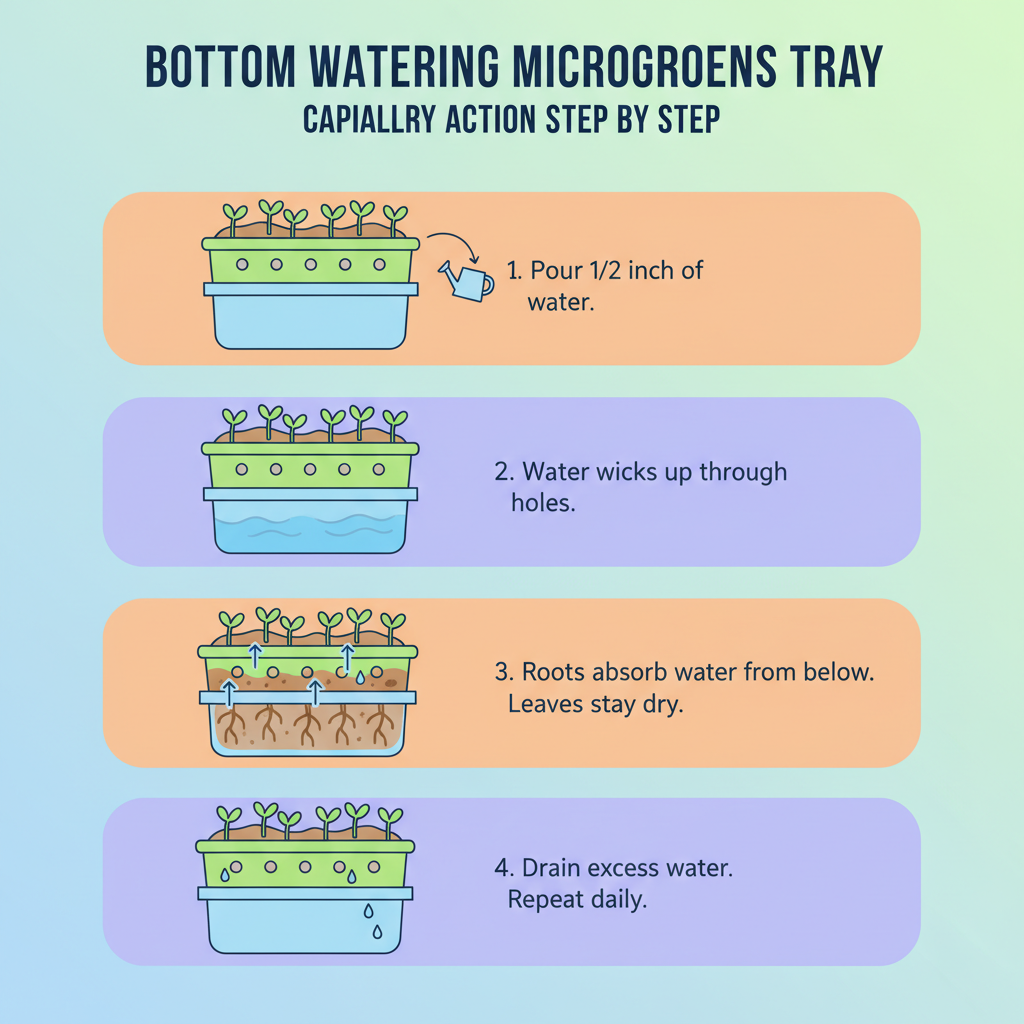
- Place a perforated tray (with holes) holding your microgreens on top of a solid tray (no holes).
- Pour water into the solid bottom tray — about 1/2 inch deep.
- Water wicks upward through the holes via capillary action, moistening roots from below.
- Wait 10–15 minutes, then remove the growing tray and drain any excess water.
- Repeat daily (or every other day), adjusting based on tray weight and plant size.
This keeps leaves and stems completely dry — which is the single biggest factor in preventing mold on dense microgreen crops.
Most new growers start by watering from the top. It feels natural. But microgreens are densely seeded, and wet foliage in a warm, humid space is a recipe for mold and damping off. Switching to bottom watering is often the turning point between frustrating, patchy crops and consistently healthy harvests.
The good news? You don’t need fancy equipment to get started. A simple two-tray system — one with holes, one without — is all it takes.
Why Use a Bottom Watering Microgreens Tray?
At Financelyx, we believe that the foundation of a healthy lifestyle starts with nutrient-dense food. When we grow our own microgreens, we want them to be as vibrant and clean as possible. Using a bottom watering microgreens tray is the gold standard for achieving this.
The primary mechanism at play here is capillary action. Think of your growing medium (like coco coir or soil) as a sponge. When the bottom of that sponge touches water, the liquid climbs upward through the microscopic spaces between soil particles. This ensures the root zone stays hydrated while the “canopy”—the delicate leaves and stems—remains bone dry.
Foliage Protection and Humidity Control
When you water from the top, moisture gets trapped between the tightly packed stems. This creates a high-humidity microclimate that is a playground for fungal spores. By keeping the leaves dry, we drastically reduce the risk of mold and damping off. Furthermore, keeping the foliage dry reduces evapotranspiration stress on the plants, which can actually improve their shelf life after harvest.
Water Conservation and Soil Integrity
Bottom watering is incredibly efficient. Instead of water running off the surface or splashing soil onto your clean greens, the roots take exactly what they need. This protects the soil integrity, preventing the “crusting” or compaction that often happens with overhead watering. If you are choosing the best microgreen trays for your home garden, ensuring you have a solid bottom reservoir is the first step toward a professional-grade setup.
Essential Equipment for Your Bottom Watering System
To master this technique, you need the right hardware. While you can DIY many aspects of seed starting, microgreens benefit from specific tray dimensions that allow for even wicking.
The Tray Comparison
The industry standard is the “1020” tray (approximately 10 inches by 20 inches). However, home growers often prefer smaller footprints.
| Tray Type | Dimensions (approx.) | Best For | Water Volume (When Dry) |
|---|---|---|---|
| 1020 Tray | 10″ x 20″ | Commercial/Large family use | 1.5 – 2 Cups |
| 1010 Tray | 10″ x 10″ | Hobbyist/Weekly rotation | 1 Cup |
| Home Tray | 7.5″ x 5″ | Kitchen counters/Singles | 1/2 Cup |
Necessary Supplies
- Perforated Trays: These have drainage holes. This is where your soil and seeds live.
- Solid Trays: These have no holes. They act as the reservoir for your bottom watering microgreens tray system.
- BPA-Free Plastic: We recommend heavy-duty #5 polypropylene. Some professional trays are even guaranteed against breakage for five years!
- Growing Media: Fine-grained soil or coco coir works best for capillary action.
- pH Testers and Measuring Cups: Precision helps prevent stunting.
When finding easy-to-clean microgreen trays for your home garden, look for “shallow” trays (about 1.25 inches deep). These allow you to cut your greens closer to the root, maximizing your harvest.
Setting Up Your Bottom Watering Microgreens Tray
The setup is a “nesting” technique. You place the perforated tray inside the solid tray. It is vital that the trays fit snugly but are easy to separate. If the fit is too tight, you might struggle to lift the top tray to check water levels.
For those looking into steps to set up a diy microgreens tray, ensure your reservoir is deep enough to hold at least half an inch of water without overflowing. If you are choosing the right trays for vertical microgreen growth, ensure your shelving is perfectly level; otherwise, water will pool at one end, leaving half your crop thirsty and the other half drowning.
Step-by-Step Guide to Bottom Watering Microgreens
Watering isn’t a “one size fits all” task. The needs of your plants change as they move through different growth phases.
Phase 1: Pre-Sowing and Germination
Before you even put seeds in the tray, you should moisten your medium. We recommend wetting only the upper 1/3 of the soil profile to a “wrung-out sponge” consistency. This provides enough moisture for the seeds without creating a swamp at the bottom of the tray that could rot the seeds before they sprout.
During the blackout phase (when seeds are covered to encourage stretching), you generally don’t need to bottom water. A light misting with a spray bottle is usually enough to keep the surface humid. However, once the seeds have sprouted and you see those first tiny roots poking through the bottom holes, it’s time for the technique behind watering microgreens from the bottom.
Phase 2: Post-Blackout (First Light)
When you move your trays under grow lights, their thirst increases dramatically. This is the critical moment to start your watering regimen for thriving microgreens.
- Lift the corner of the perforated tray.
- Pour the measured water (see our volume guide below) into the solid bottom tray.
- Lower the perforated tray back down. You might see it “float” for a second before the soil starts absorbing the weight.
- Wait 15 minutes. If there is still standing water after this time, dump it out. Roots need to breathe!
How to Bottom Water Microgreens Tray During Active Growth
As the canopy grows denser, the roots will begin to carpet the bottom of the tray. This is a good sign! It means the plants can drink directly from the reservoir. At this stage, you should follow the watering regimen for thriving microgreens 2 by checking your trays daily.
Focus on the “Canopy Dryness.” If the leaves look slightly limp or the tray feels light, it’s time to water. Large, “thirsty” varieties like peas and sunflowers might need water twice a day near harvest time.
Determining Water Volume for Your Bottom Watering Microgreens Tray
The “Tray-Weight Method” is the most reliable way to know if your plants are thirsty. Pick up a freshly watered tray to feel its “heavy” weight. Check it again the next day. When it feels significantly lighter—almost like it’s filled with air—it’s time for a drink.
According to the watering regimen for thriving microgreens 3, standard volumes for dry trays are:
- 1020 Tray: 2 cups of water.
- 1010 Tray: 1 cup of water.
- Home Tray: 1/2 to 9/16 cups of water.
That environmental factors like low humidity or high heat will make your bottom watering microgreens tray dry out faster. Also, peat-based mixes tend to hold more water than coco coir, so adjust accordingly.
Troubleshooting and Best Practices
Even with a great system, things can go sideways. Here’s how to stay on track.
Overwatering vs. Underwatering
- Overwatering Signs: Yellowing stems, a musty or “swampy” smell, and the presence of gnats. If your roots look brown and slimy instead of white and fuzzy, they are rotting.
- Underwatering Signs: Dramatic wilting. Microgreens can often be revived from a wilt if caught early, but it will reduce their final yield and shelf life.
pH and Temperature
Microgreens prefer slightly acidic water (pH 5.5 to 6.5). If your tap water is very alkaline, a few drops of lemon juice can help balance it. Always use room-temperature water. Cold water can shock the delicate root systems and stunt growth.
Cleaning Protocols
Hygiene is non-negotiable. Between every grow, scrub your trays with a mild bleach solution or food-grade hydrogen peroxide. If you’re deciding between soil vs hydroponic trays for microgreens a comparison, both require strict cleaning to prevent pathogen buildup. Check out soil vs hydroponic trays for microgreens a comparison 2 for more on how different media affect tray maintenance.
Frequently Asked Questions about Bottom Watering
Can I use tap water for bottom watering?
Yes, most growers use tap water successfully. However, if your water is heavily chlorinated, let it sit in an open jug overnight to allow the chlorine to dissipate. Avoid using softened water, as the salt content can be toxic to sensitive microgreens like amaranth or basil.
How long should the tray sit in water?
Usually, 10 to 20 minutes is the “sweet spot.” This is enough time for capillary action to pull moisture to the surface. Never leave your trays sitting in standing water for hours; this leads to “wet feet” and root suffocation, which invites root rot.
Does bottom watering prevent mold?
It is the most effective preventative measure! By keeping the surface of the soil and the plant canopy dry, you remove the moisture that mold spores need to germinate. Combine this with good airflow (using a small fan) and proper seeding density for a 99% success rate.
Conclusion
Mastering the bottom watering microgreens tray technique is a game-changer for anyone looking to incorporate more nutrient-dense, flavorful greens into their diet. At Financelyx, we’re passionate about helping you turn your kitchen into a powerhouse of health. Whether you’re following Elena Monroe’s advice on the latest superfoods or just trying to grow a better salad garnish, the way you water makes all the difference.
By switching to bottom watering, you save time, reduce waste, and—most importantly—produce a cleaner, safer crop. Ready to upgrade your garden? For more information on the best gear, check out our guide on more info about tools and supplies. Happy growing!
