
Why Pea Seeds for Microgreens Belong in Every Home Kitchen
The best pea seeds for microgreens are non-GMO, high-germination varieties like Green Pea, Speckled Pea, Sugar Prince, and Dun Pea — all ready to harvest in as little as 8–14 days.
Top pea seed varieties for microgreens at a glance:
| Variety | Flavor | Days to Harvest | Best For |
|---|---|---|---|
| Green Pea | Sweet, crisp | 8–14 days | Beginners, shoots |
| Speckled Pea | Fresh, snap pea-like | 10–14 days | Texture, garnishes |
| Sugar Prince | Classic sweet pea | 8–14 days | Year-round growing |
| Dun Pea | Earthy, hearty | 8–14 days | Cover crop & microgreens |
| Dwarf Grey | Sweet, tender | 8–10 days | Fast harvests |
Pea microgreens are one of the easiest and most rewarding crops you can grow at home. They take up almost no space, need minimal equipment, and deliver a surprisingly large harvest — roughly 1.5 lbs of fresh greens per 10×20″ tray in under two weeks.
They’re also loaded with nutrients your body actually needs: vitamins A, C, and K, plant-based protein, fiber, and chlorophyll. All from a windowsill.
Whether you’re short on time, tired of bland salads, or just looking for a simple way to eat better every day — growing pea microgreens from seed is one of the most practical places to start.
Introduction
When we talk about Pisum sativum, we are diving into one of the most beloved microgreens on the planet. Unlike mature peas that require months of garden space and trellis systems, pea seeds for microgreens are harvested at the cotyledon stage—the point where the first set of leaves has fully opened and turned a vibrant green.
At this stage, the plant is a nutritional powerhouse. The flavor is unmistakably that of a fresh garden pea: sweet, bright, and refreshing. The texture is where they truly shine, offering a succulent crunch that holds up beautifully in salads or as a garnish. While “pea shoots” are often grown a bit longer to develop those whimsical, curly tendrils, the microgreen stage (usually 3–5 inches tall) is the sweet spot for maximum tenderness.
Best Pea Seeds for Microgreens Varieties
Choosing the right variety is the first step toward a high-yielding indoor garden. While almost any pea seed can technically be grown as a microgreen, certain cultivars are prized for their growth habit, leaf-to-stem ratio, and flavor profile.

- Organic Dun Pea Seeds – Microgreens | Non-GMO Micro Greens Seeds: Also known as Dundale peas, these are perhaps the most robust option. They are a cool-weather favorite, known for being hearty and sustaining. They produce a beautiful, classic green leaf and are often used as a cover crop because of their vigorous root systems.
- Pea Seeds – Speckled Pea Microgreens: If you want that “snap pea” flavor, this is your go-to. Speckled peas are in high demand because they grow quickly and produce a very crisp, sweet shoot. They are excellent for those who want a visually striking microgreen with slightly more texture.
- Sugar Prince: This variety is a staff favorite for year-round indoor growing. It maintains a consistent sweetness even when grown under artificial lights. It’s particularly well-suited for standard 1020 trays, with 190 grams of seed being the “magic number” for a dense, lush canopy.
- Dwarf Grey Sugar: Coveted for its thick, fast-growing shoots, the Dwarf Grey is one of the quickest to reach harvest height. It’s a fantastic variety to grow with kids because the visible growth from day to day is quite dramatic.
When sourcing, we always recommend looking for organic seed sourcing to ensure your greens are free from synthetic treatments. High-quality pea seeds for microgreens should be non-GMO and heirloom whenever possible. Heirloom seeds ensure that the plants grow “true to type,” which is a mark of genetic stability and quality.
Top Varieties for Tendrils: If you love those curly, crunchy tendrils, look for these varieties:
- Speckled Pea (High tendril production)
- Green Pea (Variable tendrils, great texture)
- Afila-type peas (Specifically bred for massive tendril clusters)
Step-by-Step Growing Guide and Yield Expectations
Growing peas is a bit different than growing tiny seeds like broccoli or arugula. Because the seeds are large and starchy, they require a bit of “prep work” to wake them up.
The Pre-Soak Secret
Before you even touch a tray, you must soak your pea seeds for microgreens. Because the seed coat is thick, soaking for 6–24 hours (overnight is usually perfect) allows the seed to hydrate fully. This jumpstarts the germination process and ensures a much more uniform “pop” across your tray. You’ll notice the seeds nearly double in size after their bath!
Setting Up Your Tray
For those looking into indoor microgreen setups, the 1020 tray (10 inches by 20 inches) is the industry standard. Following a step-by-step-microgreen-guide will tell you that peas love a solid foundation.
| Feature | Soil Growing | Hydroponic Growing |
|---|---|---|
| Yield | High (1.5 – 2 lbs per tray) | Moderate (1 – 1.2 lbs per tray) |
| Ease of Use | Very Easy | Moderate (requires monitoring) |
| Root Health | Excellent (peas love to dig deep) | Good (requires nutrient solution) |
| Mold Risk | Low (with good drainage) | Higher (standing water issues) |
Seeding Density and Yield
To get that thick, carpet-like growth, you need to seed densely.
- Seed count: There are approximately 140–180 seeds per ounce depending on the variety.
- Tray density: We recommend using about 0.8 lbs (approx. 2 cups) of dry seed for a single 1020 tray.
- Expected Yield: After about 12 days, a well-managed tray should yield roughly 1.5 lbs of fresh pea microgreens.
Optimizing Your Pea Seeds for Microgreens Setup
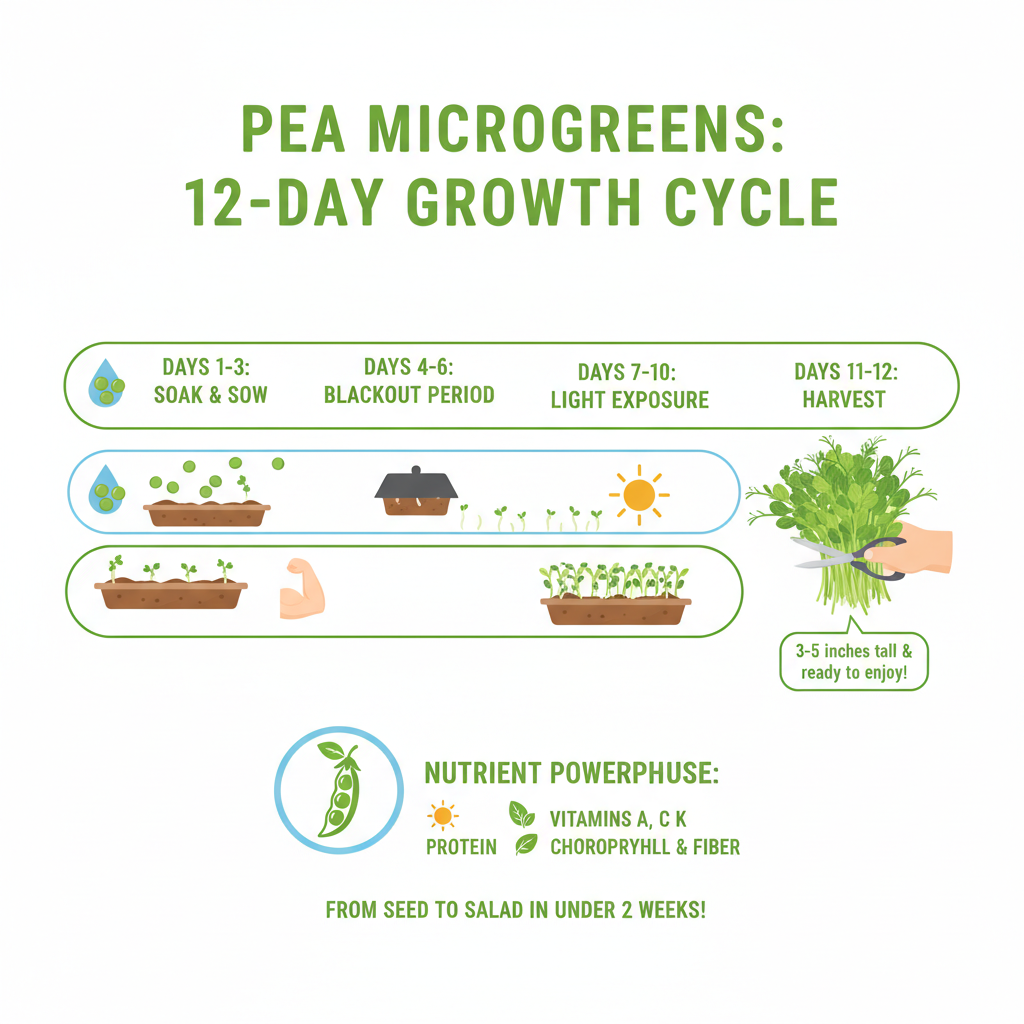
Once your seeds are spread evenly across your moist soil (about 1–2 inches deep), it’s time for the “Blackout Period.”
- The Blackout (3–5 Days): Cover your seeds with an inverted tray or a lid. This mimics being underground and forces the stems to stretch upward in search of light. We often place a small weight (like a brick or a heavy book) on top of the cover tray for the first 2–3 days. This encourages the roots to dive deep and results in stronger, thicker stems.
- Lighting: After the blackout, move your tray to a sunny windowsill or under grow lights for indoor farming. Peas aren’t too picky; they need about 12–16 hours of light to “green up” and start photosynthesizing.
- Bottom Watering: This is the golden rule for preventing mold. Instead of splashing water on the leaves, pour water into the bottom tray and let the soil soak it up. This keeps the canopy dry and the roots happy.
- Air Circulation: Peas grow thick. If the air is stagnant, you’re inviting mold. A small fan in your growing area can make a world of difference. When choosing the best microgreen trays, ensure yours have excellent drainage holes to prevent “wet feet.”
Nutrition, Troubleshooting, and Culinary Uses
Why go through the effort of growing these? Because the nutritional profile is staggering. When you use Organic Green Pea Microgreens Seeds, you are growing a source of:
- Vitamin A & C: Essential for immune function and skin health.
- Vitamin K: Vital for bone health and blood clotting.
- Plant Protein: Peas are one of the highest protein microgreens available.
- Chlorophyll: Known for its antioxidant properties.
Troubleshooting Common Issues
Even the pros run into hiccups. Here is how we handle them:
- Mold: If you see white fuzz at the base, it might be root hairs (which are good!) or mold (which is bad). Mold smells sour and looks like a spiderweb. Increase air circulation and switch to bottom watering immediately.
- Leggy Growth: If your peas are pale and falling over, they are “searching” for light. Move them closer to your light source or increase the “on” time for your grow lights.
- Yellowing Leaves: This usually means they have been in the tray too long and have exhausted the nutrients in the seed. Harvest immediately!
Harvesting and Storage
Harvesting is simple: take a pair of sharp kitchen scissors and snip the greens about half an inch above the soil line. The best time to harvest is when they are 3–5 inches tall, usually between day 8 and 14.
For storage, ensure the greens are dry. Place them in an airtight container or a reusable silicone bag with a paper towel to absorb excess moisture. They will stay crisp in the refrigerator for up to a week. For long-term success, follow these microgreen seed storage tips to keep your remaining dry seeds fresh for your next planting.
Culinary Inspiration:
- Raw: Toss them into any salad for a sweet crunch.
- Sandwiches: Use them instead of lettuce in wraps or on avocado toast.
- Stir-fries: Throw them in at the very last second of cooking so they stay crunchy.
- Smoothies: A handful adds protein and vitamins without overpowering the fruit flavor.
Frequently Asked Questions
How long do pea microgreens take to grow?
On average, pea microgreens are ready for harvest in 8–12 days. If you prefer “pea shoots” (which are taller and have more tendrils), you can let them grow for up to 14–21 days. For the best flavor and most tender stems, we recommend harvesting when they reach a height of 3–5 inches.
Do I need to soak pea seeds before planting?
Yes! Soaking is highly recommended for pea seeds for microgreens. Because the seeds are large and have a tough outer hull, a 6–24 hour soak in cool water significantly improves the germination rate. It hydrates the embryo and signals the plant that it’s time to grow, leading to a much more uniform tray.
Can I grow pea microgreens without soil?
Absolutely. While peas love soil because of their aggressive root systems, they can be grown on hydroponic pads, hemp mats, or even thick paper towels. However, because peas are “heavy feeders” compared to smaller greens, you may need to add a light organic nutrient solution to your water if you aren’t using soil. You can read more about the soil vs hydroponic tray comparison to see which fits your lifestyle better.
Conclusion
At Financelyx, we believe that healthy eating shouldn’t be complicated or expensive. Growing your own pea seeds for microgreens is a perfect example of how a small habit can lead to a big nutritional payoff. Whether you’re following a recipe from Elena Monroe or just looking for a nutrient-dense snack to grab from the windowsill, pea microgreens offer a versatility that few other greens can match.
If you are just starting out, don’t be intimidated. Peas are forgiving, fast, and fun to watch grow. For more detailed advice on setting up your first “farm,” check out our beginner-guide-to-microgreen-farming.
Final Tips for Buying Pea Seeds for Microgreens
- Buy in Bulk: Since you use about 0.8 lbs per tray, buying 5 lb or 25 lb bags will save you a significant amount of money in the long run.
- Check Germination Rates: Only buy seeds that have been recently tested for high germination (90% or higher).
- Microbial Testing: Since microgreens are grown in humid conditions, ensure your seed supplier conducts microbial testing to ensure the seeds are free from pathogens like E. coli or Salmonella.
- Year-Round Growth: These are an indoor crop! You can have fresh, spring-flavored peas in the middle of January.
Ready to start? Explore more about starting your microgreen journey and turn your kitchen into a high-yield superfood factory today!
