
Why Pea Shoot Microgreens Belong in Your Kitchen
Pea shoot microgreens are young pea plants harvested just 10-14 days after planting — and they pack a serious nutritional punch.
Here’s the quick version of everything you need to know:
- What they are: Tender young shoots from pea seeds (Pisum sativum), harvested at the 2-4 inch stage before the plant matures
- Why eat them: Up to 40x more nutrient-dense than full-grown peas, with 35% of your daily vitamin C and 66% of your daily vitamin K in just one cup
- Taste: Sweet, fresh, and crunchy — like the best sugar snap pea you’ve ever eaten
- How to grow: Soak seeds 8-12 hours, plant in soil or coir, keep in darkness for 3-4 days, then move to light and harvest in under two weeks
- How to use them: Raw in salads, layered in sandwiches, tossed into stir-fries, blended in smoothies, or eaten straight from the tray
They’re one of the easiest microgreens you can grow at home. Large seeds mean high germination rates. A standard 10×20 tray yields around 10-12 oz of greens. And the cost per tray can be as low as $2.10 in seeds and soil.
Whether you want a fast nutrition boost or a beginner-friendly growing project, pea shoots deliver on both.
Nutritional Benefits and Comparison to Mature Peas
When we talk about “superfoods,” pea shoot microgreens truly earn the title. Research indicates that microgreens can contain between 30 to 40 times more vitamins than their mature counterparts. While a bowl of full-grown peas is certainly healthy, these young shoots are concentrated powerhouses of vitality.
Per 100-gram serving, pea microgreens offer approximately 50 mg of Vitamin C and 45 mg of Vitamin E. They are also rich in Vitamin A, lutein, and folate. If you are looking to boost your heart health or support your immune system, these tiny greens are a non-negotiable addition to your diet.
| Nutrient | Pea Sprouts | Pea Microgreens | Mature Peas |
|---|---|---|---|
| Vitamin C | Moderate | Very High (50mg/100g) | Standard |
| Vitamin K | Low | Exceptional (66% DV/cup) | Moderate |
| Vitamin A | Trace | High (15% DV/cup) | Standard |
| Protein | High | High (Plant-based source) | High |
| Fiber | Low | High | High |
| Texture | Crunchy/Watery | Tender/Crisp | Soft/Starchy |
One of the most impressive stats we’ve found is that just one cup of these greens provides 66% of your daily value of Vitamin K, which is essential for bone health and proper blood clotting. Furthermore, they are an excellent source of plant-based protein, which is rare for such a young green. To better understand how these plants develop such high nutrient levels, you can read about decoding the growth cycle of microgreens.
Because they are harvested so early, they retain all the enzymes and antioxidants intended to fuel the plant’s entire life cycle. This makes them a perfect ingredient for those just starting their wellness journey. For some inspiration on how to eat them, check out our first steps in microgreen recipes for beginners.
How to Grow pea shoot microgreens: A Step-by-Step Guide
Growing pea shoot microgreens is widely considered the “entry-level” project for indoor gardening. Because the seeds are large and hardy, they are very forgiving. We have broken the process down into a simple, repeatable system.
- Soaking: Unlike smaller seeds (like broccoli or arugula), pea seeds have a thick, tough outer coat. You must soak them in cool water for 8 to 12 hours (some growers even go up to 24 hours). They will swell significantly, sometimes doubling in size, as they “wake up.”
- Planting: Prepare your tray with about 1-2 inches of moistened soil or coco coir. Spread the soaked seeds densely across the surface. You want them touching but not overlapping in thick piles. For more details on the setup, see our step-by-step microgreen guide.
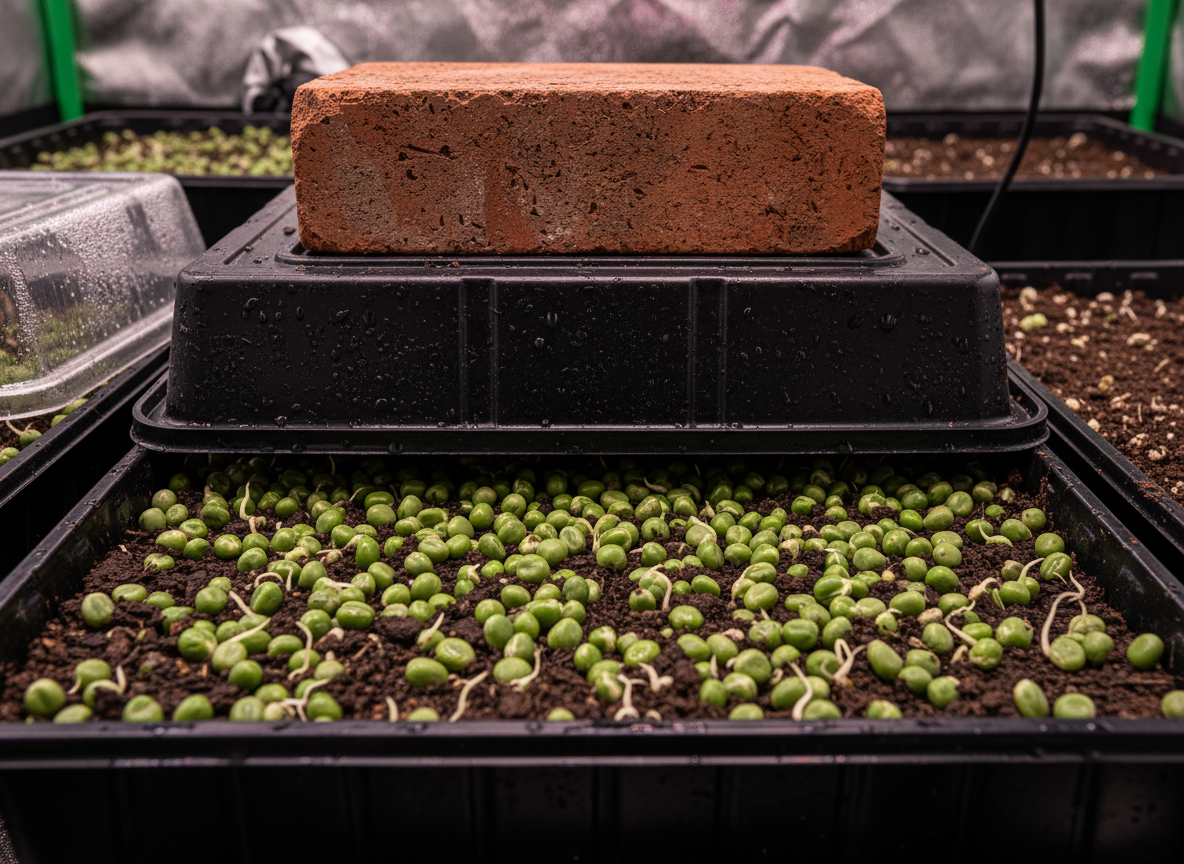
- The Blackout and Weight Phase: This is the “secret sauce” of professional growers. Place an empty tray on top of your seeds and add a 5-15 lb weight (like a brick or large book). This forces the roots deep into the soil and creates stronger, sturdier stems. Keep them in total darkness for 3-4 days.
- Light Exposure: Once the shoots are about 1-2 inches tall and pushing up the weighted tray, remove the cover and introduce light.
- Bottom Watering: To prevent mold and keep the leaves dry, always water from the bottom. Pour water into the lower tray and let the soil wick it up. This is a critical part of the watering regimen for thriving microgreens.
- Harvesting: Between days 10 and 14, when the shoots are 4-6 inches tall and have their first set of true leaves and curly tendrils, they are ready to snip!
Selecting the Best Seeds for pea shoot microgreens
Not all peas are created equal when it comes to microgreens. While you can use leftover garden seeds, specific varieties are bred for the best “shoot” experience:
- Speckled Peas: These are the industry standard. They produce beautiful, tall shoots with plenty of those sought-after curly tendrils.
- Dun Peas: Known for a very sweet flavor and a slightly more “leafy” growth habit. They tend to grow quickly and are very reliable.
- Yellow Peas: Often used for a more affordable, high-yield crop.
- Jumbo Variety: Preferred by commercial growers because they produce thicker stems and larger leaves, leading to a higher harvest weight.
High germination rates are key to avoiding moldy, unsprouted seeds in your tray. Always look for organic, non-GMO seeds specifically labeled for sprouting or microgreens. You can find reliable sources in our guide on where to buy organic microgreen seeds online.
Essential Supplies for Your Indoor pea shoot microgreens Setup
You don’t need a greenhouse to be successful, but a few specific tools will make your life much easier.
- Trays: The standard 10×20 tray is the most common. However, if you are looking for higher efficiency, “Paperpot” trays (12×24) offer 30% more space and can yield up to 600g of greens per harvest. You can learn more about choosing the best microgreen trays for your home garden to see what fits your space.
- Lighting: While a sunny windowsill can work, it often leads to “leggy” or pale plants. High-quality LED grow lights kept 6-12 inches above the plants for 12-16 hours a day will yield a much more vibrant, nutrient-dense crop. Check out our tips on optimal lighting conditions for indoor microgreens.
- Growing Medium: You can use a fine seed-starting soil (80% peat, 20% perlite) or coconut coir. Soil generally provides a slightly higher yield and better flavor, but coir is cleaner for indoor use.
- The Setup: Even a small apartment can house a vertical rack with lights. If you’re just starting, our indoor microgreens setup for beginners will show you how to build a budget-friendly station.
Troubleshooting Common Growth Issues
Even though pea shoot microgreens are hardy, you might run into a few hiccups.
Mold vs. Root Hairs: This is the most common panic for new growers. If you see white, fuzzy structures at the base of the stem during the first few days, look closely. If they are uniform and attached to the root, they are “root hairs” — this is a good thing! If the fuzz is spider-web-like and spreading across the tops of the seeds, it’s mold.
Preventing Mold:
- Airflow: Use a small fan to keep air moving.
- Hydrogen Peroxide: If you live in a humid climate, soak your seeds in a 3% food-grade hydrogen peroxide solution for 5 minutes before planting.
- Bottom Watering: Keep the top of the soil and the leaves dry.
- Cinnamon: A light dusting of cinnamon on the soil can act as a natural antifungal.
For a deeper dive into keeping your crop clean, see our effective strategies for preventing formation of mold on microgreens.
Leggy Growth: If your shoots are very tall, thin, and pale, they are “stretching” for light. Move your grow lights closer to the tray or increase the duration of light exposure.
Culinary Uses and Storage Tips
Once you’ve harvested your pea shoot microgreens, the fun really begins. They have a distinct “snap pea” flavor that is both sweet and refreshing.
- Raw Applications: They are best eaten raw to preserve their Vitamin C content. Pile them onto sandwiches, tuck them into wraps, or use them as a base for a “micro-salad” with avocado and lemon dressing.
- Warm Dishes: Unlike delicate lettuce, pea shoots are hearty enough to be tossed into a hot stir-fry or pasta dish during the last 30 seconds of cooking. They wilt slightly, similar to spinach, but retain a pleasant crunch.
- Smoothies: If you have kids who are picky about greens, pea shoots are a lifesaver. They are much sweeter than kale or spinach and blend easily into fruit smoothies without turning them bitter.
Storage is Key: To maximize shelf life (which is usually about 7-10 days), do not wash your microgreens until you are ready to eat them. Moisture is the enemy of shelf life!
- Harvest using sharp microgreen harvesting scissors.
- Place the dry shoots in a glass container or a plastic clamshell.
- Add a folded paper towel to the container to absorb any excess humidity.
- Store in the refrigerator at 35-38°F.
Frequently Asked Questions about Pea Shoots
Can pea shoot microgreens regrow after the first harvest?
Yes! Unlike many other microgreens (like radish or sunflower), pea shoots have the ability to regrow. If you harvest by cutting the stem above the bottom set of small leaves (about an inch above the soil), the plant will often send out a second “flush” of growth. This second harvest will be smaller and slightly less tender, but it’s a great way to double your yield from a single tray. Just keep bottom-watering the tray after the first cut.
How long does it take to grow pea shoots from seed to harvest?
The total cycle is usually 10 to 14 days.
- Soaking: 8-12 hours.
- Blackout/Germination: 3-4 days.
- Growth under light: 6-10 days. If you prefer “pea sprouts” (where you eat the root and the seed), the time is much shorter — only 2-4 days. However, for the full “shoot” experience with leaves and tendrils, wait the full two weeks.
What is the difference between pea shoots and pea sprouts?
The difference lies in how they are grown and what part you eat:
- Pea Sprouts: Grown in water (usually in a jar), no soil, and no light. You eat the entire thing: the seed, the tiny root, and the small sprout.
- Pea Shoot Microgreens: Grown in a medium (soil or coir), exposed to light to develop chlorophyll, and harvested by cutting the stem. You do not eat the roots or the original seed. Shoots are generally considered more flavorful and have a better texture than sprouts.
Conclusion
At Financelyx, we believe that healthy eating shouldn’t be complicated or expensive. Pea shoot microgreens are the perfect example of how a small investment in time and space can lead to a massive upgrade in your daily nutrition. As our expert writer Elena Monroe often says, “The freshest food is the food you grow three feet from your kitchen sink.”
By following this guide, you can produce a continuous supply of sweet, crunchy, and nutrient-dense snacks for your family. Whether you’re adding them to a gourmet dinner or snacking on them straight from the tray, these greens are a game-changer for any health-conscious home.
Ready to start your next indoor garden project? Explore more of our guides for beginners to discover the wonderful world of home-grown nutrition. Happy growing!
