
High Five for These 5×5 Microgreen Trays
Small but Mighty: What You Need to Know About 5×5 Microgreen Trays
5×5 microgreen trays are compact, shallow growing inserts designed for small-batch microgreen production at home or in a commercial setup. Here’s a quick look at the top options available in 2026:
| Brand | Material | Pack Size | Price Range | Key Feature |
|---|---|---|---|---|
| Bootstrap Farmer | BPA-free PP plastic | 16, 40, 80, 240 | ~$34.95/40pk | Multi-color, USA-made |
| Hoss Tools | Food-safe #5 PP | 5, 25, 100 | ~$6.99/unit | Shallow, drainage holes |
| Sow True Seed | Food-grade PP | 5-pack | Varies | Colorful, dishwasher safe |
| The Mighty Microgreen | Recycled food-grade PP | 5-pack | ~$7.50/5pk | Dishwasher safe, BPA-free |
| Park Seed | BPA-free #5 PP | 40-pack | ~$34.95 | Extra-strength, 1.25″ deep |
Growing your own microgreens is one of the easiest ways to add fresh, nutrient-dense food to your meals — even with almost no space or time. And 5×5 trays make it even simpler.
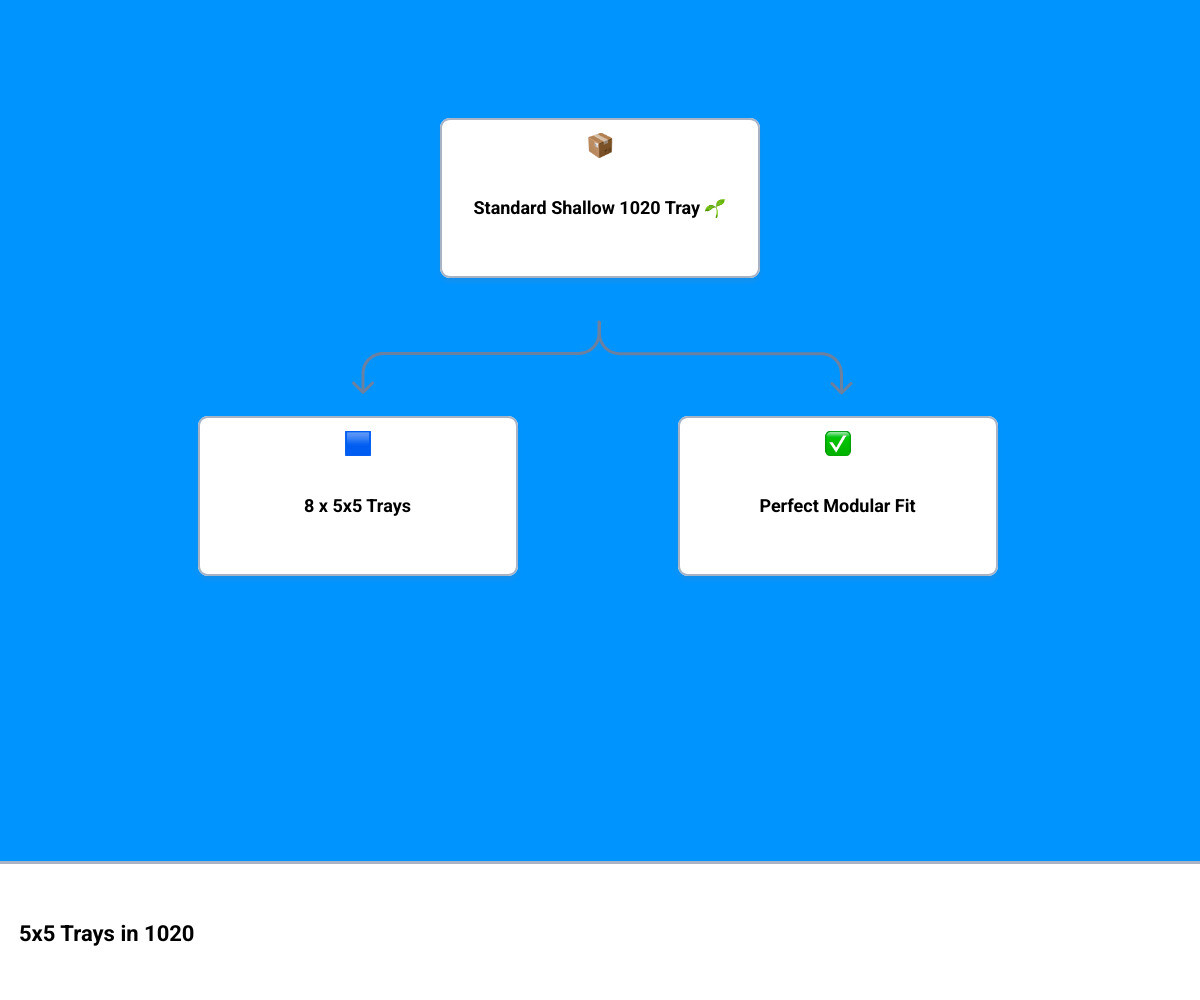
Rather than committing a full 10×20 tray to a single crop you’ve never tried before, a 5×5 tray lets you grow a small test batch first. Eight of these compact inserts fit perfectly inside one standard shallow 1020 tray — so you can grow eight different varieties at once in the same footprint you’d normally use for one.
They’re also a natural fit for busy people. Small trays mean faster harvests, less waste, and a setup that fits on a countertop or windowsill.
Know your 5×5 microgreen trays terms:
Why Choose 5×5 Microgreen Trays for Your Indoor Garden?
If you have ever felt the “commitment phobia” of planting a massive 10×20 tray of spicy radish only to realize your family can’t eat it all before it wilts, you aren’t alone. We have all been there! That is exactly where the 5×5 microgreen trays shine. These pint-sized powerhouses offer a level of flexibility that full-sized trays simply can’t match.
Variety Trials and Small-Batch Flexibility
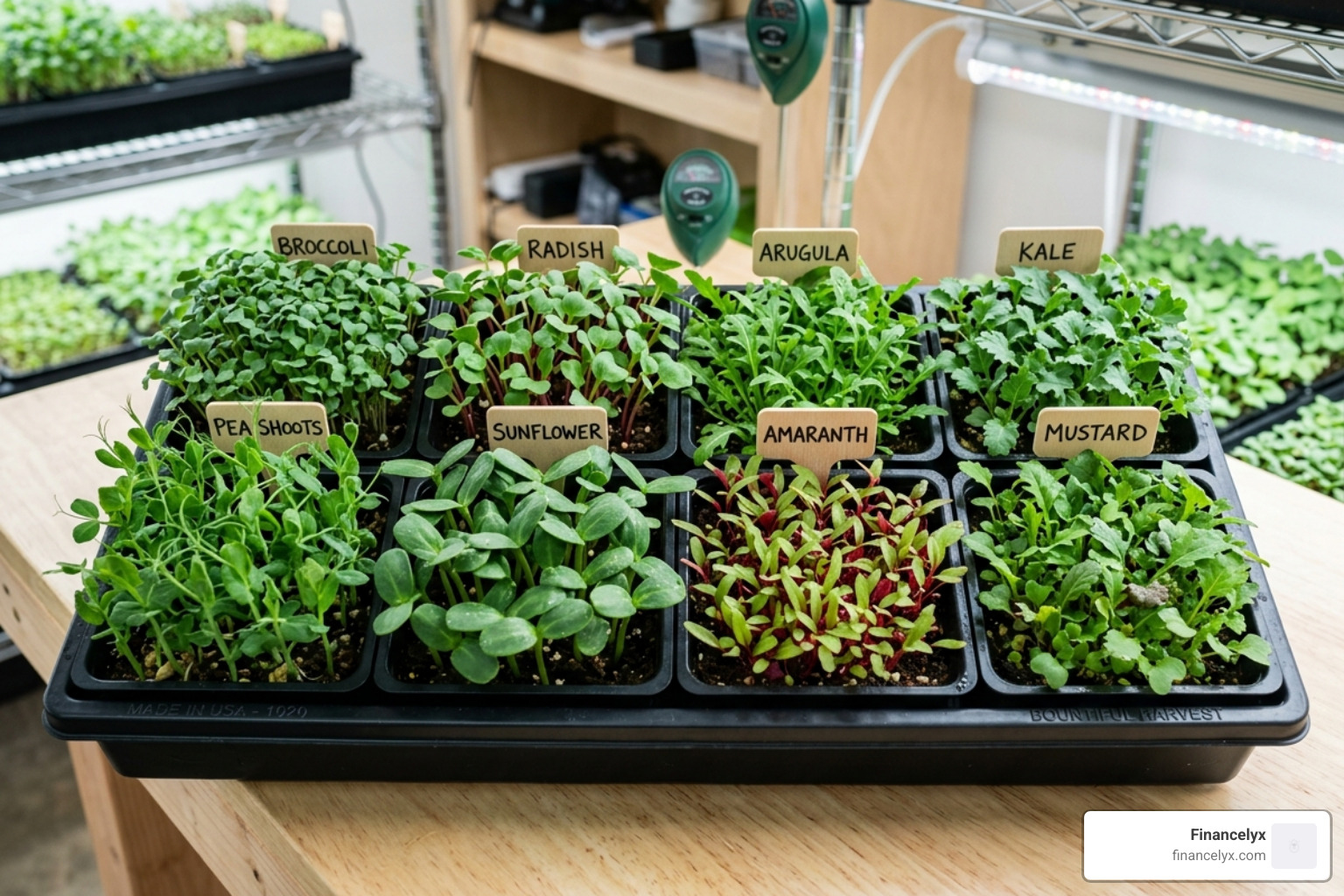
The biggest advantage of these trays is the ability to run “variety trials.” In indoor gardening, every seed variety behaves differently. Some need more water, some need more light, and some—let’s be honest—just don’t taste as good as we hoped. By using 5×5 inserts, you can test a new variety of amaranth or kohlrabi without wasting a huge amount of soil or seed.
This modularity is a game-changer for home growers who want a diverse salad. Instead of one giant tray of pea shoots, you can have two trays of peas, two of sunflowers, two of broccoli, and two of spicy mustard—all growing in the same 1020 tray footprint. For those looking to scale their hobby, using top rated trays to grow microgreens like a pro often begins with these modular experiments.
Color-Coding and Organization
Many high-quality 5×5 microgreen trays, such as the 5×5 Microgreen Grow Tray – Sow True Seed, come in a vibrant array of colors. While this looks great on a kitchen counter, it’s also highly practical. We love using color-coding to keep track of planting dates or species. For example, red trays could always represent your “spicy” crops, while green trays hold your mild greens. This prevents the common “is this broccoli or kale?” mystery that happens during the early sprout stages.
Seedling Propagation
These trays aren’t just for microgreens. Because they are heavy-duty and reusable, they work excellently for starting flower seeds or herbs before transplanting them into the garden. If you find a variety that performs well, you can easily “chunk” the soil and root mass out of the tray for transplanting into larger pots or garden beds.
Understanding the 5×5 Microgreen Trays Dimensions
When we talk about “5×5,” we are referring to the general footprint, but the exact specifications matter for compatibility. Most professional-grade 5×5 microgreen trays have an outer dimension of approximately 5.5″ x 5.5″ at the top, tapering down to about 4.25″ at the base.
The standard depth is 1.3 inches. This “shallow” design is intentional—it’s deep enough for a healthy root mat but shallow enough to save you money on growing medium. These trays are typically made from BPA-free, FDA-grade #5 polypropylene plastic. This material is “built like a tank,” often measuring between 1.8mm and 2.0mm in thickness. Unlike the flimsy, single-use inserts you might find at a big-box garden center, these are designed to last for years. Brands like 5X5 Shallow Microgreen Trays – Pepper Joe’s emphasize this durability, ensuring the plastic won’t chip or crack even after repeated uses.
Maximizing Yield with 5×5 Microgreen Trays
You might wonder if a smaller tray means a smaller yield proportional to its size. Interestingly, the shallow depth of these trays can actually improve your harvest quality. By using a 1.25″ to 1.3″ depth, you promote better airflow around the base of the stems. This reduces the risk of “damping off” and fungal issues that often plague deeper trays where air can get trapped.
Furthermore, a shallow tray allows you to cut your microgreens closer to the root. This results in a better presentation and a higher usable yield per square inch of growing space.
| Feature | Shallow 5×5 Tray (1.3″) | Deep 5×5 Tray (2.25″) |
|---|---|---|
| Medium Usage | Minimal (saves money) | Higher (better for long-term fodder) |
| Airflow | Excellent (reduced mold risk) | Moderate |
| Harvest Ease | Very Easy (cut at the base) | Moderate |
| Best For | Microgreens, Sprouts | Fodder, Wheatgrass, Seedlings |
Technical Specifications and 1020 Compatibility
The magic of the 5×5 system lies in its modularity. The industry standard for microgreen production is the “1020 tray” (which measures roughly 10 inches by 20 inches).
The Perfect Fit
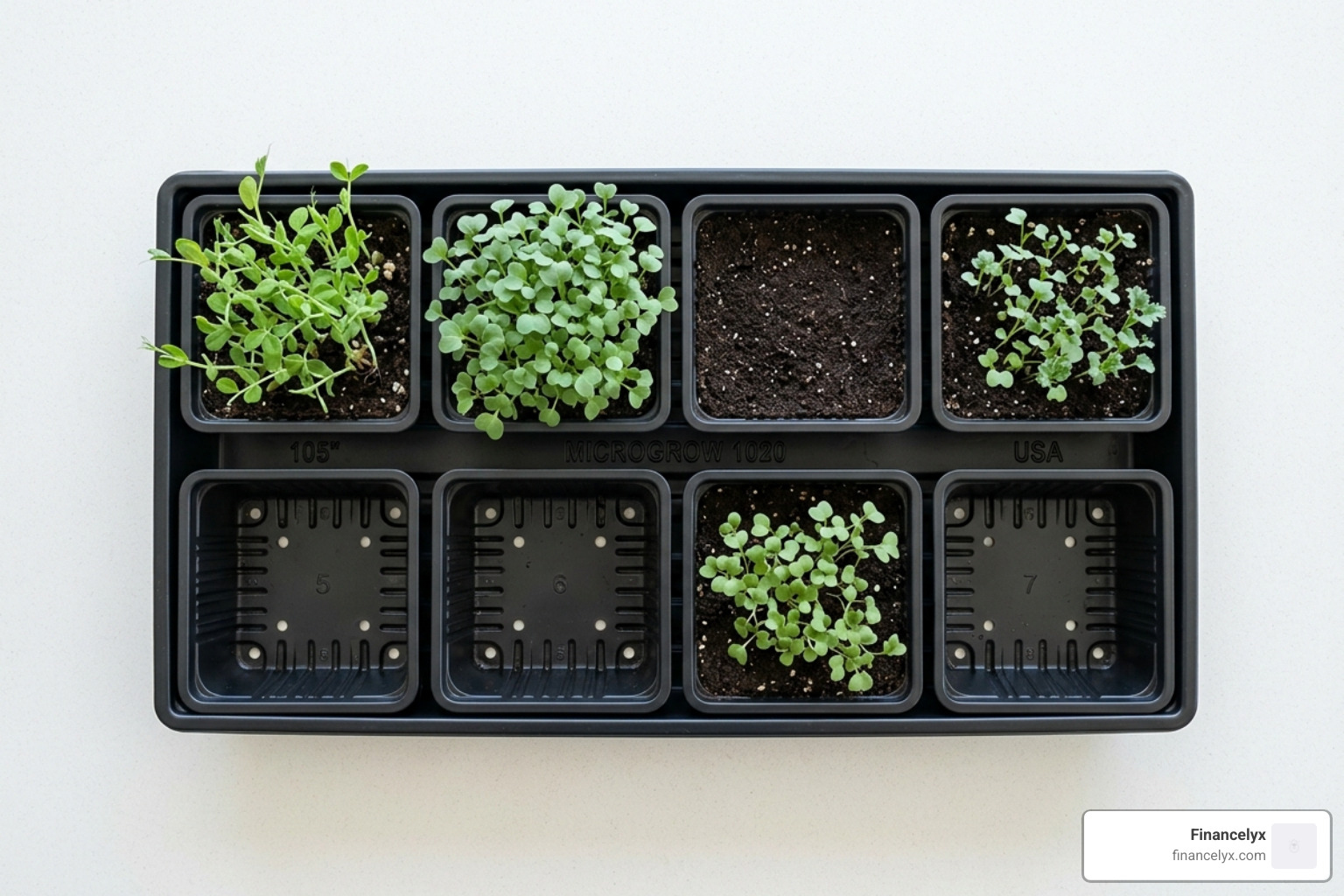
Exactly eight 5×5 microgreen trays fit into one shallow 1020 tray. This allows you to treat the 1020 tray as a “master carrier.” You can carry eight different crops to your harvest station at once. However, a common mistake beginners make is trying to fit these into “deep” 1020 trays. Because 5×5 inserts are usually tapered, they fit best in 1020 shallow germination trays for serious growers. Using a shallow 1020 flat ensures that the 5x5s sit level and are easy to remove.
Weight and Thickness
Each individual 5×5 tray weighs approximately 0.10 lbs. While that sounds light, the 1.8mm–2.0mm thickness makes them incredibly rigid. You can’t easily twist or snap these trays. This rigidity is vital when you are nesting trays for bottom watering, as a flimsy tray would buckle under the weight of wet soil. Products like the 5×5 Heavy Duty Microgreen Trays (5) – The Mighty Microgreen are specifically marketed for this “heavy-duty” nature, promising they won’t warp or break over time.
Best Practices for Growing and Bottom Watering
If you want to grow microgreens like a professional, you must master the art of bottom watering. Watering from above can flatten delicate greens and trap moisture in the canopy, which is a recipe for mold.
The Nesting Technique
To bottom water effectively, you need two types of trays:
- Trays with holes: These hold your growing medium and seeds.
- Trays without holes: These act as a reservoir.
You can nest a 5×5 tray with holes inside a 5×5 tray without holes. Alternatively—and more efficiently—you can place eight 5×5 trays with holes inside one solid (no-hole) shallow 1020 tray. You simply pour water into the 1020 tray, and the 5×5 inserts will wick the moisture up through their drainage slits. This keeps the leaves dry and the roots hydrated.
Soil vs. Hydroponics
5×5 microgreen trays are versatile enough for both soil-based and hydroponic setups. If you prefer soil, the drainage holes prevent the roots from sitting in stagnant water. For hydroponics, these trays work perfectly with hemp mats or reusable grow pads. Some trays, like those from Microgreen 5×5 Trays Multicolor – holes extra strength shallow 1.25 inches deep, feature six drainage slits specifically designed to work with flood-and-drain hydroponic systems.
Preventing Damping Off
Damping off is the bane of every microgreen grower. It’s a fungal disease that causes young stems to collapse. By using shallow 5×5 trays, you naturally increase airflow. To further prevent this, always ensure your trays are cleaned thoroughly between uses and avoid over-saturating your medium. For a deeper dive into this watering method, check out our guide on mastering the microgreen bottom watering trays technique.
Maintenance, Cleaning, and Long-Term Care
One of the best things about investing in high-quality 5×5 microgreen trays is that they are reusable. However, “reusable” only works if you take care of them!
Cleaning and Sanitizing
After harvesting your greens, remove the spent root mat and soil. Most heavy-duty polypropylene trays are dishwasher safe. We recommend placing them on the top rack only and turning off the “heated dry” cycle to prevent any potential warping. If you prefer hand washing, use warm soapy water.
For commercial or high-volume home growers, a quick dip in a diluted food-safe sanitizer (like white vinegar or a very weak bleach solution) ensures that no pathogens from the previous crop linger. This is a critical step that differentiates hobbyists from those who grow microgreens like a pro.
Storage and UV Protection
Polypropylene is tough, but its one true enemy is prolonged, direct sunlight. When your trays are not in use, store them indoors or in a shaded area. UV rays can eventually degrade the plastic, making it brittle. If you store them properly, these trays can easily last 5 to 10 years.
If you’re still deciding on the best materials for your setup, you might want to compare ceramic or plastic finding the best microgreen trays. While some prefer the look of ceramic, the durability and modularity of professional plastic trays are hard to beat. And if you’re feeling particularly crafty, you can even learn how to stop buying trays and start making your own, though they rarely match the precision fit of the 5×5 modular system.
Frequently Asked Questions about Small-Batch Trays
How many 5×5 trays fit into a standard 1020 tray?
Exactly eight 5×5 trays fit into a standard 1020 tray. This 8-per-flat configuration is the industry standard for modular growing. They fit best in “shallow” 1020 trays (about 1.25″ deep) rather than the traditional 2.5″ deep trays.
Are these trays food-safe and BPA-free?
Yes, high-quality 5×5 trays from reputable manufacturers are made from BPA-free, FDA-grade polypropylene (#5 plastic). This material is chosen specifically because it does not leach chemicals into the soil or the plants, making it safe for growing food.
Can I use 5×5 trays for starting flower seeds?
Absolutely! While they are marketed for microgreens, their 1.3″ depth is perfect for starting many varieties of flowers and herbs. Once the seedlings are large enough, you can easily transplant them into larger pots or the ground.
Do I need to buy trays with holes or without holes?
Ideally, you want both. The trays with holes are necessary for drainage and bottom-watering. The trays without holes (or a larger 1020 solid tray) are necessary to act as the water reservoir. Many growers buy “bundle kits” that include a mix of both styles.
Conclusion
At Financelyx, we believe that healthy eating should be accessible, fun, and sustainable. Integrating 5×5 microgreen trays into your kitchen routine is a fantastic way to ensure a constant supply of nutrient-dense greens for your snacks and meals. Whether you are a beginner looking for a 5×5 Microgreens Kit — Seedtime Store to get started or a seasoned grower looking to optimize your space, these modular trays offer the perfect balance of durability and flexibility.
By choosing heavy-duty, reusable equipment, you are not only saving money in the long run but also reducing plastic waste in our environment. So, give your indoor garden a “high five” and start small-batch growing today! For more tips on the best gear for your healthy lifestyle, explore more info about professional growing supplies on our site.
