
You’re Paying Too Much for Microgreens (And You Don’t Have To)
Homemade microgreen trays are one of the easiest ways to grow fresh, nutrient-dense greens at home – using containers you probably already have.
Here’s the quick answer if you’re in a hurry:
How to make homemade microgreen trays:
- Pick a shallow container – takeout clamshells, berry baskets, or yogurt tubs all work
- Add drainage – poke 6-8 small holes in the bottom with a heated nail
- Nest it inside a second container (no holes) to catch water
- Fill with 1-1.5 inches of pre-moistened coco coir or seed-starting mix
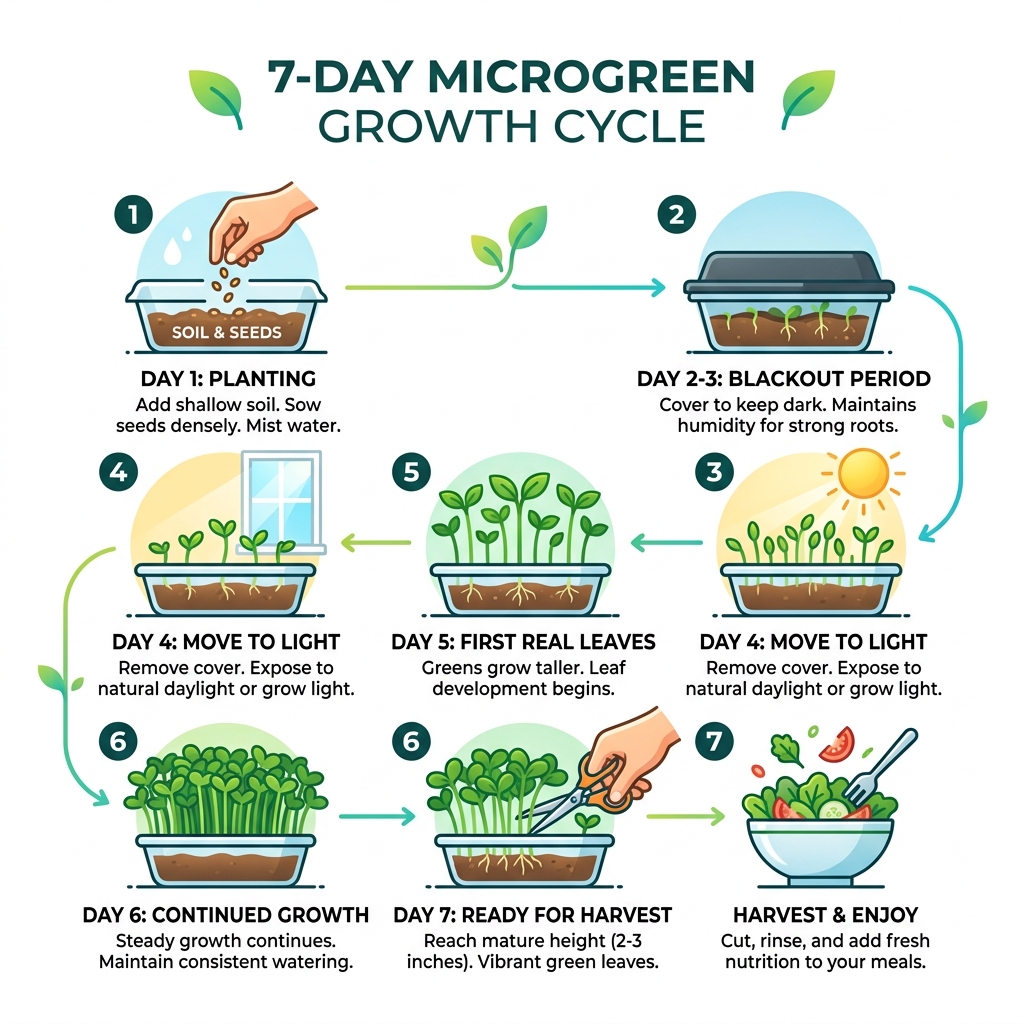
- Sow seeds densely, mist, and cover for 3-4 days in the dark
- Move to light and harvest in as little as 7 days
That’s it. No special equipment. No expensive gear.
Store-bought microgreens run $3-5 per ounce. A homemade tray costs around $0.50 and yields 3-4 ounces. Over a year, that’s $140+ back in your pocket – just from repurposing containers you’d otherwise throw away.
And beyond the savings? Microgreens pack up to 40 times the vitamins, minerals, and antioxidants of their fully grown counterparts. Growing them at home means you get the freshest, most nutrient-dense version possible – cut and eaten within minutes. For a general overview of what microgreens are, see Microgreens on Wikipedia.
The best part: the whole setup fits in 3 square feet of space. A windowsill, a closet shelf, a corner of your kitchen counter – it all works.
Best Household Items for Homemade Microgreen Trays
When we look at our recycling bins, we don’t just see trash; we see a “treasure chest” of potential homemade microgreen trays. You don’t need professional 10×20 heavy-duty plastic to get started. In fact, many household items are perfectly sized for small-batch growing.
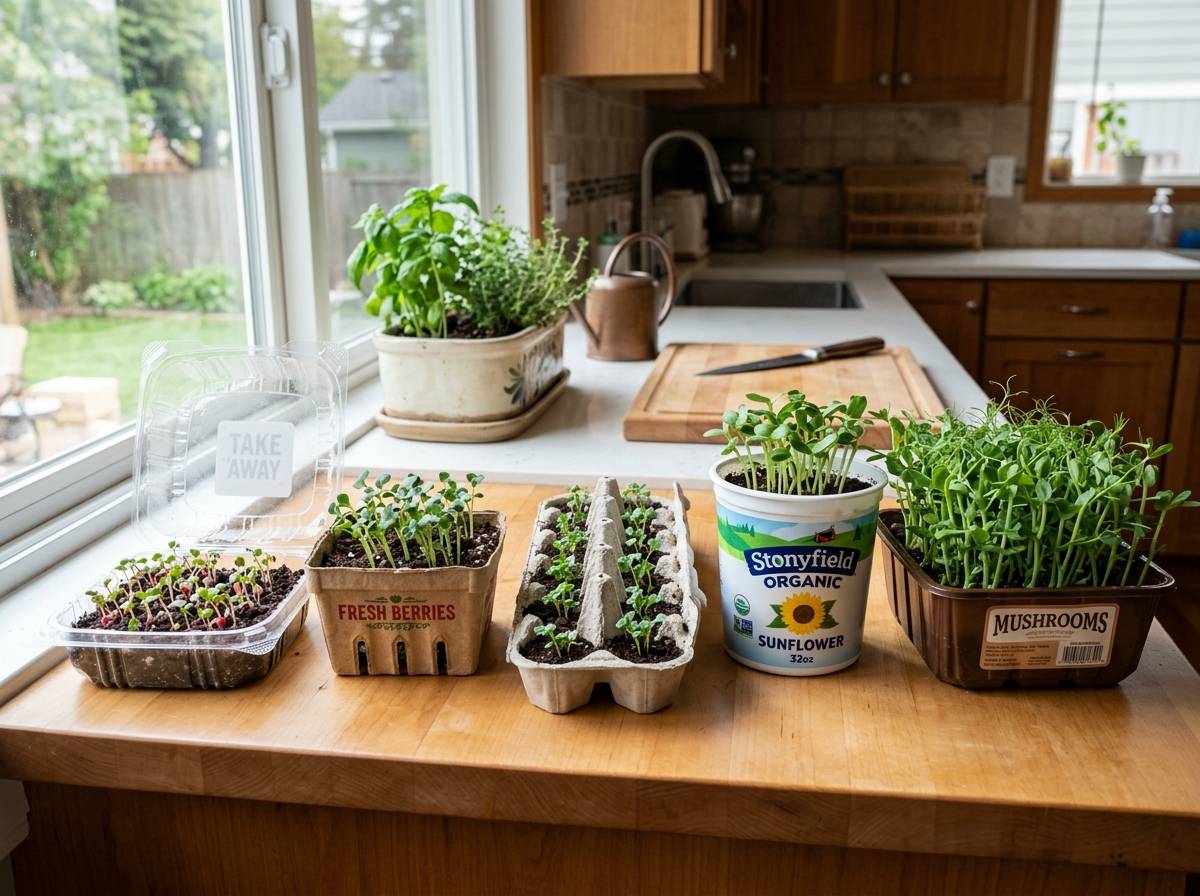
The best containers are shallow (1–2 inches deep). Since microgreens are harvested so young, they have very shallow root systems. Using a deep pot just wastes your growing medium. Here are our favorite upcycled options:
- Takeout Clamshells: These are the “gold standard” of DIY trays. The black plastic bottoms are sturdy, and the clear lids can be used as humidity domes during the first few days of growth.
- Berry Containers: Strawberries and blueberries usually come in vented plastic boxes. These already have drainage holes, making them ready to go almost immediately.
- Mushroom Flats: These are typically blue or green and have a great surface area-to-depth ratio.
- Yogurt Tubs and Sour Cream Containers: These are excellent for “single-serving” harvests.
- Pie Tins or Aluminum Trays: While not plastic, these are easy to poke holes in and reflect light well.
- Egg Cartons: Cardboard cartons can work for a single grow, though they tend to get soggy. Plastic egg cartons are more durable and can be washed and reused.
Safety First: Food-Safe Plastics
Since we are growing food, we want to ensure no nasty chemicals leach into our greens. Look at the bottom of your plastic containers for the recycling triangle. We recommend sticking to these “safe” plastics:
- #2 HDPE (High-Density Polyethylene): Very stable and common in milk jugs.
- #4 LDPE (Low-Density Polyethylene): Flexible and safe.
- #5 PP (Polypropylene): Often found in yogurt tubs and many takeout containers. It has a high heat tolerance.
| Container Type | Durability | Drainage Needs | Best For |
|---|---|---|---|
| Takeout Clamshell | High | Must add holes | Broccoli, Radish |
| Berry Basket | Medium | Already has holes | Small batches |
| Mushroom Flat | High | Must add holes | Pea Shoots |
| Aluminum Pie Tin | Medium | Must add holes | Windowsill herbs |
| Egg Carton (Plastic) | Low | Must add holes | Kids’ projects |
How to Prepare and Build Your homemade microgreen trays
Once you’ve rescued a container from the bin, it needs a little “surgery” to become a functional grow tray. Proper drainage is the difference between a lush harvest and a moldy mess.
Creating Drainage Holes
The easiest way to add drainage to thin plastic is the heated nail method. Hold a large nail with pliers and heat the tip over a lighter or stove flame. Gently press it through the bottom of your container. It will melt a clean, cauterized hole without cracking the plastic. Aim for 6–8 quarter-inch holes for a standard takeout container.
The Two-Tray (Nesting) System
Professional growers use a two-tray system, and we should too. You need:
- The Planting Tray: This is the one with the holes you just made.
- The Reservoir Tray: This is an identical container without holes.
Nest the planting tray inside the reservoir tray. This allows you to “bottom-water.” Instead of pouring water over the delicate leaves (which causes mold), you pour water into the bottom tray. The soil wicks the moisture up through the holes via capillary action.
Algae and Light Prevention
If you are using a clear container, light hitting the wet soil can cause algae to grow. A quick fix is to paint the outside of the container black to block light, then white to reflect heat. Or, simply slide your clear container into a dark-colored one.
Sterilization
Before every new grow, wash your homemade microgreen trays in hot, soapy water. If you’re using sturdy #5 plastic, many are even dishwasher safe! For extra insurance against mold, give them a quick spray with a 3% hydrogen peroxide solution and let them air dry.
Step-by-Step Guide to Growing in DIY Containers
Now that your hardware is ready, let’s talk about the “software”—the soil and seeds.
Selecting Your Growing Medium
You have three main choices for filling your homemade microgreen trays:
- Coco Coir: Our top recommendation. It’s made from coconut husks, holds water beautifully, and is very clean.
- Seed-Starting Mix: A light, peat-based mix. Avoid heavy garden soil, which can harbor pests and pathogens.
- Paper Towels or Toilet Paper: Yes, you can grow microgreens on paper! This is the cleanest method. Simply layer 3–4 sheets of damp paper in the bottom of your tray. It works great for fast growers like arugula or radish.
Sowing Seeds in homemade microgreen trays
To get those thick, carpet-like results you see in stores, you need to sow seeds much more densely than you would in a garden.
- Moisten the Medium: Before putting soil in the tray, mix it with water in a bowl until it feels like a wrung-out sponge. It should be damp but not dripping.
- Fill the Tray: Add about 1 to 1.5 inches of soil. Level it out with your hand or a small piece of cardboard.
- The “Spice Shaker” Hack: For even distribution, put your seeds in an old spice shaker. This prevents “clumping,” which is a major cause of mold.
- Sow Densely: You want the seeds to be close together, like people in a crowded elevator, but not overlapping.
- Mist and Cover: Give the seeds a final misting with a spray bottle. Cover the tray with a lid or another tray to create a “blackout” environment.
The Power of Compression
For larger seeds like sunflower or pea shoots, we recommend stacking and weighting. Place an empty tray on top of your seeded tray and put a heavy rock or a can of beans inside it. This pressure forces the roots to grow deep and results in stronger, thicker stems.
For more detailed advice on the gear you might want as you scale up, check out our guide on tools and supplies.
Lighting and Maintenance for homemade microgreen trays
During the first 3–4 days (the blackout period), your seeds don’t need light—just warmth (around 70–75°F is ideal). Once the sprouts are about an inch tall and pushing up the cover, it’s time for “The Big Reveal.”
- Lighting: You don’t need expensive “blurple” grow lights. Standard LED shop lights with a 5000K–6500K “daylight” spectrum work perfectly. Aim for at least 2,000 lumens. Keep the lights close—about 4–6 inches above the plants—to prevent them from getting “leggy” (tall, thin, and weak).
- Watering: Switch to bottom-watering now. Add about a cup of water to the reservoir tray every day or two. If the soil feels dry, add water; if it’s still wet, wait.
- Airflow: This is the “secret sauce.” A small USB fan blowing gently across your trays will prevent stagnant air and significantly reduce the risk of mold.
Root Hairs vs. Mold
Beginners often panic when they see white “fuzz” on the roots. These are usually root hairs, which are perfectly healthy. They grow straight out from the root and disappear when you mist them. Mold, on the other hand, looks like a tangled spider web and stays visible even when wet.
Troubleshooting and Harvesting Your DIY Crop
Even with the best homemade microgreen trays, things can occasionally go sideways. Don’t worry—most issues are easy to fix.
Common Hiccups and Fixes
- Mold: If you spot a small patch of mold, spray it with a mixture of 1 teaspoon 3% hydrogen peroxide and 1 cup of water. Increase your fan speed!
- Leggy Stems: This means your plants are “stretching” for light. Move your LED lights closer or move the tray to a sunnier windowsill.
- Uneven Growth: This usually happens if your tray wasn’t level or your seeds were clumped. Make sure to spread seeds evenly and rotate your trays 180 degrees every day if using a window.
When to Harvest
Most microgreens are ready in 7 to 14 days. You are looking for the “cotyledon” stage—this is when the first two heart-shaped leaves are fully open. For the best flavor, harvest before the “true leaves” (the jagged ones) appear, as some varieties like radish or broccoli can become bitter once they mature.
The Harvest Process
Use clean kitchen scissors or a sharp knife. Grasp a small handful of greens and snip them about half an inch above the soil line.
Pro Tip: Do not wash your microgreens until right before you eat them. If you wash them and then put them in the fridge, they will turn to mush. Store unwashed greens in a sealed container with a paper towel to absorb excess moisture; they should last 5–7 days in the refrigerator.
Frequently Asked Questions about DIY Microgreens
Are recycled plastic containers safe for growing?
Yes, provided you use food-grade plastics. Look for symbols #2, #4, or #5. Avoid containers that held harsh chemicals (like bleach or motor oil). Since microgreens grow quickly and don’t require high heat, the risk of chemical leaching is extremely low. Always give your recycled homemade microgreen trays a thorough scrub before use.
Do I need drainage holes for every setup?
If you are using the paper towel method or are an expert at moisture management, you can grow without holes. However, for beginners, we strongly recommend drainage holes. It is far too easy to overwater, and without holes, the water sits at the bottom, rots the roots, and invites mold. The two-tray bottom-watering system is the most “foolproof” method for success.
How much money can I save with a DIY system?
The math is staggering.
- Retail: A 1-ounce clamshell at the grocery store is $4.00 ($64.00 per pound).
- Home-Grown: A 1-pound bag of organic broccoli seeds costs about $20.00 and can produce roughly 50-60 of our small DIY trays. Including the cost of a little coco coir, you are looking at about $0.50 per tray.
If you eat one tray a week, you’re saving roughly $180 a year. If you scale up vertically using a simple shelving unit, you can turn 8 square feet of floor space into 32 square feet of growing area, potentially producing enough to sell at a local farmer’s market!
Conclusion
At Financelyx, we believe that healthy eating shouldn’t have to break the bank. Growing your own food is a radical act of self-sufficiency, and homemade microgreen trays are the perfect entry point. Whether you’re in a tiny apartment or a house with a big basement, you have the space to grow.
By upcycling your “trash” into functional garden tools, you’re not just saving money—you’re reducing waste and ensuring your family has access to the most nutrient-dense snacks possible.
Ready to level up your indoor garden? Explore our expert reviews on more tools and supplies to help you on your journey to a greener, healthier kitchen. Happy growing!
