
The Best Microgreens for Beginners: Your Quick-Start Guide
The best microgreens for beginners are radish, broccoli, pea shoots, sunflower, and arugula — all fast-growing, forgiving, and packed with nutrition.
Here’s a quick look at each:
| Variety | Days to Harvest | Flavor | Difficulty |
|---|---|---|---|
| Radish | 5-7 days | Peppery, crisp | Very easy |
| Broccoli | 7-10 days | Mild, delicate | Very easy |
| Pea shoots | 10-14 days | Sweet, crunchy | Very easy |
| Sunflower | 10-12 days | Nutty, hearty | Easy |
| Arugula | 7-10 days | Peppery, bold | Easy |
You don’t need a garden, a greenhouse, or a green thumb. A single tray, a bag of seeds, some soil, and a bright windowsill are enough to get started.
Microgreens are young vegetable seedlings harvested just after the first leaves appear — usually between 7 and 14 days after planting. They’re tiny, but don’t let that fool you. Research, such as studies from the USDA, shows they contain 4 to 40 times more nutrients than their fully grown counterparts. That’s a serious nutritional punch from something that fits on your kitchen counter.
If you’re short on time, tight on space, or just want a simple way to add fresh, flavorful greens to your meals every week, microgreens might be the easiest food you’ll ever grow.
Why Microgreens are the Ultimate Entry Point for New Gardeners
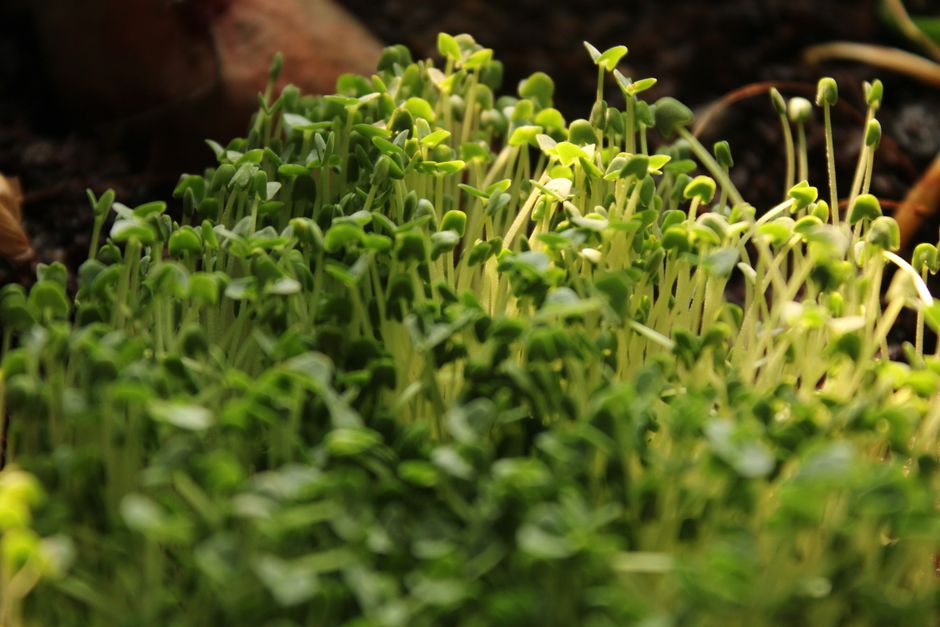
When we talk about gardening, many of us picture sprawling backyards, heavy bags of mulch, and months of waiting for a single tomato to ripen. Microgreens flip that script entirely. They are the ultimate “shortcut” to fresh, homegrown food, and they are perfect for beginners because they offer almost instant gratification.
One of the biggest draws is space efficiency. You don’t need an acre of land; you don’t even need a balcony. A single square foot on a kitchen counter or a windowsill is enough to produce a significant harvest. This makes them the ideal choice for urban dwellers or anyone living in an apartment.
Beyond the convenience, the health benefits are staggering. As we mentioned, these tiny greens are nutrient powerhouses. For example, arugula microgreens contain 8 times the calcium, 5 times the vitamins, and 4 times the iron of iceberg lettuce. Kale microgreens pack 4 times the nutrients of adult kale. When you grow these at home, you are essentially cultivating your own multivitamins.
Furthermore, microgreens provide a “masterclass in fundamentals” without the high stakes. If you accidentally overwater a tray, you’ve only lost a few days of work and a couple of dollars in seeds, rather than a whole season’s crop. This low-risk environment is why we often recommend an indoor microgreens setup for beginners as the best way to build your “green thumb” confidence.
They are also incredibly versatile in the kitchen. From topping morning eggs to blending into smoothies or garnishing a five-star dinner, they add a pop of color and a concentrated burst of flavor that store-bought greens simply cannot match. Plus, you can grow them year-round, regardless of the snow or heat outside.
The Best Microgreens for Beginners: Top 5 Easiest Varieties
Choosing your first variety is the most important step. While there are dozens of options, some are much more “bomb-proof” than others. If you start with a finicky herb like cilantro, you might get discouraged by slow germination. Instead, we suggest starting with the “Big Five” that are known for their resilience and speed.
Why Radish is one of the best microgreens for beginners
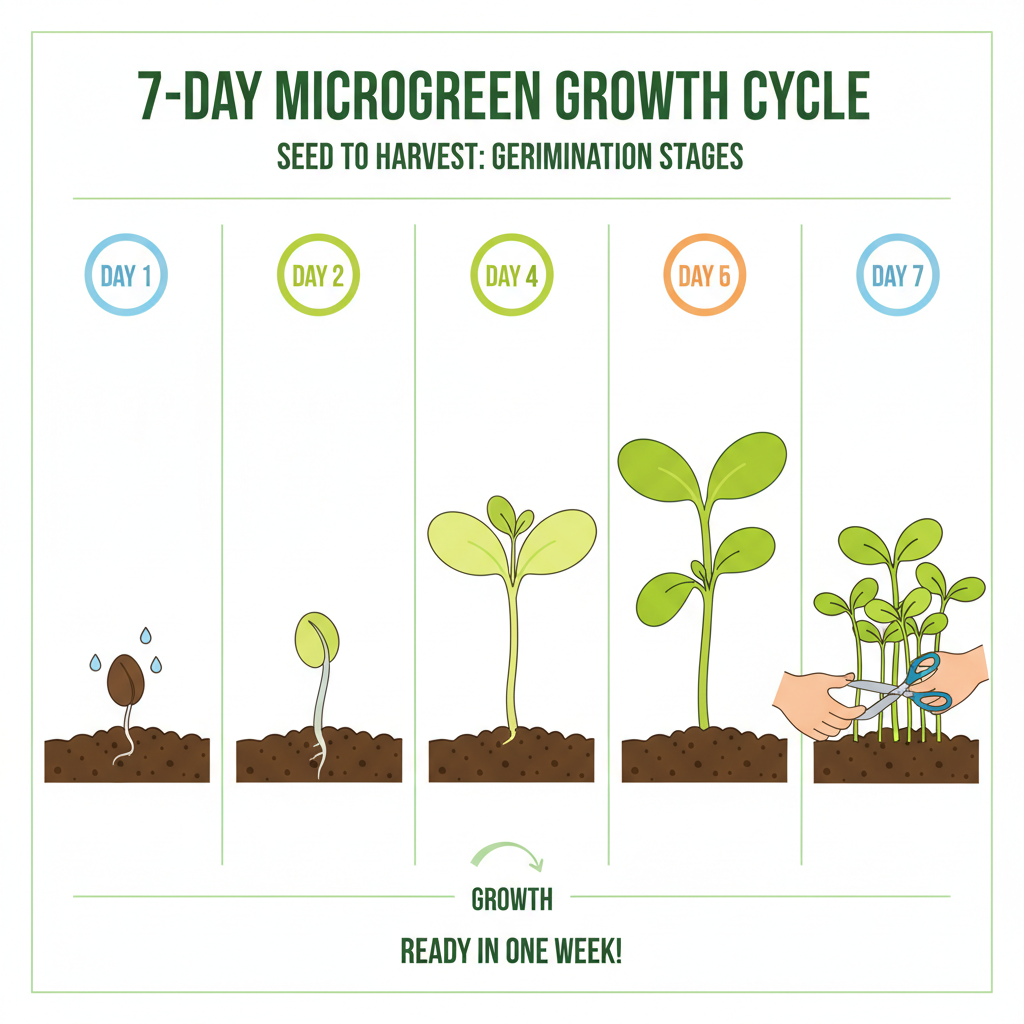
If you want a quick win, radish is your best friend. It is widely considered the absolute easiest and fastest variety to grow. Radish seeds are large and easy to handle, and they germinate in as little as 24 hours.
You can go from seed to a full harvest in just 5 to 7 days. They have a crisp, succulent texture and the same spicy, peppery kick as a mature radish. Because they grow so fast, they rarely face issues with mold or pests, making them one of the most reliable fast growing microgreens at home. For a beginner, seeing a tray turn from bare soil to a lush green carpet in less than a week is an incredible motivator.
Broccoli: The nutritional powerhouse for novices
Broccoli is the “overachiever” of the microgreen world. It is incredibly easy to grow, taking about 7 to 10 days to reach harvest. Unlike the spicy radish, broccoli microgreens have a very mild, delicate flavor, which makes them easy to hide in smoothies or sprinkle over almost any dish without changing the taste profile.
The real reason to grow broccoli, however, is the sulforaphane. Broccoli microgreens contain high concentrations of this compound, which has been linked to numerous health benefits in scientific studies. They are a staple for anyone looking for easy microgreens to grow indoors while maximizing their nutritional intake.
Pea Shoots: The high-yield favorite
Pea shoots are a delight for both adults and kids. They take slightly longer (10-14 days), but the yield is impressive. A standard 10×20 tray can produce about 16 ounces of greens. They have a sweet, crunchy flavor that tastes exactly like fresh garden peas.
Kids love watching the twisty tendrils form, making this a great microgreens for kids beginner project. An added bonus? Pea shoots are one of the few microgreens that can sometimes regrow after the first harvest if you cut them high enough above the soil line.
Sunflower: Hearty, nutty, and satisfying
Sunflower shoots are often ranked as the #1 favorite for flavor. They are “meaty,” crunchy, and have a rich, nutty taste. They take about 10 to 12 days to harvest. While they require a little more attention—specifically, you need to soak the seeds and use a weight during germination to help them shed their black hulls—the reward is well worth it. They are substantial enough to be used as a base for a salad rather than just a garnish.
Arugula: The bold and peppery classic
Arugula is for those who love a bit of “zing.” It germinates within 2 days and is usually ready in 7 to 10 days. It’s a bit more delicate than radish, but it’s still very beginner-friendly. One unique thing about arugula seeds is that they are “mucilaginous,” meaning they develop a gel-like coating when wet. Because of this, you shouldn’t soak them before planting. Just spread them on moist soil and watch them take off.
Essential Supplies: What You Need to Start Your Tiny Farm
One of the common mistakes beginners make is overcomplicating their equipment. You don’t need a high-tech hydroponic system to start. In fact, we recommend keeping it simple. Here is the basic kit we suggest for every new grower:
- Growing Trays: The industry standard is the “1020 tray” (which measures roughly 10 by 20 inches). You’ll want two: one with drainage holes and one without. This setup allows for “bottom watering,” which keeps the delicate stems dry and prevents mold.
- Growing Medium: While you can use potting soil, many beginners find coco coir or hemp mats easier and cleaner. Coco coir is made from coconut husks; it’s sustainable, holds water well, and is less likely to harbor soil-borne diseases.
- Seeds: Always look for “untreated” seeds specifically labeled for microgreen use. These are usually sold in larger quantities because you will be sowing them very densely.
- Spray Bottle: A simple mister is essential for the first few days of germination to keep the seeds moist without washing them away.
- Lighting: While a bright windowsill can work, it often leads to “leggy” (tall and weak) plants. A basic full-spectrum LED light or even a shop light positioned about 6-10 inches above the tray will give you much more consistent results.
- A Weight: This sounds strange, but having something like a brick or a heavy book to place on top of your seeds during the first few days helps them develop strong roots and shed their seed hulls.
If you are looking for a shortcut, there are many affordable microgreen starter kits to begin your gardening journey that bundle all of these items together for under $50.
Step-by-Step Guide: How to Grow the Best Microgreens for Beginners
Growing microgreens is a process of “controlled neglect.” Once you get the setup right, they mostly do the work themselves. Here is our tried-and-true method for success.
Step 1: Seed Preparation (The Soak)
For larger seeds like peas and sunflowers, you need to “wake them up” by soaking them in cold water for 8 to 12 hours. This softens the outer shell and speeds up germination. Smaller seeds like radish, broccoli, and arugula do not need soaking; they can go straight onto the soil.
Step 2: Tray Preparation and Sowing
Fill your tray with about 1 to 1.5 inches of moist growing medium. Level it out so there are no dips where water can pool. Now, it’s time to sow. Unlike traditional gardening where you space seeds inches apart, microgreen seeds are “broadcast” densely.
Think of it like spreading sprinkles on a cupcake. You want a thick, even layer, but the seeds shouldn’t be piled on top of each other. For a 1020 tray, you’ll typically use about 16-20g of broccoli seed or up to 300g of pea seeds. Once sown, give them a gentle misting with your spray bottle.
Step 3: The Blackout Period (The Secret Sauce)
This is where the magic happens. Cover your seeds with another tray (the one without holes) and place a weight on top. Keep them in the dark for 2 to 4 days. This “weighted blackout” method mimics the pressure of soil and forces the seeds to struggle upward, creating thicker, stronger stems. It also keeps the humidity high, which is crucial for germination.
Step 4: Light Exposure and Bottom Watering
Once the seedlings are about half an inch tall and looking a bit yellow, it’s time to take off the cover and introduce them to the light. Within hours, they will turn a vibrant green as they begin photosynthesis.
From this point on, stop misting from the top. Instead, pour water into the bottom tray (the one without holes) and let the roots soak it up. This keeps the leaves dry and is the best way to prevent mold. Check them daily; they are thirsty little plants!
Mastering the best microgreens for beginners setup
To truly excel, pay attention to your environment. Microgreens prefer temperatures between 65-75°F. If your room is too cold, they will grow slowly; if it’s too hot and humid, you might run into mold issues.
Good airflow is your best defense against disease. A small desk fan pointed near (but not directly at) your trays can make a world of difference. For more detailed technical advice, check out our beginner-guide-to-microgreen-farming.
Troubleshooting and Harvesting Your Homegrown Greens
Even the best microgreens for beginners can run into a few hiccups. The most common issue is mold. Beginners often confuse root hairs with mold. Root hairs are tiny, white, fuzzy structures that grow out of the main root to absorb water; they are a sign of a healthy plant. Mold, on the other hand, looks like a spiderweb or “fuzz” that sits on top of the soil and doesn’t disappear when you mist it. If you see mold, it usually means your seeds are too dense or there isn’t enough airflow.
When and How to Harvest
Most microgreens are ready when they are about 2 to 3 inches tall and have developed their first set of leaves (called cotyledons). To harvest, simply hold a clump of greens in one hand and use sharp, clean scissors to snip them about half an inch above the soil line.
It is best to harvest them in the morning when they are at their crispest. If you aren’t eating them immediately, do not wash them yet! Moisture is the enemy of shelf life.
Storage Tips for Maximum Freshness
Freshly harvested microgreens can last in the refrigerator for about 5 to 7 days if stored correctly. We recommend placing them in a glass container or a reusable bag with a dry paper towel to absorb any excess moisture.
When you’re ready to eat, give them a quick rinse in cool water. From there, the possibilities are endless. You can find inspiration in our first-steps-in-microgreen-recipes-for-beginners.
Frequently Asked Questions about Growing Microgreens
Can microgreens regrow after the first harvest?
For the vast majority of varieties, the answer is no. Most microgreens are a “one-and-done” crop because you are cutting off the growing tip of the plant. However, pea shoots are a notable exception. If you leave at least one “node” (the point where a leaf meets the stem) at the bottom, they will often send out a second shoot. Just keep in mind that the second harvest is usually smaller and tougher than the first.
Do I need expensive grow lights to start?
Not necessarily. If you have a south-facing window that gets at least 6 hours of direct sunlight, you can grow a decent tray of microgreens. However, if your plants look “leggy”—meaning they have very long, thin, pale stems that fall over—they are stretching for light. In this case, a basic LED shop light is a cheap and effective upgrade. You don’t need fancy “purple” grow lights; a standard “daylight” spectrum LED bulb will work wonders.
Are microgreens safer to eat than sprouts?
Yes, microgreens are generally considered safer than sprouts. Sprouts are grown in water in warm, humid conditions, which is also the perfect breeding ground for bacteria like E. coli and Salmonella. Microgreens, however, are grown in a medium (like soil or coir) with plenty of airflow and light. Furthermore, you harvest microgreens by cutting the stems above the soil, whereas with sprouts, you eat the entire plant, including the roots that have been sitting in the water.
Conclusion
At Financelyx, we believe that healthy eating shouldn’t be a chore—it should be an adventure. Growing your own food is one of the most empowering things you can do for your wellness journey. As our expert writer Elena Monroe often says, “You don’t need a big farm to have big dreams for your health.”
Starting with the best microgreens for beginners like radish and broccoli is a low-cost, high-reward way to bring nutrient-dense, flavorful greens into your kitchen every single week. Whether you are looking to boost your immune system, add a gourmet touch to your cooking, or simply find a relaxing new hobby, microgreens are the perfect place to start.
Don’t wait for the “perfect” time to start a garden. Grab a tray, some seeds, and start your journey with more expert growing tips today. Your future self (and your salads) will thank you!
