
Why Microgreen Farming for Profit Is One of the Smartest Small-Scale Businesses You Can Start
Microgreen farming for profit is a real, accessible business — not just a gardening hobby. A single tray costs $1–$3 to produce and can sell for $20–$40. That’s an 80%+ gross profit margin on a crop that’s ready in as little as 7 days.
Here’s a quick snapshot of what’s possible:
| Scale | Space Needed | Est. Monthly Revenue |
|---|---|---|
| Beginner | 60–100 sq ft | $500–$2,000 |
| Part-time | 100–300 sq ft | $2,000–$5,000 |
| Full-time | 300–1,000 sq ft | $5,000–$20,000+ |
Key facts at a glance:
- Startup cost: As low as $200–$500 for a basic home setup
- Growth cycle: 7–21 days from seed to harvest
- Profit margin: 75%–91% gross margin on most common varieties
- Best sales channels: Restaurants, farmers markets, direct-to-consumer
- Most profitable varieties: Sunflower, pea shoots, radish, broccoli, basil
Microgreens are young vegetable and herb seedlings harvested just after their first leaves appear. They pack an intense nutritional punch — some varieties contain up to 40x more nutrients than their fully grown counterparts. That’s exactly why chefs, health-conscious home cooks, and grocery buyers are willing to pay a premium.
The barrier to entry is genuinely low. You don’t need farmland, a greenhouse, or a big team. A spare bedroom, a few shelving racks, some LED grow lights, and the right seeds are enough to get started.
The bigger challenge isn’t growing — it’s selling. But with the right strategy, growers have scaled from a $1,000 startup investment to tens of thousands in annual revenue within the first year.
This guide covers everything: setup, varieties, pricing, legal requirements, and how to find your first paying customers.
Understanding the Basics: Microgreens vs. Sprouts
Before we dive into the logistics of microgreen farming for profit, we need to clear up a common point of confusion: the difference between microgreens and sprouts. While both are young plants, they are grown and harvested in very different ways.
Sprouts are the first stage of a plant’s life. They are grown entirely in water (no soil or medium) and are harvested within 2 to 7 days. When you eat a sprout, you eat the seed, the root, and the tiny stem. Because they are grown in warm, humid conditions without light, they carry a higher risk of bacterial contamination.
Microgreens, on the other hand, are the “toddler” stage of the plant. We grow them in a medium like soil or coco coir and provide them with plenty of light and airflow. They are harvested after they develop their first set of leaves, known as cotyledon leaves, and sometimes after their first “true leaves” appear. This usually happens between 7 and 21 days.
Comparison Table: Microgreens vs. Sprouts
| Feature | Sprouts | Microgreens |
|---|---|---|
| Growth Medium | Water only | Soil, coco coir, or hemp mats |
| Light Needed | Low to none | High (LED or Sunlight) |
| Harvest Time | 2–7 days | 7–21 days |
| Parts Eaten | Seed, root, and stem | Stem and leaves only |
| Flavor Profile | Mild, watery | Intense, concentrated |
| Food Safety Risk | Higher (due to humidity/water) | Lower (grown in ventilated medium) |
Microgreens are a “nutritional powerhouse.” Because they are allowed to photosynthesize and develop a more robust root system, they absorb and create higher concentrations of vitamins and minerals. For us at Financelyx, this nutrient density is what makes them such a vital part of a healthy lifestyle.
Setting Up Your Microgreen Farming for Profit Operation
One of the most exciting aspects of starting a microgreen business is that you can do it almost anywhere. Whether you have a spare bedroom, a basement, or a corner of your garage, vertical farming allows you to maximize every square inch of your floor space.
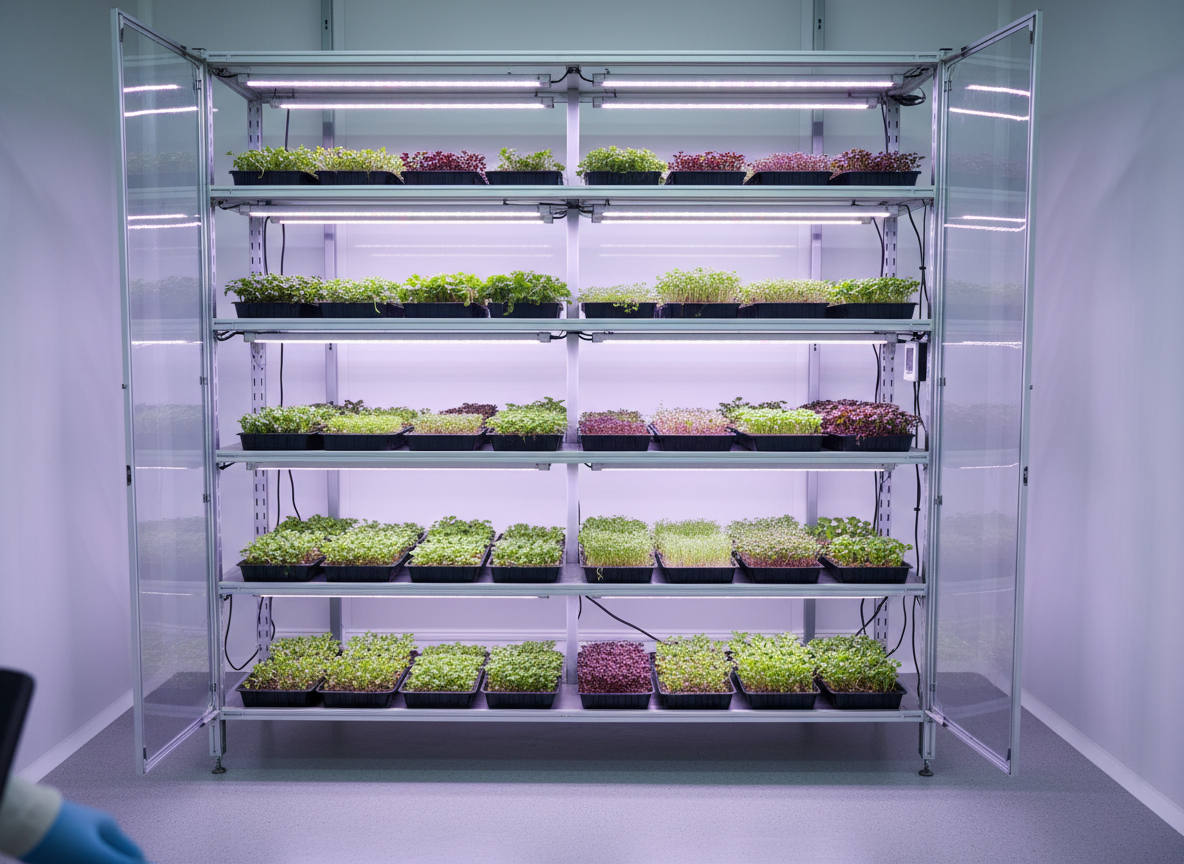
To succeed, you need to create a controlled environment. Microgreens thrive when the temperature is kept between 65°F and 75°F (18–24°C) and humidity is maintained between 40% and 60%. If it gets too hot or humid, you risk mold; if it’s too cold, your growth cycles will slow down, eating into your profits.
For a deep dive into the physical requirements, check out our indoor-microgreens-setup-for-beginners.
Essential Equipment for Microgreen Farming for Profit
You don’t need to break the bank to start, but investing in the right tools will save you hours of labor and prevent crop failure. Here is our list of essentials:
- Vertical Racks: Standard 4-foot wide wire shelving units are the “cheat code” for home growers. They allow you to stack 4 to 5 layers of crops in a tiny footprint.
- 1020 Trays: These are the industry standard (10 inches by 20 inches). You’ll want a mix of trays with holes for drainage and trays without holes for “bottom watering.” For help choosing, see our guide on choosing-the-best-microgreen-trays-for-your-home-garden.
- LED Grow Lights: Full-spectrum LED shop lights are cost-effective and use 50-60% less electricity than old-fashioned fluorescents. Position them 6–12 inches above your trays.
- Ventilation Fans: Airflow is your best defense against mold. Small clip-on fans or floor fans are a must.
- Growing Medium: We recommend starting with coco coir or a high-quality, sterile seed-starting mix. Avoid standard garden soil or compost, which can introduce pathogens.
- Misters and pH Meters: You’ll need a spray bottle for the germination phase and a pH meter to ensure your water is slightly acidic (around 6.0), which helps with nutrient uptake.
For a complete list of gear, visit top-tools-you-need-for-growing-indoor-microgreens and must-have-indoor-gardening-tools-for-microgreen-cultivation. If you are on a tight budget, explore affordable-microgreen-starter-kits-to-begin-your-gardening-journey.
Maximizing Yields and Selecting Profitable Varieties
In microgreen farming for profit, your yield per tray determines your hourly wage. If you can squeeze 12 ounces of radish out of a tray instead of 8, you’ve just increased your revenue by 50% for the same amount of work.
To get the most out of your setup, you must master the “Blackout Phase.” This is the period right after sowing where you cover the seeds with another tray and a weight. This mimics being underground, forcing the stems to stretch and grow tall and strong. Once they reach about an inch in height, you remove the cover and hit them with light.
We also swear by “bottom watering.” Instead of spraying the delicate leaves (which invites rot), you pour water into the bottom tray and let the roots soak it up. This keeps the canopy dry and the plants healthy.
To avoid common pitfalls, read our guide on how to avoid-these-common-mistakes-in-microgreen-farming-for-better-yield and learn how-to-increase-your-microgreens-yield. Consistency is key, which is why effective-rotation-of-microgreen-crops-to-maximize-yield is essential for a steady income.
Top Varieties for Microgreen Farming for Profit
Not all microgreens are created equal when it comes to the bottom line. Some take 25 days to grow (like cilantro), while others are ready in 7. For beginners, we recommend starting with high-yield, fast-growing varieties.
- Radish (7–10 days): The king of profitability. It grows incredibly fast, has a spicy kick that chefs love, and yields heavily. Gross profit margins often exceed 84%.
- Pea Shoots (10–14 days): These are crunchy, sweet, and very popular. They are heavy, meaning you get more “weight” per tray, selling for $20–$30 per pound.
- Sunflower (12–15 days): A crowd favorite at farmers markets. They have a nutty flavor and a great “crunch.” They can offer margins of 300-400% over seed cost.
- Broccoli (10–12 days): One of the easiest to grow and highly marketed for its health benefits (specifically sulforaphane).
- Basil (16–25 days): Though it takes longer, basil microgreens command a premium price—often $4 to $8 per ounce—making them highly lucrative specialty crops.
For a full breakdown of varieties, see our beginner-guide-to-microgreen-farming.
Business Strategy: Pricing, Sales, and Legal Requirements
Growing microgreens is the easy part; building a business is where the real work begins. To be successful in microgreen farming for profit, you must understand your Cost of Goods Sold (COGS). This includes your seeds, soil, electricity, packaging, and—most importantly—your labor.
Pricing for Profit
We generally see three main pricing tiers in the industry:
- Wholesale/Restaurants: $20–$30 per pound. Chefs want consistency and high quality.
- Farmers Markets: $3–$6 per 2-ounce clamshell. This works out to $24–$48 per pound.
- Direct-to-Consumer (Subscriptions): Many growers find success with a “weekly harvest box” model, charging $15–$25 per week for a variety pack delivered to the customer’s door.
Sales Channels
The most profitable growers don’t just wait for customers; they go find them.
- Chefs: Visit local high-end restaurants between 2:00 PM and 4:00 PM (the “slow” time). Bring free samples in your final packaging. If a chef likes your product, they may place a standing weekly order.
- Farmers Markets: This is the best place to build a brand and gather email addresses for your subscription list.
- Grocery Stores: Local independent grocers are often happy to carry local produce, but they will require more formal labeling and potentially higher insurance coverage.
Legal Requirements and Safety
Don’t let the “micro” name fool you; this is a commercial food business.
- Business License: Register your business (often as an LLC) with your state.
- Food Safety: While many states allow microgreens under “Cottage Food Laws,” selling to restaurants or stores usually requires a food handler’s permit and a clean, inspected grow space.
- Insurance: Product liability insurance is a must. It protects you if someone gets sick and is often required by chefs and markets.
- Labeling: Your packaging should include the common name of the product, your business name/address, net weight, and the harvest date.
Frequently Asked Questions about Microgreen Farming
How much space do I need to start a microgreen business?
You can start in as little as 60 square feet. A single 4-foot wire rack can hold up to 20 trays if you use all five shelves. In a standard 160 sq-ft spare room, you could easily fit enough racks to produce 100+ pounds of greens per month. The beauty of microgreen farming for profit is that you scale vertically, not horizontally.
Do I need a special license to sell microgreens?
The requirements vary significantly by location. In many U.S. states, microgreens are considered “fresh produce” and may not require a specific license for direct-to-consumer sales at farmers markets. However, once you sell to a “third party” like a restaurant or grocery store, you typically need a commercial food license and an inspected facility. Always check with your local Department of Agriculture or Health Department.
How long is the shelf life of harvested microgreens?
With proper handling, most microgreens will stay fresh for 5 to 10 days. The “cold chain” is critical—get them into a refrigerator at 35–40°F as soon as possible after harvesting. We recommend harvesting them when they are dry (don’t wash them before packaging!) and using breathable clamshells or adding an absorbent pad to the container to manage moisture.
Conclusion
At Financelyx, we believe that health and wealth go hand-in-hand. Microgreen farming for profit is more than just a way to make money; it’s a way to provide your community with some of the most nutrient-dense food on the planet. Whether you’re a stay-at-home parent looking for a side hustle or an aspiring urban farmer, this business offers a scalable, sustainable path to success.
Our expert writers, like Elena Monroe, are dedicated to helping you find flavorful wellness in every bite. Once you’ve harvested your first crop, don’t forget to use those vibrant greens in your own kitchen for a healthy boost.
Ready to take the first step toward your own indoor farm? Explore our beginner guides for more healthy living tips and nutritious snack ideas and start your journey today!
