
The Science of Humidity Control Microgreens Growth
To master humidity control microgreens growth, we first need to understand the invisible dance between water and air. When we talk about humidity in a grow room, we are usually referring to Relative Humidity (RH). This is the amount of water vapor present in the air expressed as a percentage of the amount needed for saturation at that same temperature.
Why does this matter for a tiny radish sprout? It all comes down to transpiration. Transpiration is essentially how a plant “breathes” and drinks. Water is pulled up through the roots, travels through the stem, and evaporates through tiny pores in the leaves called stomata.
If the humidity is too high (above 80% during active growth), the air is already saturated with water. The plant can’t evaporate moisture from its leaves, which causes the “transportation train” to grind to a halt. When transpiration stops, nutrient absorption stops. This leads to weak, “soft” stems and a high risk of pathogens.
Conversely, if the air is too dry (below 40%), the plant loses water faster than its tiny root system can replace it. This leads to cell desiccation, loss of turgidity (wilting), and stunted growth. By maintaining humidity control microgreens growth within the 50-70% range, we ensure efficient photosynthesis and maximum nutrient density.

Managing Humidity Control Microgreens Growth Across All Stages
Managing your environment isn’t a “set it and forget it” task. Microgreens have different physiological needs as they transform from a dormant seed into a nutrient-packed snack.
| Growth Stage | Humidity Goal (RH) | Purpose |
|---|---|---|
| Germination/Blackout | 75% – 85% | Softens seed coat; ensures uniform sprouting. |
| Post-Germination | 65% – 75% | Acclimatizes seedlings to open air; prevents shock. |
| Active Growth | 50% – 60% | Prevents mold; concentrates flavors and nutrients. |
| Pre-Harvest (24 hrs) | 40% – 50% | Dries the canopy for better shelf life and easier cutting. |
High Humidity for Germination and Blackout
During the initial 2 to 7 days, we are focused on seed metabolism. Seeds need three things to wake up: oxygen, the right temperature (ideally 70-75°F), and high moisture. This is where humidity domes or “weighted germination” methods come into play.
By covering our trays with a dome (usually 2 to 4 inches high), we create a “mini-greenhouse” effect. This traps the moisture evaporating from the substrate, keeping the RH near 80%. This high moisture-wicking environment ensures that the seed coat remains soft enough for the primary root (radicle) to break through.
If you are using the weighted method—stacking trays on top of each other—the trays themselves act as the humidity control. The physical contact helps maintain moisture right at the seed level. However, we must be careful; if droplets start forming in large clusters inside the dome, it’s a sign that the temperature might be too high (over 75°F), which can lead to premature mold before the seeds even sprout.
Lowering Humidity Control Microgreens Growth for the Seedling Phase
Once the “blackout” phase is over and the sprouts are about an inch tall, it is time to introduce them to the world. This is a critical transition for humidity control microgreens growth.
When we remove the domes and turn on the LED grow lights, the plants begin active photosynthesis. We want to drop the humidity to the 50-60% range. Why? Because lower humidity at this stage actually improves the quality of your harvest.
Research suggests that microgreens grown in slightly lower humidity have higher concentrations of essential oils and antioxidants. This is because the plant has to work a bit harder to manage its water, leading to a more “concentrated” flavor profile. For example, kale microgreens can contain 5 times more glucosinolates than mature kale, but only if they aren’t “water-logged” by stagnant, humid air.
Essential Tools for Maintaining Humidity Control Microgreens Growth
You cannot manage what you do not measure. While experienced growers can sometimes “feel” if a room is too damp, beginners should rely on data.
Monitoring and Mechanical Adjustments
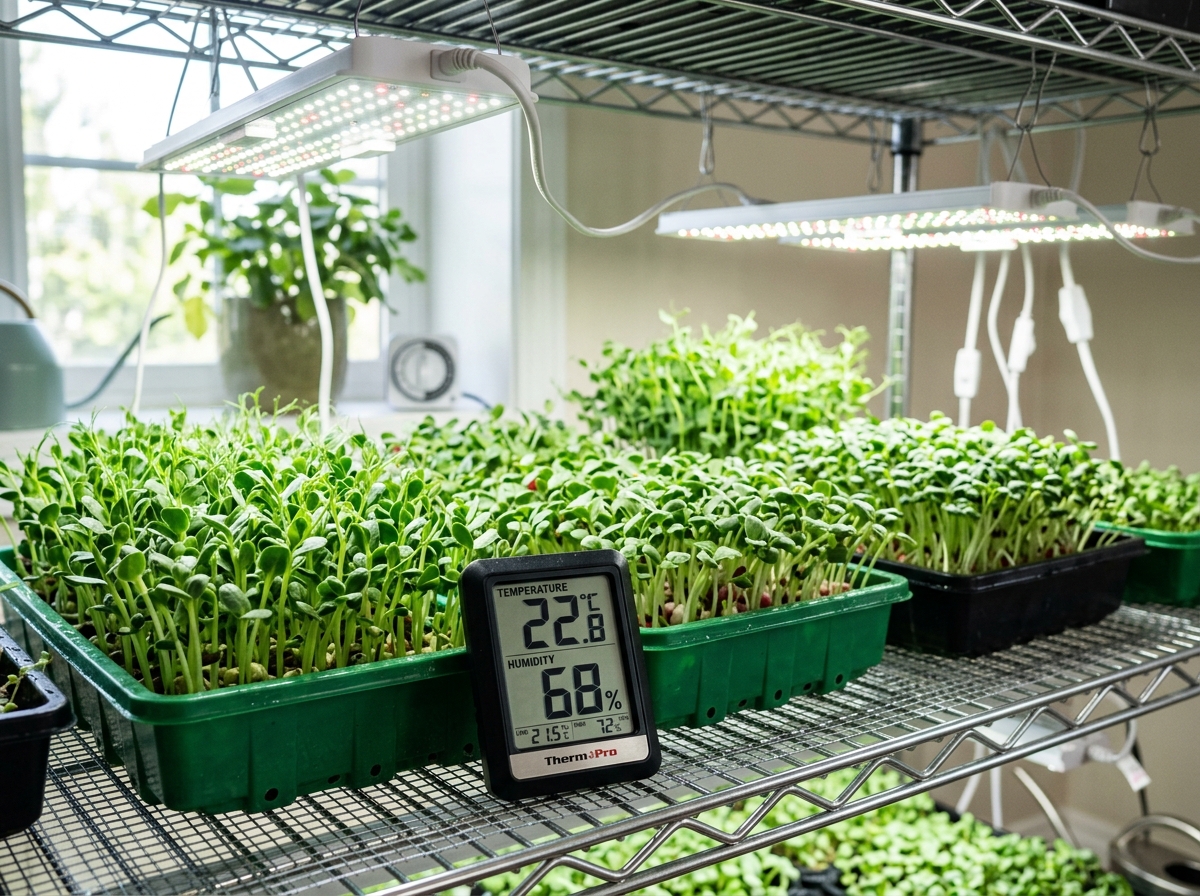
The most important tool in your kit is a digital hygrometer. These are inexpensive (often around $15) and provide real-time readings of both temperature and RH. We recommend placing a hygrometer at the same level as your trays, as humidity can vary significantly between the floor and the ceiling.
- Dehumidifiers: In most indoor setups, especially in basements or during summer, high humidity is the enemy. A dehumidifier is essential for pulling excess moisture out of the air. Aim for a unit that can be set to a specific percentage to automate your humidity control microgreens growth.
- Humidifiers: If you live in an arid climate or are growing in a heated room during winter, the air may drop below 40%. A small ultrasonic humidifier can add the necessary moisture back into the air.
- Automated Controllers: For those looking to scale up, smart controllers can link your fans and dehumidifiers together, turning them on or off based on the hygrometer’s data.
Airflow and Ventilation Strategies
Airflow is the “quiet engine” of a successful grow room. Even if your hygrometer says 55%, you can still have “stagnant air pockets” sitting right on top of your microgreens. Because plants transpire, they create a micro-layer of high humidity around their leaves.
To break this up, use oscillating fans. The goal is not to “blast” the plants—which can cause windburn—but to create a gentle, consistent dance of the leaves. This strengthens the stems (similar to how wind strengthens trees) and ensures that CO2 is constantly replenished around the stomata.
In larger setups or grow tents, an exhaust fan is necessary. This pulls the warm, moist air out of the environment and replaces it with fresh, drier air from outside the grow space.
Preventing Mold, Damping-Off, and Wilting
Mold is the “boogeyman” of microgreens, but it is almost always a symptom of poor humidity control microgreens growth and overwatering.
The best way to keep the surface of your trays dry is bottom watering. By pouring water into a catch tray and letting the substrate soak it up via capillary action, the “canopy” (the leaves and stems) stays dry. Mold spores need standing water on the surface to germinate; bottom watering denies them that opportunity.
Common Signs and Fixes:
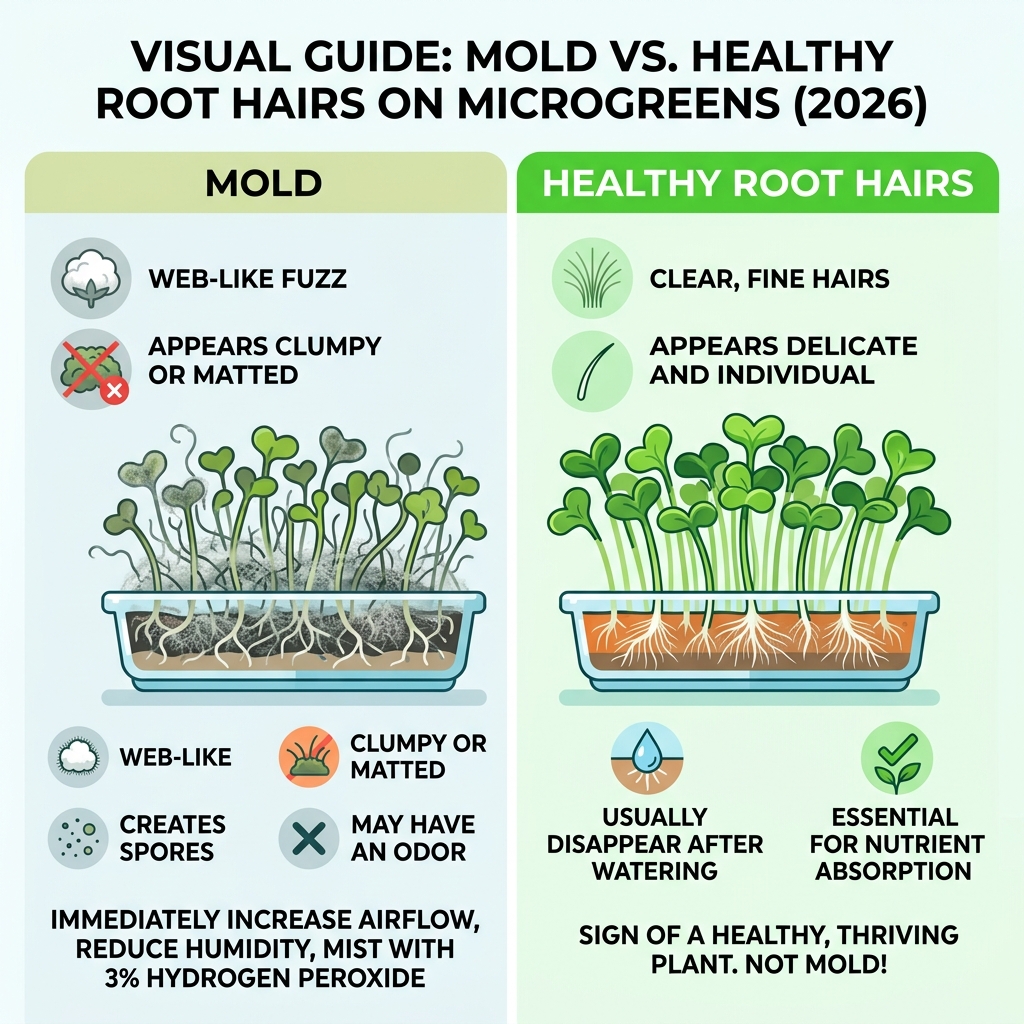
- Web-like fuzz: This is likely mold. Increase airflow immediately and reduce humidity. You can mist the affected area with a 3% hydrogen peroxide solution.
- Clear, fine hairs: Don’t panic! These are often root hairs, which are a healthy part of the plant. They usually disappear once you water the tray.
- Damping-off: If your seedlings are falling over at the base and looking “mushy,” your humidity is too high and your drainage is poor.
- Wilting: If the plants are drooping but the soil is wet, the humidity might be so high that the plant has stopped transpiring. If the soil is dry, they simply need a drink.
Frequently Asked Questions about Microgreens Humidity
What is the ideal humidity range for most microgreen varieties?
For the majority of varieties, including brassicas like broccoli and kale, a range of 50% to 60% RH during the growth phase is ideal. During the initial germination phase, aim higher, between 75% and 85%.
How can I tell if my humidity is too high without a hygrometer?
Look for condensation on the windows or the inside of your grow tent. If the air feels “heavy” or “muggy” like a sauna, it is likely above 70%. Another sign is “guttation”—small droplets of water appearing on the tips of the leaves in the morning, which indicates the plant is struggling to transpire.
Do different varieties like brassicas and herbs have different humidity needs?
Yes. Generally, “hardy” crops like peas, sunflowers, and radishes are more forgiving. However, delicate herbs like basil and cilantro are very sensitive to high humidity and are prone to damping-off. Basil, in particular, loves a slightly warmer and drier environment once it has sprouted.
Conclusion
At Financelyx, we believe that the journey to a healthier lifestyle starts with the food you grow and eat. Mastering humidity control microgreens growth is more than just a technical skill; it is the key to unlocking the full nutritional potential of these tiny superfoods. By keeping your environment stable, you ensure that every harvest is packed with the flavors and nutrients your body craves.
Whether you’re sprinkling spicy radish microgreens over a salad or blending kale sprouts into a morning smoothie, the quality of your snacks depends on the climate you create today. Stop the mold, start the growth, and enjoy the rewards of your indoor garden.
