
Why Tiny Greens Deliver Massive Nutrition
Nutrient dense microgreen recipes are one of the smartest ways to pack more vitamins, minerals, and antioxidants into your meals — without adding extra calories or spending hours in the kitchen.
Here’s a quick look at what you’ll find in this guide:
- What microgreens are and why they’re considered superfoods
- The best varieties for flavor and nutrition (radish, pea shoots, sunflower, and more)
- 7 simple recipes covering breakfast, lunch, dinner, and beyond
- Creative uses beyond garnishing — think frittatas, smoothies, and even desserts
- How to grow and store microgreens at home with minimal effort
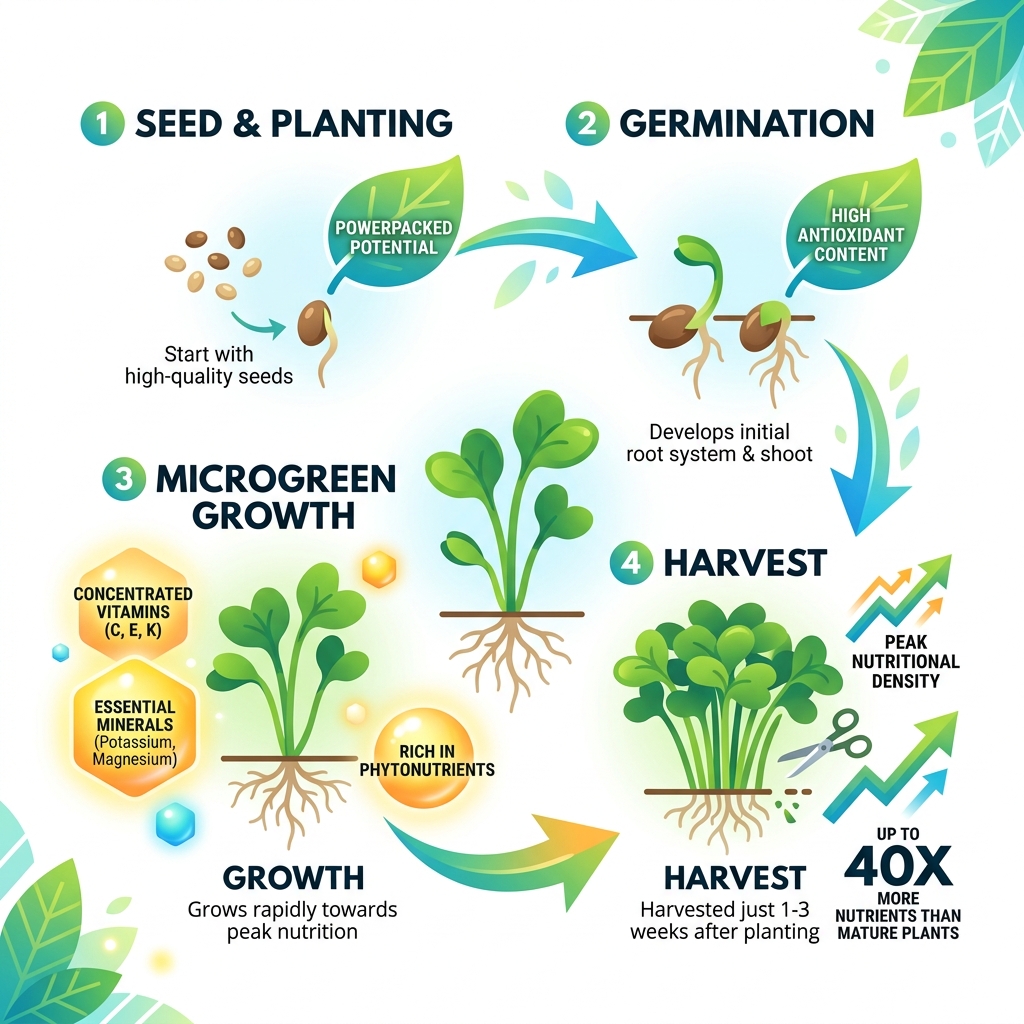
Microgreens are young seedlings harvested just 1–3 weeks after planting. Despite their small size, research shows they can contain 4 to 40 times more nutrients than their fully grown counterparts. That means a small handful of radish or broccoli microgreens can deliver a serious nutritional punch.
They’re also incredibly versatile. You can toss them on a grain bowl, blend them into a smoothie, fold them into eggs, or layer them in a sandwich. No complicated cooking skills required.
Whether you’re short on time, looking for easy ways to eat healthier, or just curious about these tiny greens — this guide has you covered.
Why Nutrient Dense Microgreen Recipes are a Nutritional Powerhouse
When we talk about “superfoods,” we often think of exotic berries or expensive powders. However, microgreens are the literal definition of a nutritional powerhouse that you can grow on your kitchen windowsill. But what makes them so special?
Research suggests that these tiny greens are harvested at their peak nutritional density. Because they are in the early stages of growth, they contain all the energy and nutrients the plant needs to become a giant vegetable, but concentrated into a tiny package. This results in a nutrient concentration that is 4 to 40 times higher than mature plants.
The Vitamin and Mineral Breakdown
According to scientific research on microgreen phytonutrients, these greens are exceptionally high in vitamins A, C, E, and K. They are also rich in essential minerals like:
- Potassium: Essential for heart health and fluid balance.
- Iron: Vital for oxygen transport in the blood.
- Magnesium: Supports muscle and nerve function.
- Antioxidants: Help fight oxidative stress and inflammation.
| Nutrient | Microgreens (per 100g) | Mature Vegetables (per 100g) |
|---|---|---|
| Vitamin C | 4-20x Higher | Standard Base |
| Beta-Carotene | 10-40x Higher | Standard Base |
| Vitamin K | 5-15x Higher | Standard Base |
| Antioxidants | Significantly Higher | Standard Base |
By cooking-up-health-with-microgreens, we aren’t just adding a garnish; we are significantly boosting the bioavailability of nutrients in our daily diet.
Top Varieties for Maximum Flavor and Nutrition
Not all microgreens are created equal. Each variety brings a unique flavor profile and a specific set of health benefits to your nutrient dense microgreen recipes.
- Peppery Radish: These provide a spicy kick similar to a full-grown radish and are excellent for digestion.
- Sweet Pea Shoots: These are crunchy, sweet, and taste exactly like fresh garden peas. They are high in protein and fiber. You can learn more about them in the-ultimate-guide-to-growing-and-cooking-pea-shoot-microgreens.
- Nutty Sunflower: These are hearty, crunchy, and have a pleasant nutty flavor that pairs well with almost anything.
- Earthy Kale: A milder way to get your kale fix, these are packed with vitamins A and C.
- Spicy Mustard: These offer a sinus-clearing heat that is perfect for sandwiches.
- Garlic Chives: These provide a subtle garlic and onion flavor without the “garlic breath” intensity.
Selecting the Best Greens for Nutrient Dense Microgreen Recipes
When choosing your greens, consider the “flavor architecture” of your dish. If you have a rich, creamy dish like a risotto, a peppery radish or spicy mustard green can cut through the fat. For a fruit smoothie, sweet pea shoots or mild kale are better choices.
We always recommend looking for vibrant colors. Purple or red varieties (like Red Rambo Radish or Red Cabbage) often contain higher levels of polyphenols and anthocyanins, which are powerful antioxidants. For those just starting out, first-steps-in-microgreen-recipes-for-beginners is a great resource for matching flavors to your favorite meals.
7 Simple and Nutrient-Packed Recipes for Every Meal
Integrating these tiny titans into your life doesn’t require a culinary degree. Here are some of our favorite ways to use them, ranging from quick breakfasts to international dinners.
Breakfast Power-Ups: Shoyu Eggs and Smoothies
Breakfast is the most important time to front-load your nutrition. We love a high-protein, high-fiber start.
- Shoyu Egg & Microgreen Tortilla: Prepare “shoyu eggs” by boiling eggs for 6–7 minutes, peeling them, and letting them soak in a mixture of soy sauce and ginger. Slice these onto a high-fiber toasted tortilla, add a massive handful of radish or broccoli microgreens, and top with salsa. This meal is incredibly satiating and keeps you full for hours. Check out adding-a-healthy-twist-to-breakfast-with-microgreens for more egg-based ideas.
- The Green Fuel Smoothie: Don’t let the color scare you! Blend sunflower or pea microgreens with kefir (or almond milk), a frozen banana, an apple, and a pinch of turmeric. Microgreens blend much smoother than mature kale or spinach, leaving no “leafy” chunks behind. It’s a secret superfood for smoothies that provides a detox boost. You can even power-up-your-detox-drinks-with-microgreens by adding them to fresh-pressed juices.
Lunch and Dinner: Grain Bowls and Global Twists
For the middle of the day, focus on healthy-and-easy-lunch-recipes-with-microgreens that are portable and fresh.
- Quinoa & Tahini Grain Bowl: Combine cooked quinoa, roasted chickpeas, diced cucumbers, and cherry tomatoes. The “secret sauce” is a creamy tahini dressing (tahini, lemon juice, water, and garlic). Top the whole bowl with a “tangle” of pea shoots and sunflower microgreens. The crunch of the greens perfectly complements the soft quinoa.
- Micro-Enhanced Sandwiches: Swap out boring iceberg lettuce for a thick layer of spicy mustard or arugula microgreens. When incorporating-microgreens-in-delicious-sandwiches-and-wraps, place the greens between “dry” ingredients like meat or cheese to keep them from getting soggy against tomatoes or condiments.
- International “Micro-Twists”: You can upgrade traditional dishes from around the world. Add lentil microgreens to Indian Khichdi for a 10x nutrient boost, or top a Brazilian Feijoada with carrot microgreens to add a hint of sweetness to the savory bean stew.
- The 10-Minute Lemon Vinaigrette Salad: Sometimes simple is best. Toss a large bowl of mixed microgreens with sliced radishes and a quick dressing of olive oil, lemon juice, honey, and salt. It’s a light, cleansing side dish that takes minutes to prep.
- Microgreen Pizza Topping: After taking a pizza out of the oven, pile on a heap of arugula or basil microgreens. The residual heat will slightly wilt them, releasing their aroma without destroying their delicate texture.
Creative Ways to Use Microgreens Beyond the Garnish
While they look beautiful as a garnish, microgreens are far more than just “plate jewelry.” We can use them as a primary ingredient in cooked dishes and even desserts.
Mastering Cooked Nutrient Dense Microgreen Recipes
There is a common myth that you should never cook microgreens. While raw is best for certain vitamins (like Vitamin C), cooking them briefly doesn’t “kill” all the nutrition. In fact, some nutrients become more accessible when slightly heated.
- The Micro-Frittata: Unlike mature spinach, which needs to be sautéed and squeezed dry, microgreens can be chopped and added directly to whisked eggs. They cook at the same speed as the eggs, meaning you can have a cheesy baked microgreens frittata ready in about 15 minutes.
- Soups and Stews: Stir in a handful of leek or garlic microgreens just before serving a hot soup. They will wilt gently, adding a fresh “pop” of flavor that mature herbs can’t match. This is a great way of warming-up-with-microgreens-in-soups-and-stews.
- Microgreen Pesto: Use sunflower or basil microgreens as the base for pesto. Blend with walnuts, olive oil, garlic, and parmesan for a spread that is much more nutrient-dense than traditional versions.
Surprisingly, you can even use them in desserts! Nasturtium microgreens have a unique peppery-sweetness that pairs beautifully with dark chocolate or can be infused into a homemade vanilla ice cream for a gourmet, nutrient-dense treat. Always remember that preserving-nutrients-while-cooking-with-microgreens is about minimizing heat time—think “wilt,” don’t “boil.”
Growing and Storing Your Own Superfoods at Home
The best way to ensure you always have fresh greens for your nutrient dense microgreen recipes is to grow them yourself. It’s faster and easier than traditional gardening.
- Setup: All you need is a shallow tray, some organic seed-starting mix (or a hemp mat), and a sunny windowsill.
- Sowing: Spread your seeds densely—think “sprinkles on a cupcake.” Mist them with water and cover them for 2–3 days to encourage germination.
- Growth: Once they sprout, uncover them and give them plenty of light. In 7–14 days, they’ll be ready!
- Harvesting: Use sharp scissors to snip the greens just above the soil line. Handle them gently, as they are fragile.
Storage Tips for Maximum Freshness
According to research on post-harvest nutrient retention, microgreens begin to lose nutrients the moment they are cut. To keep them fresh for 5–7 days:
- Keep them dry: Do not wash them until you are ready to eat them. Moisture is the enemy of shelf life.
- Breathable containers: Store them in a glass container or a reusable bag with a dry paper towel tucked inside to absorb excess humidity.
- Coldest spot: Keep them in the main part of the fridge, not the door, to maintain a consistent temperature.
Frequently Asked Questions about Microgreens
Does cooking microgreens destroy their nutrients?
Not entirely! While extreme heat can reduce Vitamin C levels, many minerals and fat-soluble vitamins (like Vitamin K) remain stable. The key is to avoid long boiling times. Quick baking (like in a frittata) or stirring them into hot dishes at the very end is perfectly fine and still offers more nutrition than most mature vegetables.
How long do microgreens stay fresh in the fridge?
Typically, they stay at peak freshness for 3 to 5 days. If stored properly with a paper towel in a breathable container, some varieties like sunflower and pea shoots can last up to a week. If they look slimy or smell “off,” it’s time to compost them.
What are the most common mistakes when eating microgreens?
The biggest mistake is using them only as a garnish. To get the health benefits, you need to eat them in significant quantities—think “handfuls,” not “sprinkles.” Another mistake is washing them too far in advance, which leads to rapid spoilage. Lastly, don’t stick to just one variety; rotating your greens ensures you get a wider spectrum of phytonutrients.
Conclusion
At Financelyx, we believe that healthy eating shouldn’t be a chore. Nutrient dense microgreen recipes offer a “cheat code” for better health—allowing you to multiply your nutrient intake with almost zero extra effort. Whether you are blending them into a morning smoothie, folding them into a cheesy frittata, or experimenting with international flavors, these tiny greens bring a world of culinary creativity to your kitchen.
From the peppery bite of a radish sprout to the sweet crunch of a pea shoot, there is a variety for every palate. We encourage you to start small: grab a tray, some seeds, and start your own windowsill garden today. Your body (and your taste buds) will thank you.
For more tips on living a nutrient-dense lifestyle, visit us at https://financelyx.com/.
