
What Are Pea Microgreen Seeds and Why Should You Grow Them?
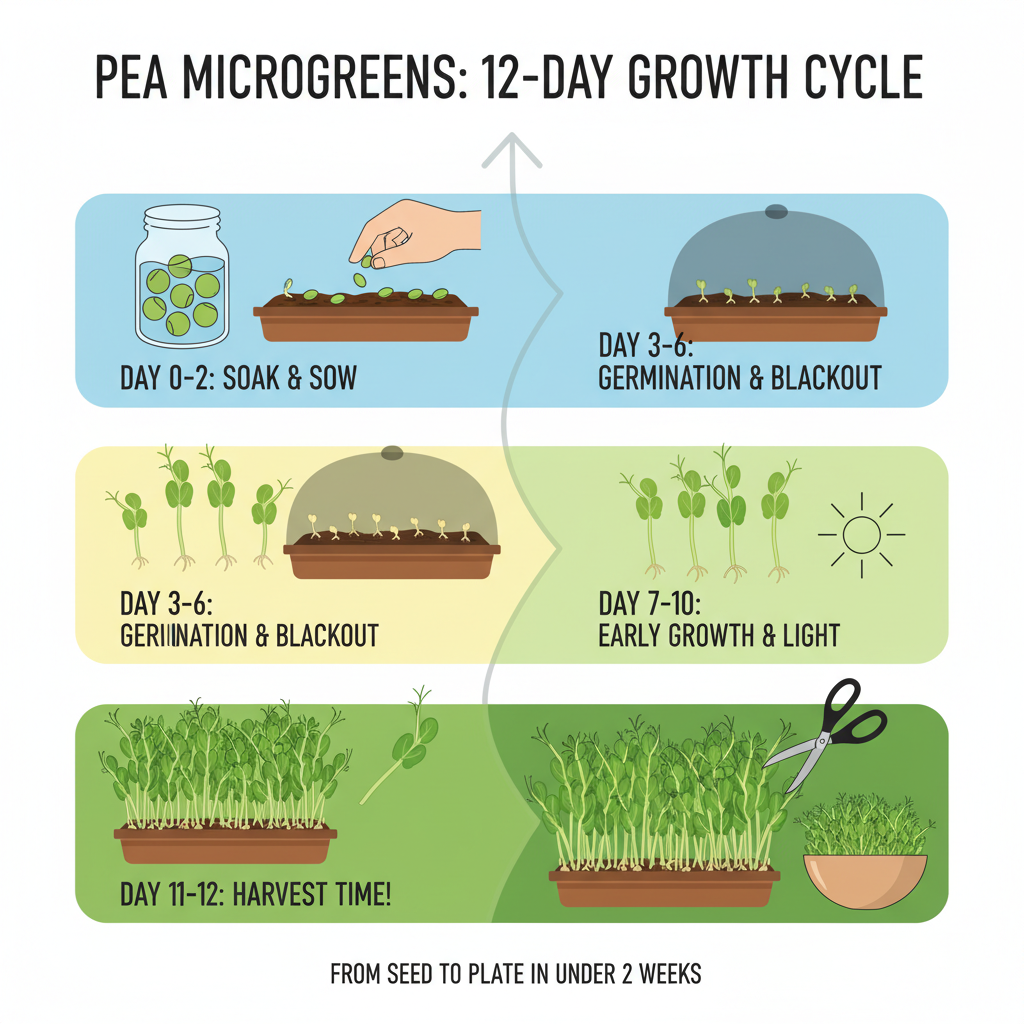
Pea microgreen seeds are small, nutrient-packed seeds that sprout into tender, sweet shoots you can harvest and eat in as little as 8–14 days.
Here’s a quick overview of what you need to know:
- What they are: Seeds from the Pisum sativum plant grown as young shoots, harvested before maturity
- Time to harvest: 8–14 days from planting
- Seed needed: About 2 cups (0.8 lb) per standard 10×20 inch tray
- Expected yield: Around 1.5 lbs of greens per tray
- Key nutrients: Vitamins A, C, and K, protein, fiber, and essential amino acids
- Best varieties: Green pea, Dundale (Dun), Speckled, Lincoln, Dwarf Grey Sugar
- Difficulty level: Beginner-friendly — no grow lights or fertilizer required
Growing your own pea microgreens is one of the fastest ways to add fresh, nutritious greens to your meals — without a garden, without much space, and without much time.
They taste like young garden peas: sweet, crisp, and satisfying. And unlike most vegetables, you go from seed to plate in under two weeks.
Whether you want to boost your salads, add crunch to a stir-fry, or simply eat more plants without overhauling your diet — pea microgreens fit right into a busy lifestyle.
This guide covers everything: choosing the right seeds, growing them step by step, harvesting at peak nutrition, and putting them to use in your kitchen.
Understanding Pea Microgreen Seeds and Varieties
When we talk about pea microgreen seeds, we are essentially talking about the same Pisum sativum seeds used for garden peas, but selected and sold in bulk for their ability to produce vigorous, tasty shoots. Unlike sprouts, which are grown in water and eaten whole (roots and all), microgreens are grown in a medium like soil and harvested above the root line.
Choosing high-quality seeds is the foundation of a successful harvest. We always recommend looking for non-GMO, heirloom, and open-pollinated seeds. These terms ensure that the seeds haven’t been genetically modified and will produce plants with the classic, robust flavors we love.
There are several types of peas used for microgreens, each offering a slightly different growth habit or flavor. For instance, Organic Dun Pea Seeds – Microgreens are a top choice for those wanting a hearty, cool-weather variety. If you prefer a more traditional taste, Organic Green Pea Microgreens Seeds provide that quintessential sweet pea crunch.
Knowing where to buy organic microgreen seeds online is half the battle. You want a supplier that conducts microbial testing and offers high germination rates so you aren’t left staring at a tray of un-popped seeds.

Choosing the Best Pea Microgreen Seeds for Your Garden
Not all peas are created equal in the microgreen world. While any pea seed can technically become a microgreen, some varieties are bred to produce more “tendrils” (those curly little vines) or leafier stems.
- Dundale (Dun) Peas: These are known as one of the heartiest varieties. They are particularly resilient in cooler indoor temperatures and produce beautiful, earthy shoots.
- Lincoln Peas: If you want something a bit different, Microgreens Seeds – Lincoln Pea are shorter and very leafy. They have a distinct aesthetic appeal that looks great as a garnish.
- Speckled Peas: A favorite among home growers, Pea Seeds – Speckled Pea Microgreens are prized for their sweet flavor and rapid growth. They are excellent for beginners because they are quite forgiving.
- Dwarf Grey Sugar Peas: These are often coveted for their thick, fast-growing shoots. They produce a high volume of biomass, meaning more food for you!
Once you’ve picked your favorites, storage matters. Check out our microgreen seed storage tips every gardener should know to keep your bulk seeds fresh for months.
Comparing Flavor Profiles of Different Pea Varieties
We often get asked, “Do they all just taste like peas?” The short answer is yes, but the nuances are fascinating!
Most pea microgreen seeds grow into shoots that are sweet and crunchy. However, varieties like the Lincoln pea can be slightly more on the bitter side, offering a “fresh green” flavor without the sugary hit of a snap pea.
Then there is the “tendril” factor. Some varieties, like the Speckled pea, are famous for their curly tendrils, which provide a delicate, airy texture to salads. Others are more focused on the leaves. If you are looking for a specific look or mouthfeel, Pea Shoot Microgreen Seeds – West Coast Seeds offer varieties specifically selected for their aesthetic and culinary qualities.
Nutritional Profile and Health Benefits
Pea microgreens aren’t just a pretty garnish; they are nutritional heavyweights. Because they are harvested at the peak of their early growth, they contain a concentrated amount of the vitamins and minerals needed for the plant to grow into a giant vine.
When you eat a handful of these shoots, you are getting:
- Vitamins A and C: Powerful antioxidants that support your immune system and skin health.
- Vitamin K: Essential for bone health and proper blood clotting.
- Plant-based Protein: Pea microgreens are surprisingly high in protein compared to other greens, making them a favorite for vegetarians and vegans.
- Fiber: Great for digestion and keeping you feeling full.
If you are looking for easy microgreens to grow indoors that actually contribute to your daily protein intake, peas are your best bet.
Why Pea Microgreens Outshine Mature Peas
You might wonder why you wouldn’t just wait for the peas to grow in the garden. While mature peas are delicious, microgreens offer some unique advantages.
First, the nutrients in microgreens are often more “bioavailable.” This means your body can absorb them more easily. During the germination process, enzymes are activated that break down complex starches and proteins into simpler forms.
Furthermore, research suggests that microgreens can contain up to 40 times the nutrient density of their mature counterparts. For those of us looking for easy microgreens to grow indoors that pack a punch, the pea shoot is a clear winner. You get the benefits of the pea plant without the weeks of waiting and the need for a massive trellis system.
Step-by-Step Guide to Growing Pea Microgreens at Home
Ready to get your hands dirty? Growing pea microgreen seeds is a straightforward process, but there are a few “pro tips” that will help you avoid common pitfalls like mold or stunted growth.
You don’t need a lot of equipment. A standard 10×20 inch tray is the industry standard, but you can use smaller 5×5 inch containers if you’re just starting out.
| Feature | Soil-Based | Hydroponic (Fiber Mat) |
|---|---|---|
| Growth Speed | Standard | Slightly Faster |
| Flavor Intensity | High | Moderate |
| Mess Factor | Moderate (dirt) | Low |
| Nutrient Source | Soil nutrients | Water/Added nutrients |
For a deeper dive into the mechanics, our step-by-step microgreen guide and our beginner guide to microgreen farming are excellent resources to keep bookmarked.
Preparing and Sowing Your Pea Microgreen Seeds
Because pea seeds are large and have a hard outer shell, they benefit immensely from pre-soaking. This “wakes up” the seed and tells it that it’s time to grow.
- Soak: Place your seeds in a bowl of cool water for 8 to 24 hours. You’ll notice they double in size and look “plump.”
- Prepare the Tray: Fill your tray with about 1 inch of moist potting mix.
- Sow: Spread the seeds thickly. For a 10×20 tray, use about 0.8 lbs (approx. 2 cups) of soaked seed. They should be touching but not piled on top of each other in thick layers.
- Press: Gently press the seeds into the soil to ensure good contact.
If you’re looking for fast-growing microgreens at home, peas are top-tier. And if you’re on a budget, you can easily find a cheap microgreens starter kit to get all the basics in one go.
Managing the Blackout Period and Lighting Requirements
After sowing, pea microgreens need a “blackout period.” This mimics the seeds being deep underground.
- The Blackout: Cover your tray with another tray (inverted) or a piece of cardboard to block out all light. This should last for 3 to 5 days.
- The Weight: Here is a secret: place a light weight (like a brick or a heavy book) on top of the covering tray. This forces the roots to grow deep and the stems to grow strong.
- Lighting: Once the shoots are about 1-2 inches tall and starting to push up the cover, remove the weight and expose them to light. While a sunny windowsill works, using T5 grow lights for 12–16 hours a day will result in much bushier, greener shoots.
For more on managing light and speed, see our guide on fast-growing microgreens at home.
Harvesting, Storage, and Culinary Uses
The magic happens between day 8 and day 14. Your shoots should be about 3–4 inches tall and have their first set of true leaves (or those beautiful curly tendrils).
To harvest, simply take a pair of clean scissors and snip the shoots just above the soil line. If you wait too long, the stems can become “woody” and tough to chew, so catch them while they are succulent!
If you aren’t eating them immediately, store them in an airtight container in the refrigerator. They will stay fresh for up to a week. For high-quality seeds that yield these results consistently, Green Pea Organic Microgreen Seeds are a reliable choice.
Growing indoors is a year-round hobby. Check out more easy microgreens to grow indoors to keep your kitchen garden diverse.
Creative Recipes for Fresh Pea Microgreen Seeds
Now for the best part: eating! Pea microgreens are incredibly versatile.
- Salad Garnish: Toss a handful on top of any salad for an instant upgrade in crunch and sweetness.
- Stir-fry: Add them at the very end of cooking. They only need about 30 seconds of heat to wilt slightly while maintaining their snap.
- Smoothies: If you have picky eaters at home, blending pea shoots into a fruit smoothie is a great way to sneak in protein and vitamins without changing the flavor too much.
- Sandwiches and Wraps: Use them in place of sprouts or lettuce for a more substantial, flavorful green.
Starting your journey is easy with affordable microgreen starter kits.
Frequently Asked Questions about Pea Microgreens
How much seed is needed for a standard 10×20 tray?
For a standard 10×20 inch tray, we recommend using about 2 cups (0.8 lbs) of dry pea microgreen seeds. Once soaked, this will expand significantly and cover the tray perfectly.
From this amount, you can expect a yield of roughly 1.5 lbs of fresh greens. To put that in perspective, 5 lbs of bulk seed will produce about 6–7 full trays, which is a lot of nutrition for a very small investment!
Do pea microgreens regrow after the first harvest?
This is a common question! While some people have success getting a second “flush” of growth by cutting above the lowest leaf node, we generally don’t recommend it for commercial-quality results.
The second harvest is usually much slower to grow, the stems are tougher, and the flavor isn’t as sweet. For the best experience, it’s usually better to compost the roots and start a fresh tray with new pea microgreen seeds.
How do I prevent mold when growing pea shoots?
Mold is the arch-nemesis of the microgreen grower. Because pea seeds are large and we plant them densely, moisture can get trapped between them.
- Air Circulation: Use a small fan to keep air moving around your trays.
- Bottom Watering: Once the shoots have roots, stop watering from the top. Instead, pour water into the bottom tray so the roots soak it up without getting the leaves or stems wet.
- Seed Quality: Use varieties known for mold resistance and high germination. Trays with “dead” seeds are where mold usually starts.
Conclusion
At Financelyx, we believe that healthy eating shouldn’t be complicated or expensive. Growing pea microgreen seeds is a perfect example of how a small habit can lead to a big boost in your daily nutrition.
Whether you are following the expert advice of our writers like Elena Monroe or just experimenting in your kitchen for the first time, pea shoots are a rewarding, flavorful, and nutrient-dense snack that anyone can master.
Ready to start your next tray? Explore our guides for beginners to find more tips on living a vibrant, plant-powered life. Happy growing!
