
Why the Best Microgreens Snack Combos Are Worth Your Attention
The best microgreens snack combos pack serious nutrition into small, tasty bites — and they’re easier to pull together than you might think.
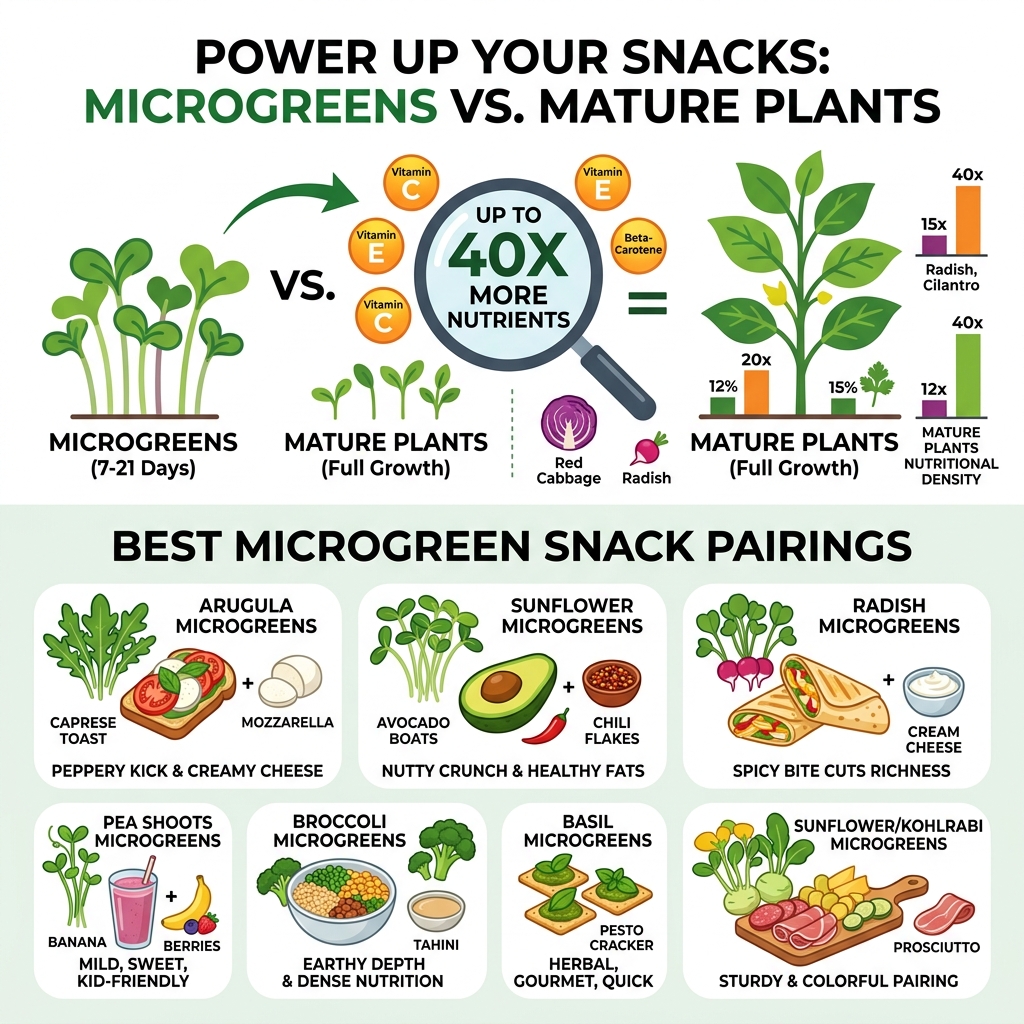
Here’s a quick look at the top pairings to get you started:
| Microgreen | Best Snack Combo | Why It Works |
|---|---|---|
| Arugula | Caprese toast with mozzarella | Peppery kick balances creamy cheese |
| Sunflower | Avocado boats with chili flakes | Nutty crunch + healthy fats |
| Radish | Quesadilla roll-ups with cream cheese | Spicy bite cuts through richness |
| Pea shoots | Smoothies with banana and berries | Mild, sweet, kid-friendly |
| Broccoli | Grain bowls with tahini and quinoa | Earthy depth + dense nutrition |
| Basil | Pesto cracker bites with pine nuts | Herbal, gourmet, quick to prep |
| Sunflower/kohlrabi | Charcuterie boards with prosciutto | Sturdy, colorful, crowd-pleasing |
Microgreens are harvested just 7–21 days after germination. Yet research shows they can contain up to 40 times more nutrients than their fully grown counterparts. That means a small handful on your snack plate is doing a lot of heavy lifting.
They also bring real flavor — peppery, nutty, sweet, or herbal — depending on the variety. That makes them ideal for pairing with everyday snack staples like cheese, crackers, dips, and wraps.
Whether you’re short on time or just want to eat smarter without giving up taste, microgreens are a simple upgrade worth exploring.
Why Microgreens are the Secret to Nutrient-Dense Snacking
When we talk about “superfoods,” we often think of exotic berries or expensive powders. However, the secret to elite snacking might already be sitting in a small tray on your windowsill. At Financelyx, we believe that creating healthy snacks with the power of microgreens is the most efficient way to upgrade your daily diet.
The science behind these tiny greens is staggering. A USDA study revealed that red cabbage microgreens, for instance, contain 6 times more Vitamin C and a whopping 40 times more Vitamin E than the mature red cabbage leaves you find in the produce aisle. These aren’t just garnishes; they are concentrated biological “multivitamins.”
Beyond vitamins, many varieties are rich in antioxidants and specialized compounds like sulforaphane. Found in high concentrations in broccoli microgreens, sulforaphane is a potent compound that supports cellular health and detoxification. When we combine these with healthy fats—like in a Broccoli Microgreens Salad with Kimkraut, Avocado, and Lemon Hummus—we actually help our bodies absorb those fat-soluble vitamins more effectively.
| Microgreen Variety | Primary Flavor Profile | Key Vitamins/Benefits |
|---|---|---|
| Broccoli | Mild, slightly earthy | Vitamin C, E, K, Sulforaphane |
| Red Cabbage | Earthy, sweet | 40x Vitamin E vs mature plant |
| Radish | Spicy, peppery | Vitamin B6, Folate, Magnesium |
| Sunflower | Nutty, crunchy | High protein, Zinc, Selenium |
| Pea Shoots | Sweet, grassy | Vitamin A, C, Fiber |
7 Best Microgreens Snack Combos for Every Palate
Finding the best microgreens snack combos is all about balancing flavor and texture. Think of microgreens as the “seasoning” that also provides the crunch. Whether you want something spicy to wake up your taste buds or something sweet and mild for the kids, there is a pairing for everyone.
By focusing on these combinations, you can eat more and weigh less because you are filling up on high-volume, high-nutrient greens that satisfy hunger faster than processed snacks. Let’s explore our top seven picks for incorporating microgreens in delicious sandwiches and wraps, toasts, and boards.
1. The Peppery Caprese Toast (Arugula Microgreens)
If you are looking for first steps in microgreen recipes for beginners, the Caprese toast is a perfect entry point. Traditional Caprese uses basil, but swapping it for arugula microgreens adds a sophisticated, peppery “wild ride” for your palate without the intense bitterness sometimes found in mature arugula.
To make this, lightly toast a slice of ciabatta or sourdough. Layer on fresh mozzarella and vine-ripened tomato slices. The magic happens when you drizzle a little extra virgin olive oil—which helps with lycopene absorption from the tomatoes—and top it with a generous handful of arugula microgreens and a dash of balsamic glaze. It’s a bright, acidic, and creamy snack that feels like a gourmet lunch.
2. Nutty Avocado Boats (Sunflower Microgreens)
Sunflower microgreens are the “heavyweights” of the microgreen world. They are sturdy, crunchy, and have a distinct nutty flavor that pairs beautifully with the creaminess of healthy fats.
For a quick snack, slice an avocado in half and remove the pit. Mash the center slightly with a fork, add a squeeze of lemon juice, and pile on the sunflower microgreens. Sprinkle with red chili flakes and sea salt. This combo is a protein-rich, heart-healthy snack that provides a satisfying crunch that most avocado dishes lack.
3. Spicy Quesadilla Roll-Ups (Radish Microgreens)
For those who crave heat, radish microgreens are the answer. They taste exactly like a spicy radish bulb but in a delicate, leafy form. We love using these in healthy and easy lunch recipes with microgreens like our signature quesadilla roll-ups.
Spread a thin layer of softened cream cheese on a flour tortilla (this acts as the “glue” for your greens). Layer on a mix of radish microgreens and shredded cheddar. Roll it up tightly and sear it in a pan for 2 minutes until the cheese melts. The cream cheese protects the microgreens from the direct heat, keeping them crisp and vibrant inside the warm tortilla.
4. Sweet Smoothie Sips (Pea Shoots)
Smoothies are perhaps the easiest way to ensure you’re adding a healthy twist to breakfast with microgreens. For children or those with a sweet tooth, pea shoots are the go-to variety. They are incredibly mild and taste like sweet spring peas.
Try blending a handful of pea shoots with a frozen banana, a cup of berries, and homemade kefir. The kefir provides probiotics for gut health, while the pea shoots add fiber and vitamins without altering the fruity flavor. It’s a “sneaky” way to get greens into even the pickiest eaters.
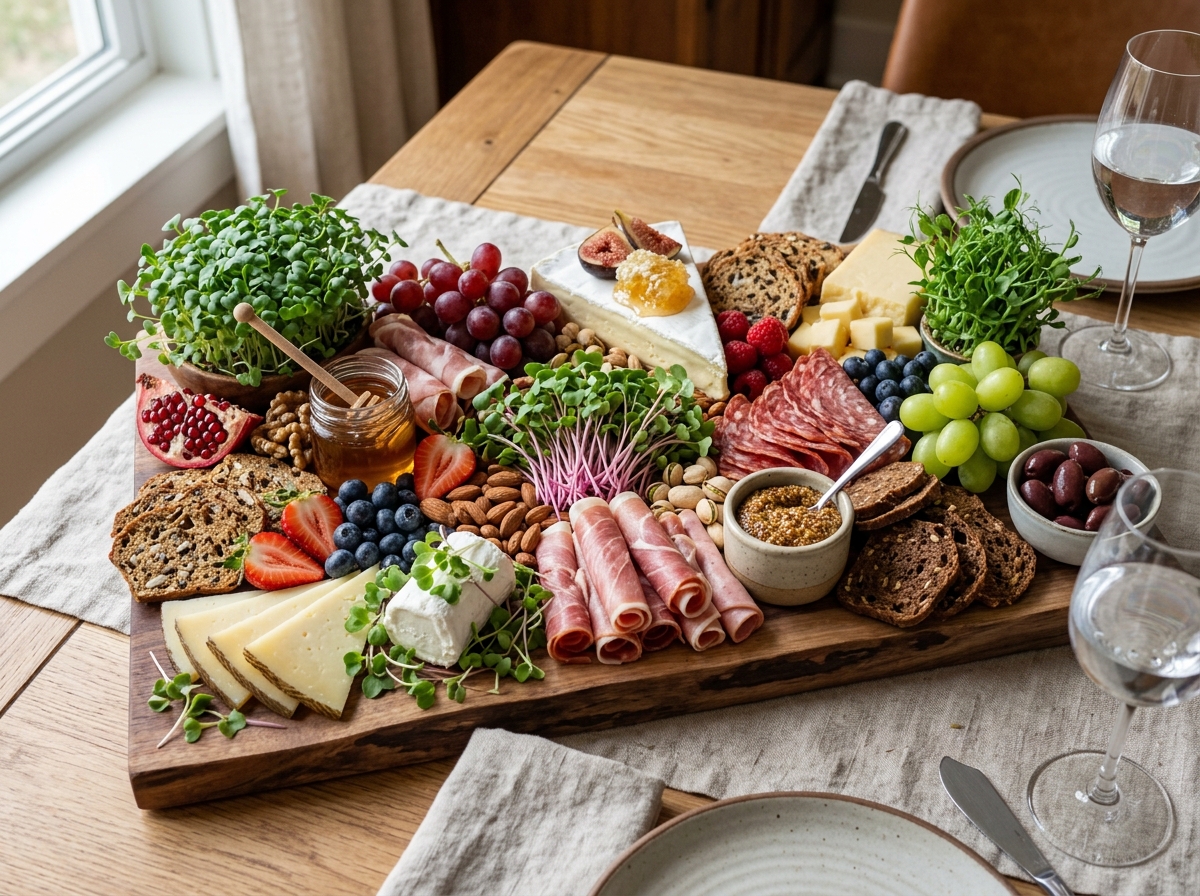
5. The Best Microgreens Snack Combos for Charcuterie
A charcuterie board is the ultimate social snack, and microgreens elevate it from a simple tray of meat to a culinary centerpiece. Instead of using large, woody herbs for decoration, use edible microgreens that actually enhance the flavor of the meats.
Sturdy varieties like sunflower shoots, purple kohlrabi, and mustard microgreens are best here because they don’t wilt quickly at room temperature. Try wrapping a slice of prosciutto around a pear wedge and tucking in a few mustard microgreens for a spicy-sweet-salty bite. Or, use purple kohlrabi to add a stunning pop of color against white cheeses like brie or goat cheese.
6. Pesto Cracker Bites (Basil Microgreens)
Basil microgreens offer a more concentrated herbal punch than mature basil. You can make a quick “micro-pesto” by pulsing basil microgreens with pine nuts, garlic, and olive oil.
Spread this over whole-grain crackers for a snack that supports immune and liver function. These bites are perfect as gourmet appetizers when you have last-minute guests, offering a sharp, fresh flavor that store-bought pesto simply can’t match.
7. Curry Crisps and Grain Bowls (Broccoli Microgreens)
Sometimes the best microgreens snack combos are the ones that provide a full-bodied, earthy experience. Broccoli microgreens are remarkably versatile. We love pairing them with chickpeas dusted in curry powder and roasted until crispy.
If you have a bit more time, assemble a mini grain bowl. Use a base of nutty quinoa, add your curry chickpeas, and top with a massive handful of broccoli microgreens. Drizzle with a tangy tahini dressing. The creaminess of the tahini complements the earthy microgreens, creating a snack that is both satisfying and energizing.
Tips for Preparing and Storing Your Microgreens
To ensure you’re getting the most out of your greens, you need to handle them with care. Unlike sturdy kale or spinach, microgreens are delicate. Cooking up health with microgreens usually means not cooking them at all, or adding them at the very last second to preserve their enzymes and heat-sensitive vitamins.
How to Maintain Freshness for the Best Microgreens Snack Combos
The clock starts ticking the moment microgreens are harvested. If you grow your own, use the “pinch-and-cut” method: only harvest what you need for that specific snack.
- Morning Crispness: If you are harvesting from your own trays, do it in the morning. This is when the plants have replenished their moisture overnight and are at their crispest.
- The Dry Rule: Moisture is the enemy of stored microgreens. If you buy them pre-washed, or if you wash them yourself, use a salad spinner to get them bone-dry.
- Storage: Store them in a glass container with a slightly damp paper towel at the bottom to maintain humidity without making the leaves soggy.
Avoiding Common Preparation Mistakes
We’ve seen many home cooks make the same few errors that ruin their microgreen experience. First, avoid high heat. Tossing microgreens into a boiling soup or a hot stir-fry will turn them into a mushy, nutrient-depleted mess. Always use them as a finishing touch.
Second, don’t over-wash. Because they are grown in controlled environments (often on clean mats), they usually only need a light misting or no wash at all if you know the source. Excessive handling bruises the delicate cell walls, leading to rapid wilting.
Kid-Friendly Strategies for Picky Eaters
If your kids run away at the sight of “trees” (broccoli), microgreens might be your new best friend. Because they are small and often have mild flavors, they are easy to integrate into familiar foods.
- The “Dinosaur” Strategy: Call them “dinosaur greens” or “superpower sprouts.” Creating a narrative around the food makes it an adventure rather than a chore.
- Participatory Prep: Let kids “harvest” the greens with safety scissors. When children help grow or cut their food, they are statistically much more likely to try it.
- The Secret Ingredient: Finely chopped pea shoots or sunflower greens can be folded into grilled cheese sandwiches or scrambled eggs. The cheese hides the texture, but the nutrients remain.
- Peanut Butter Roll-ups: Spread peanut butter on a tortilla, sprinkle with mild sunflower microgreens, add a banana, and roll it up. The nutty flavor of the greens blends perfectly with the peanut butter.
Frequently Asked Questions about Microgreen Snacks
Can you freeze microgreens for later use?
Yes, but with a caveat. Freezing destroys the cellular structure, meaning you will lose that signature crunch. However, it preserves the nutritional value perfectly. We recommend freezing microgreens only if you plan to use them in smoothies or juices where texture doesn’t matter.
Which microgreens are the least bitter for beginners?
If you’re wary of bitter greens, start with pea shoots, sunflower sprouts, or broccoli microgreens. These are traditionally sweet or mild. Save the arugula, mustard, and radish varieties for once you’ve developed a taste for the “zing” microgreens can provide.
How do I source fresh microgreens for snacking?
The freshest option is always growing your own. Using sustainable bamboo fiber mats allows you to grow them soil-free and mess-free in just 7–10 days. If you’re not ready to be a “farmer,” check your local farmers’ market or look for local vertical farms that deliver. These sources usually harvest the same day they sell, ensuring you get the highest nutrient density possible.
Conclusion
At Financelyx, we believe that small changes lead to massive health outcomes. Incorporating the best microgreens snack combos into your routine isn’t just about following a trend; it’s about embracing a nutrient-dense lifestyle that doesn’t sacrifice flavor. From the spicy kick of a radish quesadilla to the sweet simplicity of a pea shoot smoothie, these tiny plants offer endless culinary possibilities.
Ready to transform your snacking habits? Start small, experiment with different varieties, and enjoy the vibrant energy that comes from eating the most nutrient-dense plants on the planet. Explore more healthy living tips at Financelyx and let us help you stay on the path to wellness, one bite at a time.
