
Fresh Sprouts in Days: What You Need to Know About Growing Sprouts in Trays
Growing sprouts in trays is one of the fastest and easiest ways to add fresh, nutrient-dense food to your meals — no garden, no soil, and no special skills required.
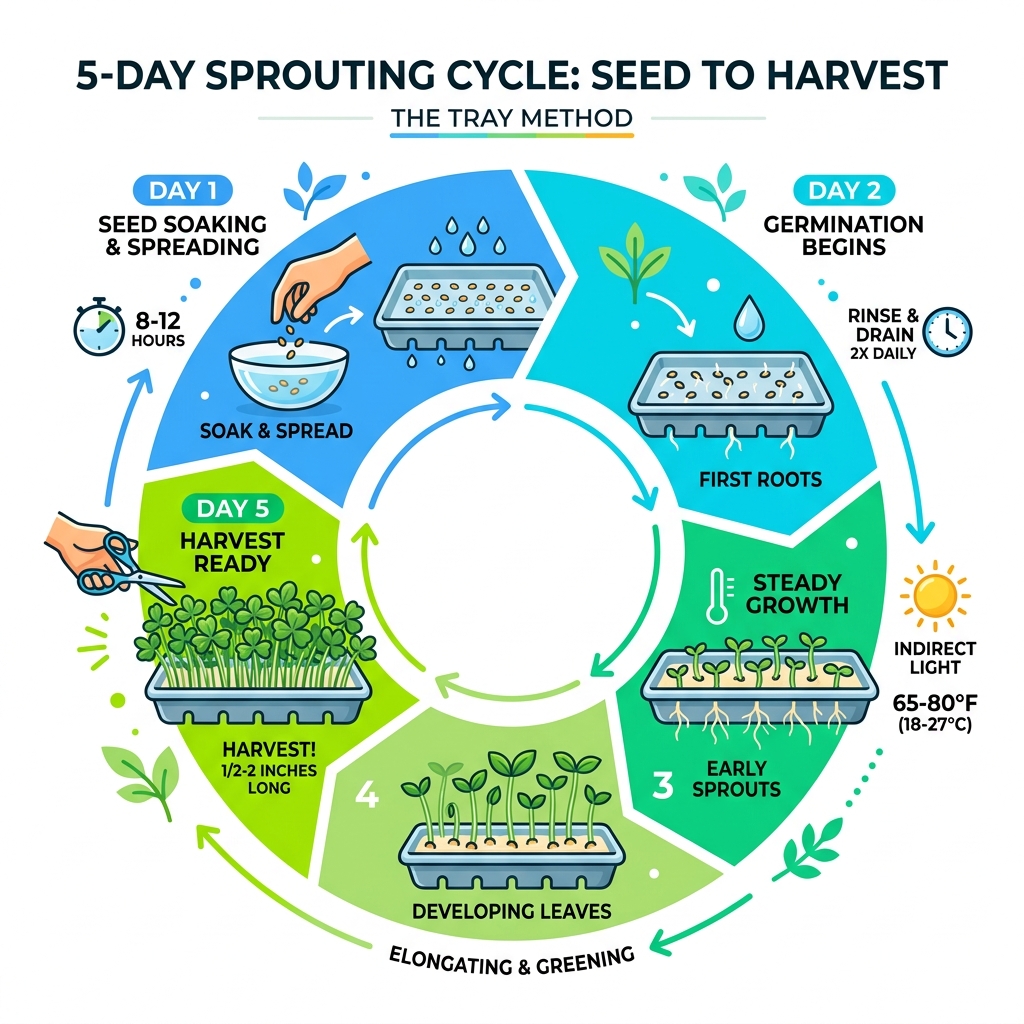
Here’s how it works at a glance:
- Soak your seeds for 8-12 hours
- Drain and spread evenly across a tray with drainage holes
- Rinse 2-3 times daily with cool water
- Keep at 65-80°F in indirect light
- Harvest in 4-6 days when sprouts are ½ to 2 inches long
That’s it. From a tablespoon of seeds to a full tray of fresh sprouts in under a week.
Sprouts are low in calories, packed with vitamins, minerals, and enzymes, and cost a fraction of what you’d pay at the store. Growing your own can save around $10 per week compared to buying them pre-packaged. And unlike store-bought sprouts that may have been sitting for days, yours go straight from tray to plate.
The tray method works especially well for leafy sprouts like alfalfa and clover, because it lets them grow vertically — something a jar simply can’t do as effectively. It’s also easy to stagger multiple trays so you always have a fresh batch ready.
Whether you’re a total beginner or you’ve tried sprouting in jars before, this guide walks you through everything you need to get a steady supply of homegrown sprouts going in your kitchen.
Sprouts vs. Microgreens: Understanding the Differences
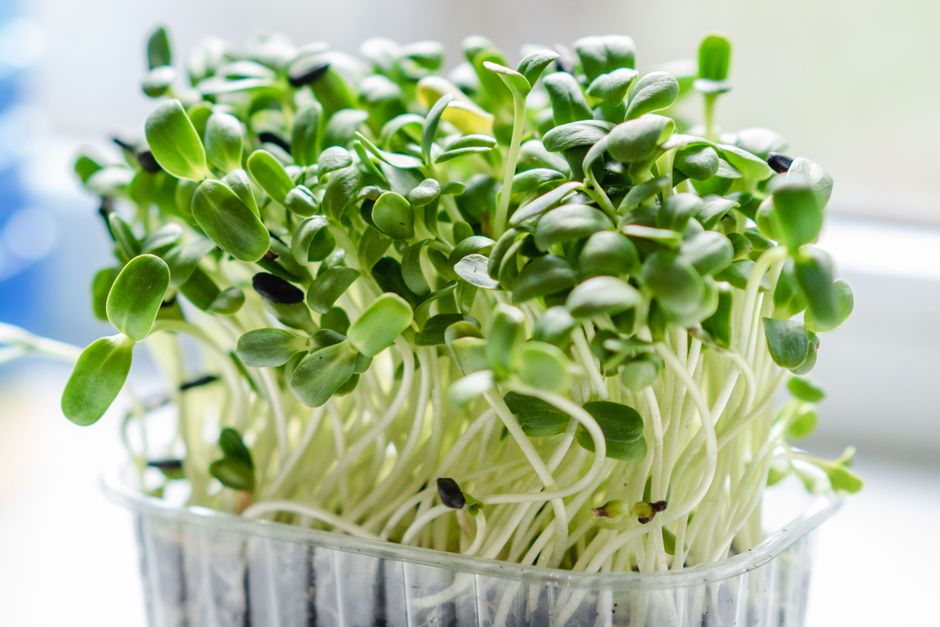
When we dive into indoor gardening, it is easy to get sprouts and microgreens confused. They look similar at a glance, but they are actually different stages of a plant’s life.
Sprouts are the very first stage of a plant’s growth. They are essentially germinated seeds that have just begun to wake up. When we grow sprouts, we aren’t using soil or even much light. The seed contains all the energy the little plant needs to pop out its first tiny root and stem. Because they grow in water, we eat the entire thing—seed, root, and stem.
Microgreens, on the other hand, are the next stage of development. They require a growth medium (like soil or a hemp mat) and plenty of sunlight or grow lights to develop their “true leaves.” Unlike sprouts, which are ready in 3 to 7 days, microgreens can take anywhere from 10 days to 5 weeks to mature. You also only eat the stems and leaves of microgreens, cutting them off at the soil line.
If you are just starting out, an indoor microgreens setup for beginners is a great project, but sprouting is even simpler because it requires zero “dirt” in your kitchen.
| Feature | Sprouts | Microgreens |
|---|---|---|
| Growth Medium | Water only | Soil or hydroponic pad |
| Time to Harvest | 3–7 days | 10–30 days |
| Light Needed | Low/Indirect | High (Sun or Grow Lights) |
| What is Eaten | Whole plant (seed, root, stem) | Stems and leaves only |
| Nutrient Density | Extremely high bioavailability | High vitamin concentration |
One of the biggest draws of sprouts is their bioavailability. The sprouting process breaks down anti-nutrients like phytic acid, making the vitamins and minerals much easier for our bodies to absorb.
Why Choose Growing Sprouts in Trays Over Jars?
While many beginners start with a mason jar, we have found that growing sprouts in trays offers several distinct advantages, especially for those looking to make sprouts a staple in their diet.
- Vertical Growth: In a jar, sprouts often become a tangled “ball.” In a tray, they can grow upright. This is particularly important for leafy sprouts like alfalfa and clover. When they grow vertically, they develop better and are easier to harvest.
- Superior Air Circulation: Trays provide a much larger surface area than the bottom of a jar. This increased airflow is the best defense against mold and “swampy” smelling sprouts.
- Drainage Efficiency: Proper drainage is the “make or break” factor in sprouting. Trays with mesh bottoms allow water to exit instantly, ensuring the seeds stay moist but never sit in a puddle.
- Succession Planting: Trays are often stackable or come in sets. This makes it incredibly easy to start a new tray every two days. By the time you finish eating tray one, tray two is ready for harvest.
If you are planning your setup, choosing the best microgreen trays for your home garden often involves looking for versatile equipment that can handle both sprouts and microgreens.
Preparing Your Setup: Equipment and Seed Selection
You don’t need a laboratory to grow high-quality sprouts, but having the right gear makes the process much more enjoyable.
- The Sprouting Tray: You want a tray with fine mesh or small drainage holes so your seeds don’t fall through. Many systems use nesting trays, where a mesh tray sits inside a solid bottom tray to catch any stray drips.
- A Lid: A loose-fitting lid helps retain moisture during the initial 24–48 hours when the seeds are just starting to “pop.”
- Sprouting-Specific Seeds: This is the most important part! Never use garden seeds meant for planting in the backyard. Garden seeds are often treated with fungicides or mercury coatings that are toxic if eaten. Always buy seeds labeled specifically for sprouting. These are pathogen-tested for E. coli and Salmonella to ensure they are safe for raw consumption.
When selecting your gear, finding easy-to-clean microgreen trays for your home garden should be a priority, as you’ll want to sanitize them between every batch. Additionally, choosing the right trays for vertical microgreen growth can help you save counter space.
Best Seeds for Growing Sprouts in Trays
Not all seeds behave the same in a tray. Here are our top picks for the tray method:
- Alfalfa & Clover: The classics. They are mild, crunchy, and grow perfectly upright in a tray.
- Broccoli: Famous for containing high levels of sulforaphane, a powerful antioxidant. Broccoli sprouts are a nutritional powerhouse.
- Radish: These add a spicy, peppery kick to sandwiches and salads.
- Mung Beans & Lentils: These are larger and more “meaty.” They are great for stir-fries and provide a good dose of plant-based protein.
To get started, you can follow these steps to set up a diy microgreens tray which are very similar to the initial steps for sprouting.
Step-by-Step Guide to the Tray Sprouting Method
Ready to start? Follow our foolproof method for growing sprouts in trays.
Step 1: Sanitize Everything Before you touch your seeds, wash your hands and ensure your trays are scrubbed with hot, soapy water. A clean environment is the key to safe sprouts.
Step 2: The Initial Soak Measure out about 1 to 2 tablespoons of seeds (remember, they expand 6 to 10 times their original size!). Place them in a jar or bowl with cool, filtered water. Soak them for 8 to 12 hours. Larger seeds like chickpeas might need up to 24 hours.
Step 3: Transfer to the Tray After soaking, rinse the seeds thoroughly and drain them. Spread them in an even, thin layer across the bottom of your sprouting tray. Don’t overcrowd them; they need room to breathe!
Step 4: The Rinse-and-Drain Routine This is your primary “job” for the next few days. At least twice a day (morning and evening), rinse the seeds with cool water. If your tray has a mesh bottom, you can simply run it under the tap. Ensure all the water drains out completely. Empty the bottom catch tray immediately so the seeds aren’t sitting in stagnant water.
For a more visual walkthrough, check out our step-by-step microgreen guide which shares many of these foundational techniques.
Maintaining Ideal Conditions for Growing Sprouts in Trays
Sprouts are a bit like Goldilocks—they like things “just right.”
- Temperature: Aim for 65-80°F. If your kitchen is too cold, they will grow slowly. If it’s too hot, they might spoil or grow mold.
- Light: For the first 3 or 4 days, sprouts actually prefer the dark. This mimics being underground and encourages them to grow longer stems as they “search” for light. On the final day, you can move them into indirect light to help them develop chlorophyll and turn a beautiful green.
- Airflow: Never seal your sprouting tray airtight. They are living, breathing plants that need oxygen.
When deciding on your setup, you might wonder about soil vs hydroponic trays for microgreens a comparison, but for sprouts, the “hydroponic” (water-only) tray method is always the winner.
Troubleshooting, Safety, and Harvesting
Even the best gardeners run into hiccups. Here is how to handle them.
Mold vs. Root Hairs This is the most common concern for new sprouters. Many sprouts (especially radish and broccoli) develop tiny, white, fuzzy “hairs” on their roots. These are cilia—totally normal parts of the plant used to soak up water. Mold, however, usually looks like a grey or black web and has a distinct “musty” or “sour” smell. If you aren’t sure, spray the fuzz with water. Root hairs will disappear instantly when wet; mold will stay visible.
De-hulling Once your sprouts are ready (usually day 5 or 6), you’ll notice many brown seed husks (hulls) floating around. To remove them, place your harvested sprouts in a large bowl of cool water. Gently swish them around. The hulls will often float to the top or sink to the bottom, allowing you to scoop out the clean sprouts.
Storage and Shelf Life Before putting your sprouts in the fridge, they must be dry. We recommend laying them out on a clean linen towel for an hour or using a salad spinner. Once dry, store them in a glass container with a paper towel to absorb any moisture. Alfalfa and broccoli sprouts can last up to 14 days in the fridge, while pea shoots can last up to 18 days.
If you’re looking to scale up your production, our beginner guide to microgreen farming offers great insights into larger-scale indoor growing.
How to Use Your Harvest:
- The “Crunch” Factor: Add them to avocado toast or turkey sandwiches.
- Smoothie Boost: Toss a handful of broccoli sprouts into your morning smoothie for a sulforaphane hit.
- Stir-Fry Finish: Add mung bean sprouts to a stir-fry during the last 30 seconds of cooking to keep them crunchy.
Frequently Asked Questions about Tray Sprouting
How long do tray-grown sprouts last in the refrigerator?
When properly dried and stored in an airtight container, most leafy sprouts (alfalfa, clover) last about 7 to 14 days. Heartier sprouts like pea shoots can last even longer, while delicate sprouts like sunflower or mung bean are best used within a week.
Can I use standard garden seeds for growing sprouts in trays?
We strongly advise against this. Garden seeds are intended to be buried in soil and are often treated with chemicals to prevent rot or pests. Sprouting seeds are specifically sourced and tested to be eaten raw and have much higher germination rates.
How do I distinguish between mold and fuzzy root hairs?
The “sniff test” is your best friend. Healthy sprouts smell fresh and slightly grassy. If they smell like a damp basement or vinegar, toss them. Also, root hairs are only on the roots, while mold will grow across the stems and seeds in a “web-like” fashion.
Conclusion
At Financelyx, we believe that healthy eating doesn’t have to be expensive or complicated. Growing sprouts in trays is the ultimate “life hack” for anyone wanting to boost their nutrition. Whether you’re following tips from our expert writers like Elena Monroe or experimenting with your own spicy radish mixes, the joy of a continuous harvest is hard to beat.
By spending just a few minutes a day rinsing your trays, you can provide your family with nutrient-dense, flavorful snacks that are literally bursting with life. Ready to take your indoor gardening to the next level? Explore more info about beginner guides and start your first tray tonight!
