
Stop Paying $5 for a Tiny Clamshell of Greens
A DIY microgreens growing setup lets you grow the same nutrient-packed greens you see at the grocery store for pennies — using items you likely already have at home.
Here’s what a basic setup needs:
- Shallow container – a pie plate, takeout tray, or 10×20 nursery tray (1-2 inches deep)
- Growing medium – potting mix, coconut coir, or even paper towels
- Untreated seeds – radish, pea, broccoli, or sunflower work great
- Water – a spray bottle or small pitcher
- Light – a sunny windowsill or basic LED shop light
That’s it. No garden. No special skills. Most varieties are ready to harvest in 7-14 days.
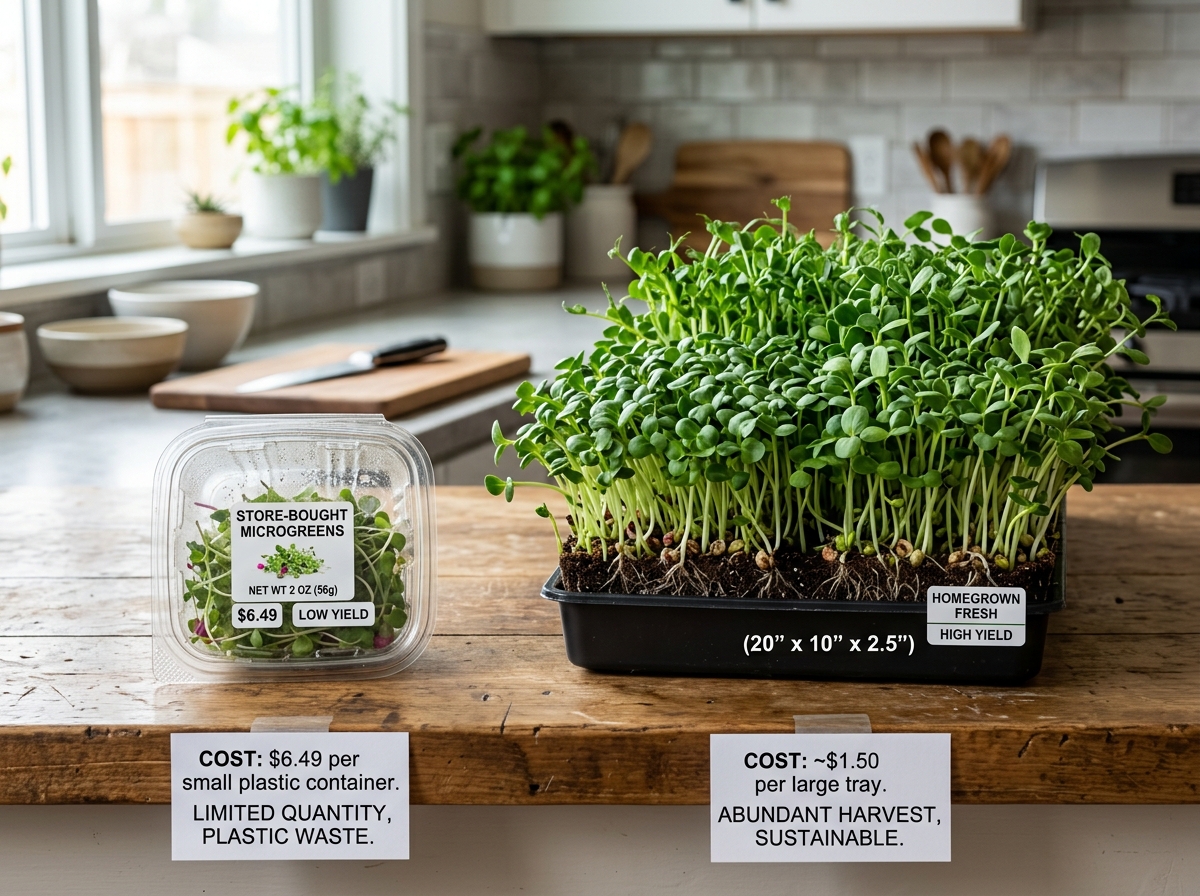
You’ve probably seen those tiny plastic clamshells of microgreens at the store — $4.99 for a handful. The same amount costs pennies to grow at home with a few dried peas, a shallow dish, and a windowsill.
For busy people who want more nutrition without more effort, microgreens are one of the smartest swaps you can make. They take about 2 minutes of daily care, fit in 3 square feet of space, and deliver up to 40 times more vitamins and antioxidants than their full-grown counterparts.
Whether you’re starting with a single recycled container or ready to build a multi-shelf system, this guide walks you through exactly how to do it — on a budget.
Why You Need a DIY Microgreens Growing Setup
We all want to eat better, but grocery prices often feel like they are doing their best impression of a rocket launch. This is where a DIY microgreens growing setup becomes a total game-changer for your kitchen and your wallet.
According to scientific research on microgreen nutrient density, these tiny plants are essentially “functional foods.” They contain between 4 to 40 times more vitamins, minerals, and antioxidants than their mature counterparts. For example, red cabbage microgreens pack roughly six times the Vitamin C of a mature cabbage head, and broccoli microgreens are famous for having up to 40 times the sulforaphane—a powerful compound studied for its cancer-fighting properties.
Beyond the health perks, the economics are staggering. A small container of pea microgreens at the store might set you back $4.99. We can grow that same amount for pennies using a handful of dried peas from the bulk bin and a recycled pie plate. When you grow your own, you’re looking at a 90% savings compared to retail prices. Plus, they add a professional culinary touch to your meals, acting as a flavorful garnish that makes even a simple sandwich feel like a five-star entree.
Microgreens vs. Sprouts: Knowing the Difference
It’s a common mix-up, but microgreens and sprouts are not the same thing.
- Sprouts are grown in water (usually in a jar), in dark, humid conditions. You eat the whole thing—seed, root, and stem. Because they grow in warm, wet environments without much airflow, they carry a slightly higher microbial risk.
- Microgreens are grown in a medium like soil or a fiber mat and require light. We only eat the stems and leaves, cutting them above the soil line. This makes them much safer to consume and gives them a more developed, complex flavor profile.
Best Beginner Varieties to Start Today
If you’re new to this, we recommend starting with the “speed demons” of the plant world.
- Radish: These are the overachievers. They germinate in a flash and are usually ready to harvest in just 5–7 days. They have a spicy, peppery kick.
- Broccoli: Very forgiving and incredibly healthy. They have a mild flavor that blends into almost anything.
- Pea Shoots: These are sweet, crunchy, and a hit with kids. They are also one of the few varieties that might give you a second harvest if you cut them correctly.
- Sunflower: These taste like nutty sunflower seeds and have a satisfying crunch. They do require a bit of a “soak” before planting, but the yield is worth it.
Essential Supplies for a Budget-Friendly DIY Microgreens Growing Setup
You don’t need a fancy “hydroponic laboratory” to get started. In fact, we love a good “trash-to-treasure” approach.
The “Dirt Cheap” Shopping List:
- Containers: Look for shallow plastic trays (1-2 inches deep). Recycled berry clamshells are perfect because they already have drainage holes. If you’re using a pie plate or takeout container, just poke a few holes in the bottom.
- Seeds: Look for “sprouting grade” or “untreated” seeds. You can even use whole dried peas or lentils from the grocery store bulk bin!
- Mister: A simple spray bottle from the dollar store is essential for keeping the seeds moist without washing them away.
- Scissors: Any clean kitchen scissors will do for the harvest.
Choosing the Right Growing Medium
While you can grow some varieties on wet paper towels, we’ve found that a solid medium produces more robust greens.
| Medium | Pros | Cons |
|---|---|---|
| Organic Potting Soil | Best nutrient availability; very forgiving. | Can be messy indoors. |
| Coconut Coir | Sustainable; holds moisture perfectly; clean. | No inherent nutrients (not a big deal for 10-day crops). |
| Hemp/Hemp Mats | Zero mess; easy to compost. | Dries out faster; can be more expensive. |
| Paper Towels | Basically free. | Roots struggle; only works for very fast crops. |
Optimizing Light for Your DIY Microgreens Growing Setup
Microgreens are not as “light-hungry” as a tomato plant, but they do need enough to prevent them from getting “leggy” (tall, skinny, and weak).
- Windowsills: A south-facing window that gets at least 4-6 hours of direct sun is the classic choice.
- LED Shop Lights: If you don’t have a sunny window, don’t buy “horticultural” lights. A standard LED shop light in the 5000K–6500K (daylight) spectrum works perfectly. We recommend a 14-16 hour photoperiod using a simple plug-in timer.
Step-by-Step: Planting and Caring for Your Greens
Ready to get your hands dirty? Here is our foolproof process.
- Prepare the Tray: Fill your container with about 1-2 inches of moistened medium. Level it out so there are no dips where water can pool.
- Sow the Seeds: Spread your seeds densely across the surface. Think of it like “sprinkles on a cupcake.” You want them close but not piled on top of each other.
- Mist and Press: Use your spray bottle to settle the seeds. Gently press them into the soil with your hand or another tray to ensure good “seed-to-soil” contact.
- The Environment: Keep the tray at room temperature (65-75°F). Extreme cold or heat will stall your growth.
The Blackout Period: Plant CrossFit
This is the “secret sauce” of a professional DIY microgreens growing setup. Once you’ve planted, cover the seeds with an upside-down tray or a piece of cardboard to keep them in total darkness for 3-4 days.
We like to add a small weight (like a book or a can of beans) on top. This forces the tiny seedlings to push against the resistance, which makes their stems stronger and encourages the roots to dive deep. It’s like a gym workout for your plants! After 3 or 4 days, you’ll see pale, yellow shoots lifting the cover. That’s your signal to remove the weight and introduce them to the light.
Harvesting and Storing for Maximum Freshness
You’ll know it’s time to harvest when the first set of leaves (the cotyledons) are fully open and look vibrant. This usually happens when the plants are 2-3 inches tall.
- The Cut: Use a sharp knife or scissors to snip the greens just above the soil line. Try to avoid getting soil on the leaves so you don’t have to wash them as much.
- The Dry: Microgreens hate being wet in the fridge. If you do wash them, make sure they are completely air-dried before storing.
- The Storage: Place them in a sealed container or glass jar with a dry paper towel to absorb excess moisture. They will stay fresh and crunchy for 5-7 days.
Troubleshooting and Scaling Your DIY Microgreens Growing Setup
Even experts run into a few hiccups. The most common issue is mold. If you see white fuzzy stuff, don’t panic! First, check if it’s actually mold or just “root hairs.” Root hairs grow straight out from the root and disappear when you mist them; mold looks like a spiderweb and stays visible.
If you do have mold, it’s usually due to poor airflow or overwatering. A small USB fan can work wonders. You can also use a “hydrogen peroxide fix”: mix 1 teaspoon of 3% hydrogen peroxide into a cup of water and lightly mist the affected area.
Scaling Up Your DIY Microgreens Growing Setup
Once you realize how easy this is, you might want more than one tray. Scaling up is where the real fun begins. You can build a professional-grade rack for about $450-$550 that can produce 48-60 trays per month.
We recommend using a 6-shelf wire rack with 9-10 inch spacing between shelves. This allows you to “daisy-chain” your LED lights together so you only need one outlet. A setup like this can produce $960-$2,160 in “retail value” every month if you were to sell them—or just provide an absurd amount of free salad for your family!
Creative Ways to Use Your Harvest
At Financelyx, we believe healthy eating should never be boring. Our expert writer, Elena Monroe, loves using microgreens to add a “nutrient-dense punch” to everyday snacks.
- Smoothies: Throw a handful of mild broccoli or kale microgreens into your morning blend—you won’t even taste them, but your body will thank you.
- Grain Bowls: Top a bowl of quinoa and roasted veggies with spicy radish microgreens for texture and heat.
- Sandwiches: Swap out boring iceberg lettuce for crunchy, sweet pea shoots.
- Omelets: Fold in some cilantro or basil microgreens right before serving for a burst of fresh herb flavor.
Frequently Asked Questions about Microgreens
Can microgreens regrow after the first harvest?
For most varieties, it’s a “one-and-done” crop. Once you snip the stem, the plant doesn’t have enough energy or “nodes” left to grow back. The big exception is pea shoots. If you cut them just above the lowest leaf, they will often regrow a second (albeit slightly smaller) crop. Once you’re finished, the spent soil and roots make excellent compost for your outdoor garden.
Are microgreens safe to eat raw?
Yes, they are generally very safe. Because they are grown in light with good air circulation and harvested above the soil, they don’t have the same contamination risks as sprouts. To be extra safe, always use clean water, food-safe trays, and buy seeds from reputable suppliers who test for pathogens.
How much does a basic setup actually cost?
You can start today for under $10 using recycled containers and a bag of bulk peas. If you want to “level up” to a dedicated home system with a light and professional trays, you’re looking at a startup cost of about $50. After that, your maintenance (seeds and soil) is only about $60 per year. Considering you’ll be saving over $140 annually on grocery bills, the system pays for itself in no time.
Conclusion
Building your own DIY microgreens growing setup is one of the most rewarding steps you can take toward a more sustainable and nutrient-dense lifestyle. It turns a small corner of your home into a “living pantry” that provides fresh, flavorful greens regardless of the weather outside.
At Financelyx, we are committed to helping you find simple, affordable ways to prioritize your health. Whether you are following Elena Monroe’s recipe ideas or just looking for a fun family project, microgreens are the perfect entry point into indoor gardening.
Ready to get started? More info about tools and supplies can help you pick the perfect gear for your new indoor farm. Happy growing!
