
Why Getting Microgreens Growing Humidity Levels Right Makes or Breaks Your Harvest
Microgreens growing humidity levels are one of the single biggest factors determining whether your trays produce a lush, nutrient-dense harvest — or a fuzzy, mold-covered disappointment.
Here’s a quick answer to what you need to know:
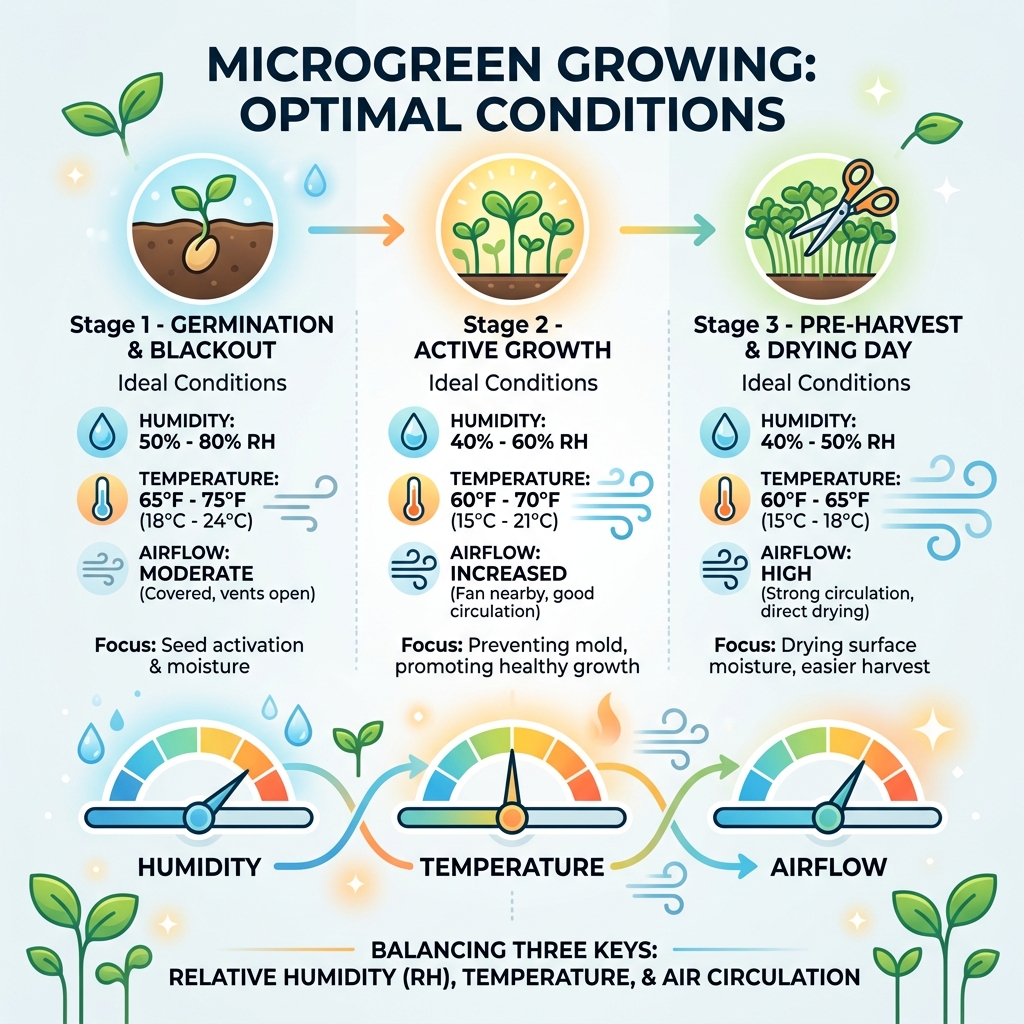
| Growth Stage | Ideal Humidity Range |
|---|---|
| Germination (blackout period) | 50-80% RH |
| Active growth (under lights) | 40-60% RH |
| Pre-harvest (drying day) | 40-50% RH |
The key rules:
- Keep humidity above 50% during germination to support seed activation
- Drop to 40-60% once your greens are under lights to prevent mold
- Never let humidity sit above 70% for extended periods — disease risk climbs fast
Think of your grow space like a tiny ecosystem. Humidity affects how your microgreens breathe, absorb nutrients, and shed excess moisture through their leaves. Too little, and young roots dry out before they can establish. Too much, and you’ve created the perfect conditions for mold and damping-off disease to wipe out an entire tray overnight.
Most home growers discover this the hard way — a warm, enclosed space with no airflow and high moisture is essentially a pathogen paradise.
The good news? Once you understand the numbers and the tools, controlling humidity is straightforward. You don’t need a commercial grow room to get this right.
Why Microgreens Growing Humidity Levels Dictate Your Harvest Success
When we talk about microgreens growing humidity levels, we are really talking about the plant’s ability to live and breathe. Microgreens aren’t just sitting there; they are active hydraulic pumps. Through a process called transpiration, they pull water and dissolved minerals up from the roots and release moisture through tiny pores in their leaves called stomata.
If the air is too saturated (high humidity), the plant cannot “exhale” that moisture. This stalls the pump, leading to poor nutrient uptake and stunted growth. Conversely, if the air is bone-dry, the plant loses water faster than its tiny, immature roots can replace it, leading to wilting and death.
The Science of the “Soggy Canopy”
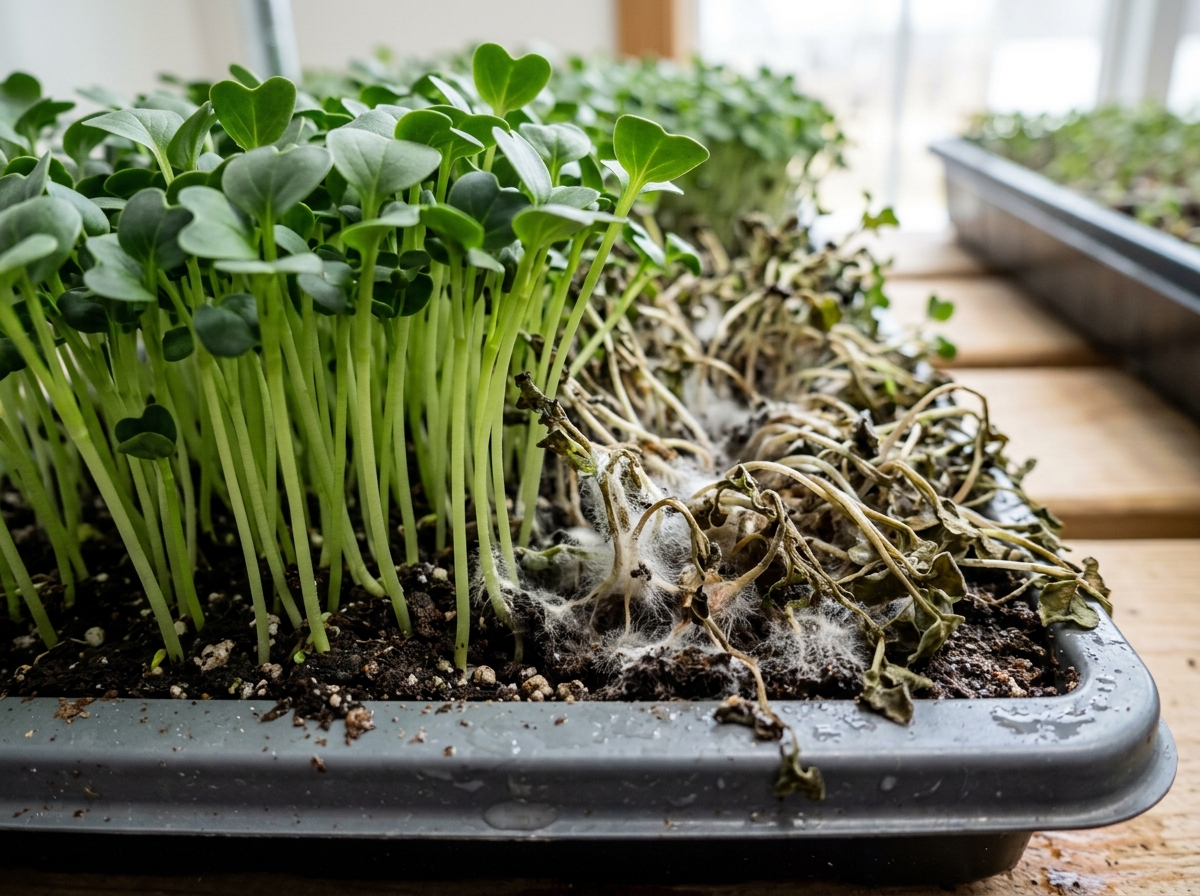
When microgreens growing humidity levels exceed 70%, we enter the danger zone. High humidity reduces stomatal conductance, meaning the plant’s “breathing” slows down. This creates a film of moisture on the leaf surface and within the dense canopy. This wet film is an open invitation for pathogens.
Common issues caused by poor humidity management include:
- Damping-off: A fungal disease that causes young stems to go mushy and collapse.
- Mold and Mildew: Fuzzy white or gray growths that ruin the flavor and safety of your greens.
- Uneven Growth: Pockets of high humidity in a tray can lead to some greens being tall and leggy while others remain stunted.
Maintaining yield consistency is all about stability. For those of us looking to learn more about optimal growing conditions for microgreens, understanding that humidity is the “governor” of plant speed is the first step toward a professional-grade harvest.
The Ideal Humidity Targets by Growth Stage
One of the most common mistakes we see beginners make is treating the environment the same from day one to harvest. In reality, your microgreens growing humidity levels should shift as the plant develops.
| Stage | Relative Humidity (RH) | Goal |
|---|---|---|
| Germination (Blackout) | 50% – 80% | Soften seed coats and trigger rapid root “searching.” |
| Growth (Under Lights) | 40% – 60% | Encourage transpiration and prevent fungal pathogens. |
| Pre-Harvest (Drying) | 40% – 50% | Dry the leaf surface for better shelf life and cleaner cuts. |
The Blackout Period (Germination)
During the first 3-5 days, we often use the “stacking method” or blackout domes. This naturally traps moisture, creating a high-humidity microclimate (often near 80% RH). This is intentional! It ensures the seeds don’t dry out before they’ve sent a taproot into the medium. However, even here, a light breeze in the room is vital to prevent stagnant air from settling under those domes.
Transition to Light
Once true leaves begin to develop and you move trays under grow lights, you must drop the humidity. Aiming for that 40-60% “sweet spot” ensures the plants can begin working hard. If you’re looking for a simple guide to microgreens temperature & humidity, as temperature rises under your lights, the air’s capacity to hold water increases, making dehumidification even more critical.
Pre-Harvest “Drying Day”
The day before you plan to cut your greens, try to nudge the humidity toward the lower end of the spectrum (40-50%). This ensures the canopy is bone-dry. Dry leaves result in a “crisper” cut, less bruising, and a significantly longer shelf life in the refrigerator.
Variety-Specific Requirements for Popular Microgreens
While the 40-60% range is a great general rule, some of our favorite varieties have unique “personalities” when it comes to moisture.
- Pea Shoots: These have dense, heavy foliage. Because they create a thick canopy, they are highly prone to mold. We recommend keeping pea shoots on the lower end of the humidity scale (45-50%) with increased airflow.
- Mucilaginous Seeds (Basil, Chia, Cress): These seeds develop a gel-like coating when wet. If humidity is too high during germination, they can become a gooey mess that refuses to sprout. They prefer a slightly drier start than brassicas.
- Brassicas (Broccoli, Radish, Kale): These are the “workhorses” of the microgreen world. They are quite forgiving but thrive best at a steady 50% RH. Radish, in particular, grows so fast that it generates a lot of its own heat and moisture, so watch those trays closely!
- Cilantro: This variety is notoriously finicky. It prefers cooler temperatures (under 70°F) and moderate humidity. High heat combined with high humidity is a death sentence for micro cilantro.
For more detailed growing tips, always check the specific needs of your seed batch, as even different varieties of the same plant can have slight variations in fungal sensitivity.
Mastering the Climate: Tools and Techniques for Control
To truly master microgreens growing humidity levels, you need to move beyond guesswork. You can’t “feel” the difference between 55% and 75% humidity, but your plants certainly can.
Monitoring Microgreens Growing Humidity Levels with Precision Tools
The most important tool in your kit is a digital hygrometer. We recommend placing these at the “canopy level”—right where the plants are growing—rather than on a distant wall. Room humidity can differ significantly from the humidity inside a tray of dense greens.
- Basic Hygrometers: Inexpensive and effective for small setups.
- WiFi Sensors: These allow us to monitor conditions from our phones and set alerts if levels spike above 65%.
- Data Loggers: For commercial-minded growers, these help track how humidity dips and spikes throughout a 24-hour cycle.
Using Equipment Effectively
If your levels are consistently off, it’s time to optimize light, temperature, and humidity for peak growth.
- Dehumidifiers: Essential for basements or humid climates. A 70-pint unit is often needed for medium-sized grow rooms. Pro tip: Place your dehumidifier higher up in the room, as warm, moist air rises.
- Humidifiers: Only needed if you live in an extremely arid climate or during harsh winters when indoor heating strips the air of moisture.
- Oscillating Fans: These don’t change the RH percentage, but they break up the “boundary layer” of moisture around the leaves, effectively lowering the humidity the plant actually experiences.
- HVAC Systems: For larger operations, oversizing your AC by 10-20% helps it act as a powerful dehumidifier while keeping temperatures at the ideal 73°F (23°C).
You can find many of these items in our tools & supplies section to help get your environment dialed in.
Adjusting Microgreens Growing Humidity Levels for Hydroponic vs. Soil
The medium you choose changes how you manage the air.
- Soil/Coco Coir: These substrates hold a significant amount of water. This creates a “buffer” but also contributes more to ambient humidity through evaporation from the soil surface.
- Hydroponic Mats: These dry out much faster. While they contribute less to room humidity, they require more frequent “bottom watering” to ensure the roots stay hydrated in a low-humidity environment.
Troubleshooting Common Humidity Issues and Mold Prevention
Even with the best tools, things can go wrong. If you see white, fuzzy growth, don’t panic—but do act fast.
The Mold vs. Root Hair Confusion
New growers often mistake “root hairs” for mold. Root hairs are tiny, microscopic filaments that help the plant absorb water; they usually appear only at the base of the stem and look like a uniform “fuzz.” Mold, however, looks like spiderwebs or cotton candy and often climbs up the stems or appears in circular patches.
Proven Prevention Strategies
- Bottom Watering: This is the gold standard. By adding water to the bottom tray rather than overhead, you keep the leaves and the top of the substrate dry, drastically reducing the risk of mold.
- Seeding Density: If you keep getting mold, try reducing your seed weight by 10-20%. This allows more air to move between the stems.
- Hydrogen Peroxide Misting: A 3% food-grade hydrogen peroxide solution can be misted over seeds during germination to kill fungal spores before they start.
- Airflow Patterns: Avoid pointing fans directly at the trays, which can cause “windburn” or uneven drying. Instead, aim for a gentle, circular airflow that moves the entire mass of air in the room.
For a deeper dive into controlling humidity and temperature in microgreens cultivation, check out our guides for beginners.
Frequently Asked Questions about Microgreens Growing Humidity Levels
Can I grow different microgreen varieties together if they have different humidity needs?
Yes, you can! Most microgreens are happy in the 45-55% RH range. For varieties that prefer it drier (like pea shoots), place them near your fans or on the top shelves where air moves more freely. For those that like it slightly more humid, place them on lower shelves or further from the direct breeze.
How do I lower humidity in a small home grow space on a budget?
If a dehumidifier isn’t in the budget, focus on ventilation. Cracking a window or using a small exhaust fan to pull moist air out of the room can work wonders. Also, ensure you aren’t overwatering your trays—standing water is a major contributor to high humidity.
What are the signs that my humidity is too low for my microgreens?
If your microgreens growing humidity levels drop below 30-40%, you’ll notice “crispy” leaf edges, stunted growth, and trays that feel light and dry just hours after watering. You might also see poor germination, as the seed coats become too hard for the sprouts to break through.
Conclusion
At Financelyx, we believe that the secret to a healthier lifestyle starts with what you grow in your own home. Mastering microgreens growing humidity levels is about more than just preventing mold; it’s about unlocking the full nutritional potential of every seed. When your environment is stable, your microgreens can focus all their energy on creating the vitamins and antioxidants that make them such powerful, nutrient-dense snacks.
Whether you’re following a recipe from Elena Monroe or just looking to add a flavorful crunch to your morning smoothie, the quality of your harvest starts with the air around it. By monitoring your levels, investing in a few key tools, and maintaining environmental stability, you’ll ensure a consistent supply of vibrant greens all year round.
Ready to take your grow to the next level? Upgrade your grow setup with the right tools & supplies and stop the mold before it starts. Happy growing!
