
Indoor Herb Garden 101: From Drainage to Grow Lights
Why an Indoor Herb Garden Is the Simplest Upgrade for Your Kitchen
An indoor herb garden is a compact growing system that lets you cultivate fresh herbs like basil, mint, and parsley inside your home year-round — no outdoor space or gardening experience required.
Quick-start essentials:
- Choose a system — hydroponic (water-based) or soil-based
- Pick your herbs — basil, thyme, mint, parsley, chives, and rosemary all thrive indoors
- Set up light — a sunny windowsill (6+ hours) or a built-in LED grow light works
- Water consistently — most systems need a refill every 1–2 weeks
- Harvest regularly — most herbs are ready to snip within a few weeks of sprouting
The idea is simple: fresh herbs, always within arm’s reach, with almost no effort.
If you’ve ever tossed out a wilted bunch of store-bought parsley — or paid $4 for three sprigs of thyme — you already understand the appeal. Growing your own herbs indoors solves that waste problem and puts more nutrition and flavor into every meal you make.
Modern indoor herb systems have made this easier than ever. Some, like hydroponic smart gardens, can grow herbs up to 5x faster than traditional soil methods. Others use sub-irrigated soil containers that practically water themselves.
Whether you have a full countertop or just a windowsill, there’s a setup that fits.

Understanding Indoor Herb Garden Systems: Hydroponic vs. Soil
When we decide to start an Indoor herb garden, the first big fork in the road is choosing between a hydroponic system and a soil-based one. Think of it as choosing between a high-tech electric car and a reliable, classic bicycle. Both will get you there, but the experience is quite different.
Hydroponic Systems
Hydroponics sounds like science fiction, but it’s actually very straightforward. Instead of soil, the plants grow in a nutrient-rich water solution. Their roots hang down into a reservoir where they get a direct “IV drip” of everything they need to thrive.
Systems like the Click & Grow or AeroGarden use this method. Because the plants don’t have to “work” to find nutrients in the dirt, they can focus all their energy on growing leaves. This is why some smart gardens can grow plants 5x faster than soil! For those of us interested in getting a head start on our greens, you might also find our guide on Indoor Microgreens Setup for Beginners helpful, as many of the same principles apply.
Soil-Based Systems
Traditional soil-based gardens are what most of us grew up with. However, modern versions have received a major “smart” upgrade. Many now use sub-irrigation. This means there is a water reservoir at the bottom of the pot, and the soil “wicks” the water up as the plant needs it.
The EarthBox is a great example of this. It uses an aeration screen and wicking chambers to prevent the common mistake of overwatering. It’s perfect if you prefer the “feel” of traditional gardening but want a safety net for your plants.
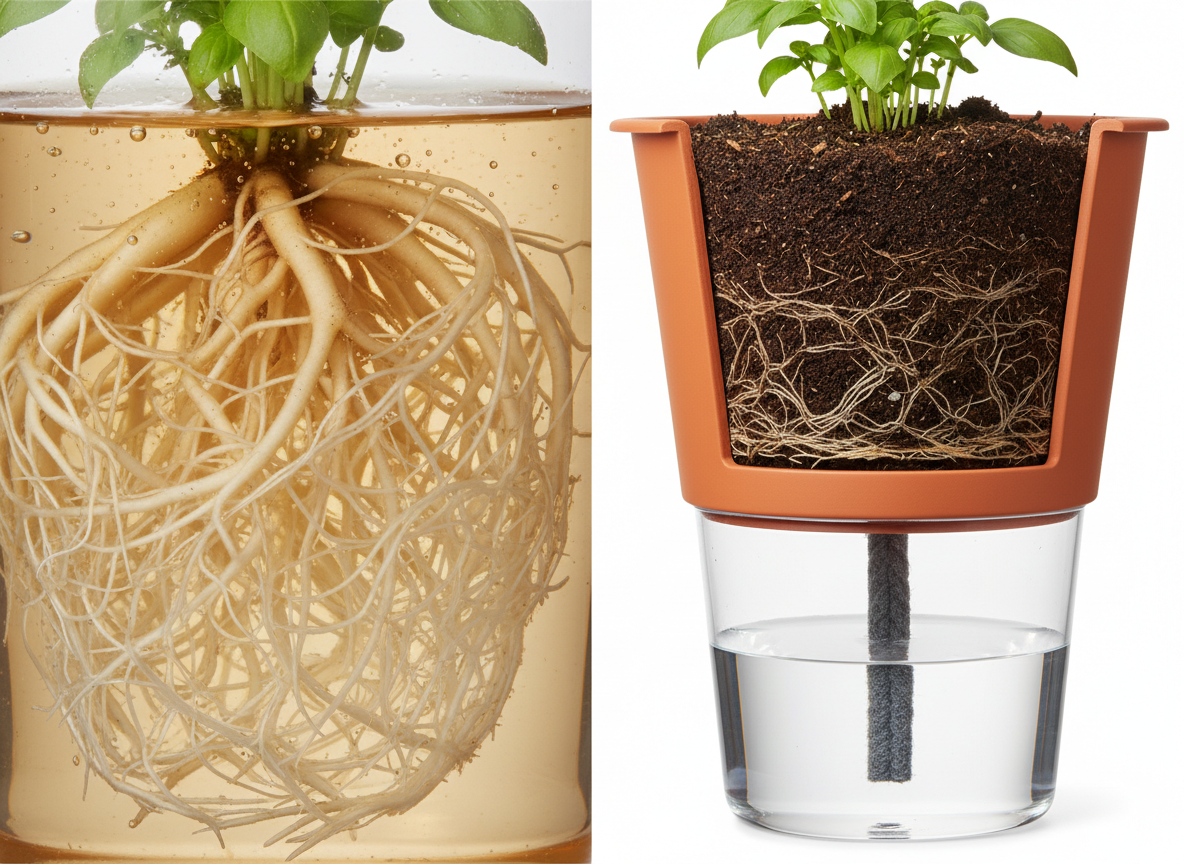
The Comparison Table: Hydroponic vs. Soil-Based
| Feature | Hydroponic Systems | Soil-Based (Sub-Irrigated) |
|---|---|---|
| Growth Speed | Up to 5x faster | Standard growth rate |
| Mess Factor | Very low (no dirt) | Moderate (soil can spill) |
| Maintenance | Refill water/nutrients every 1-2 weeks | Refill reservoir as needed |
| Water Usage | Uses ~95% less than traditional | Highly efficient, prevents evaporation |
| Learning Curve | “Plug and Play” | Requires basic potting knowledge |
Essential Features for a Thriving Indoor Herb Garden
If we want our Indoor herb garden to be more than just a temporary kitchen decoration, we need to look for specific features. Not all gardens are created equal, and the “smart” in smart garden usually refers to how much of the thinking the machine does for us.
Full-Spectrum LED Grow Lights
This is the most critical component. Plants need light to photosynthesize, and unless you have a massive south-facing window with zero obstructions, your herbs will likely struggle in the winter. High-quality systems use full-spectrum LEDs that mimic the sun. Some models, like the Auk Mini, feature lights that enable significantly faster growth compared to natural light alone. If you’re curious about the technical side of this, check out our deep dive into Optimal Lighting Conditions for Indoor Microgreens.
Adjustable Height
Herbs grow at different speeds. Your basil might shoot up like a teenager in a growth spurt, while your rosemary takes its sweet time. Look for a system with an adjustable light arm. Models like the AeroGarden Bounty Basic with Gourmet Herb Seed Pod Kit | ScottsMiracle-Gro US allow the light to move up to 24 inches, giving your taller plants room to breathe.
Smart Automation and App Integration
We live in a busy world. Sometimes we forget to water the plants. Smart gardens like The Ultimate Smart Indoor Garden | Click & Grow take the guesswork out of the equation. They often come with:
- Water sensors: Alerts on your phone when the tank is low.
- Vacation mode: Dims the lights and reduces water usage so your plants don’t outgrow the system while you’re at the beach.
- AI Gardeners: Some high-end towers, like the Gardyn, use AI (often named “Kelby”) to monitor plant health via cameras and adjust settings automatically.
Light and Water Needs for Your Indoor Herb Garden
If you aren’t using a smart system and are going the DIY route, remember the “6 and 14” rule. Most herbs need at least 6 hours of direct sunlight daily. If you are using supplemental lights, they should be on for about 14 to 16 hours a day.
For watering, the finger test is your best friend. Stick your finger an inch into the soil; if it feels dry, it’s time to water. If you’re using a hydroponic system, you’ll usually just wait for the blinking light or the floating indicator to tell you it’s thirsty. You can find many of these automated systems and accessories on Amazon.com .
Choosing the Right Space for Your Indoor Herb Garden
Space is a luxury in many kitchens. Before buying, measure your “countertop footprint.”
- Small Spaces: A 3-pod system like the Click & Grow Smart Garden 3 is about the size of a loaf of bread.
- Vertical Towers: If you want a massive harvest but have zero counter space, vertical gardens like the Gardyn Studio or Gardyn Home 4 grow upwards. They can yield 4-5 lbs of produce per month while taking up less than 2 square feet of floor space.
- Environment: Keep your garden away from the stove (too hot) and drafty windows (too cold). Ideal temperatures for most herbs are 65-70°F during the day.
For more on organizing your green space, read our guide on Finding the Right Indoor Gardening Accessories for Your Microgreens.
Best Herbs to Grow and Their Care Requirements
Not every herb is a fan of the great indoors. However, the ones that are happen to be the most delicious! Here are our top picks for a successful Indoor herb garden:
1. Basil (The “Sun Hog”)
Basil is the king of the indoor garden. It grows incredibly fast and loves the warmth of LED lights.
- Tip: “Pinch back” the top leaves once the plant is 6 inches tall. This encourages it to grow bushy rather than tall and spindly.
- Usage: Perfect for fresh pesto or topping a homemade Margherita pizza.
2. Rosemary
Rosemary is a bit more temperamental. It likes its “feet” (roots) to stay relatively dry but loves humidity in the air.
- Tip: If your home is dry in the winter, mist your rosemary twice a week or place it on a tray of pebbles with a little water.
3. Mint
Mint is a rebel. In an outdoor garden, it will take over your entire yard. Indoors, it’s much better behaved.
- Tip: Mint grows via runners. In a pod system, it might try to sneak into its neighbor’s pod, so keep an eye on it!
4. Parsley and Chives
These are the workhorses of the kitchen. Parsley takes a little longer to germinate (sometimes up to 2 weeks), so don’t give up on it! Chives are wonderful because you can “haircut” them down to an inch above the soil, and they will grow right back.
For a deeper look at specific plant varieties that work well in small setups, see our article on Indoor Microgreens Setup for Beginners 2.
Harvesting Tips
The golden rule of harvesting is: Never take more than one-third of the plant at a time. If you shave the whole thing, the plant might go into shock and stop growing. Also, try to use fresh herbs at the end of your cooking process to preserve their delicate oils and nutrients. You usually need about 3 times more fresh herbs than dried herbs in a recipe!
Step-by-Step Setup and Maintenance Guide
Setting up a modern Indoor herb garden is often easier than assembling a piece of IKEA furniture. Here is how we usually get things growing:
- Unbox and Assemble: Most smart gardens snap together in under 10 minutes.
- Insert Pods: Drop your pre-seeded pods (like the Click & Grow Plant Pods or AeroGarden pods) into the slots. These pods usually contain a “Smart Soil” or rockwool that has the seeds and nutrients already inside.
- Add Water and Domes: Fill the reservoir. Place the clear plastic “germination domes” over the pods. These act like mini-greenhouses, trapping heat and moisture to help the seeds sprout.
- Plug it In: Set the timer. Most lights will stay on for 16 hours and off for 8.
- Wait for the Sprout: Most herbs will sprout within 7 to 14 days. Once they touch the plastic dome, take the dome off!
Maintenance Schedule
- Weekly: Check water levels. Even “self-watering” systems need a refill eventually.
- Monthly: If you’re using a hydroponic system, it’s a good idea to wipe down the reservoir to prevent algae.
- Every 6 Months: For systems like the Gardyn, a deep clean with a citric acid solution helps keep the pumps running smoothly.
Having the right gear makes this a breeze. We’ve rounded up the Top Tools You Need for Growing Indoor Microgreens, many of which are essential for herb gardening too.
Troubleshooting Common Indoor Herb Garden Issues
Even with the best tech, nature can be unpredictable. Here are the most common “oops” moments:
- Leggy Growth: If your plants look tall, thin, and pale, they are “reaching” for light. Lower your grow light or move the garden to a brighter spot.
- Algae Buildup: This is the green gunk that grows on the surface of the pods. It’s usually harmless but competes for nutrients. You can prevent it by ensuring no light reaches the water in the reservoir.
- Pests: Occasionally, fungus gnats or aphids might find your indoor oasis. A simple spray of water and a tiny drop of dish soap usually does the trick.
- Shading: Fast-growing plants like basil can sometimes grow so large they block the light for smaller plants like thyme. Regular pruning is the solution!
If you’re using a high-end system like the Gardyn Studio | Smart Indoor Hydroponic Garden , the built-in cameras and AI will often alert you to these issues before they become fatal.
Cost Analysis and Long-Term Sustainability
Is an Indoor herb garden worth the investment? Let’s look at the numbers.
Initial Investment
- Entry Level: $60 – $130 (e.g., Smart Garden 3 or AeroGarden Harvest).
- High-End Towers: $500 – $900 (e.g., Gardyn Home 4).
Ongoing Costs
- Electricity: Most countertop gardens use very little power—comparable to an LED light bulb. A large tower like the Gardyn uses about 26-47 kWh per month, which is roughly the same as a tower fan.
- Seed Pods: This is where the costs can add up. Proprietary pods usually cost between $3 and $5 each. However, some systems allow you to use your own seeds with “seedless” pods to save money.
- Water: These systems are incredibly efficient. Hydroponic setups use 95% less water than traditional gardening because the water recirculates rather than draining away.
Sustainability and Health
Beyond the dollars, there is the health factor. At Financelyx, we focus on nutrient-dense eating. Herbs grown at home are harvested at the peak of freshness, meaning they haven’t lost nutrients during shipping and sitting on grocery store shelves. Plus, you have 100% control—no pesticides or “mystery” sprays.
For those looking to maximize their harvest on a budget, check out our list of Must-Have Indoor Gardening Tools for Microgreen Cultivation.
Frequently Asked Questions about Indoor Gardening
How quickly do herbs grow in indoor systems?
Most plants sprout within a week. You can usually start “snacking” on leafy greens like lettuce in 3-4 weeks. Herbs like basil are typically ready for a full harvest in 4-6 weeks and can continue producing for up to 6 months if pruned correctly.
Are indoor herb gardens safe for pet owners?
Generally, yes! In fact, having an elevated Indoor herb garden can keep curious cats and dogs away from your plants. However, always check if the specific herb is toxic. While basil and parsley are safe, some plants (like the stalks of tomato plants) should be kept away from pets.
Can I use my own seeds in smart garden systems?
Yes! While brands prefer you buy their pods, most systems offer “Grow Anything” kits. These include the sponge/medium and a plastic basket, but allow you to drop in whatever seeds you like. This is a great way to grow rare heirloom varieties you won’t find in a standard kit.
Conclusion
Starting an Indoor herb garden is one of the most rewarding steps you can take toward a healthier, more flavorful lifestyle. Whether you go with a high-tech hydroponic tower or a simple sub-irrigated windowsill box, the joy of snipping fresh basil for your Sunday pasta is hard to beat.
At Financelyx, we believe that healthy eating should be easy and delicious. By growing your own herbs, you’re not just saving money—you’re ensuring that your meals are packed with the highest possible nutrient density. Once you’ve mastered your herbs, why not expand into microgreens or other indoor veggies?
Ready to get your hands (slightly) dirty? Explore our top tools and supplies to find everything you need to turn your kitchen into a year-round oasis. Happy growing!
