
The Economics of Growing Microgreens Indoors for Profit
When we talk about growing microgreens indoors for profit, we are looking at one of the highest-value crops in the agricultural world. Traditional farmers often wait months for a single harvest, battling weather and pests. In our indoor “tiny empires,” we can harvest every 7 to 14 days, regardless of the blizzard or heatwave happening outside.
The market is currently exploding. With a projected value of $2.2 billion by 2028, the demand for these “superfoods” is no longer niche. Because they are 4 to 40 times more nutrient-dense than mature plants, they have moved from fancy restaurant garnishes to essential ingredients for health-conscious families.
From a financial perspective, the numbers are staggering. In a 60-square-foot space using vertical racks, growers can produce 50 lbs of microgreens every two weeks. At a conservative $20 per pound, that is $1,000 per cycle or $2,000 per month. Some specialty varieties even fetch $50 per pound or more. This equates to roughly $30–$50 per square foot in monthly revenue potential.
To get started, you don’t need a massive bank loan. Here is a breakdown of what it looks like to launch:
| Expense Category | Basic “Hobbyist” Startup | Professional Indoor Setup |
|---|---|---|
| Shelving/Racks | $0 (existing tables) | $150 – $300 |
| Lighting (LEDs) | $50 – $100 | $300 – $600 |
| Trays (10×20) | $30 (10 pack) | $200 (bulk durable) |
| Seeds & Media | $50 | $200 |
| Ventilation/Fans | $20 | $100 |
| Total Estimated Cost | $150 – $300 | $950 – $1,400 |
If you are just starting out, we recommend checking out this Beginner Guide to Microgreen Farming to get your bearings before investing in professional-grade gear.
Maximizing Yield in Small Spaces
The secret to a “tiny empire” is verticality. We don’t grow on the floor; we grow toward the ceiling. By using 4- or 5-tier wire shelving units, we can quintuple our growing area. A single 48″x18″ rack can hold up to 20 trays at once.
To keep the money flowing, you must master cycle rotation. This means never having an empty shelf. As soon as one tray is harvested, a new one should be ready to take its place. To dive deeper into these strategies, read our guides on How to Increase Your Microgreens Yield and the Effective Rotation of Microgreen Crops to Maximize Yield.
Realistic Revenue Projections
While some YouTube gurus claim impossible numbers, let’s look at the real-world math. A standard 10×20 tray typically produces 5–8 ounces of greens (depending on the variety).
- Small Scale: 12 trays a week can generate roughly $300 in profit.
- Medium Scale: 100 trays a week can bring in $5,000 to $8,000 in monthly revenue.
- Large Scale: Commercial growers serving dozens of restaurants and multiple grocery stores report annual revenues of $90,000 to $300,000+.
The key to reaching that $300k mark is volume and consistency. You would need roughly 500+ trays moving through your system every single week. It’s a lot of work, but it’s entirely possible within a standard garage or large basement.
Setting Up Your Indoor Farm: Equipment and Space
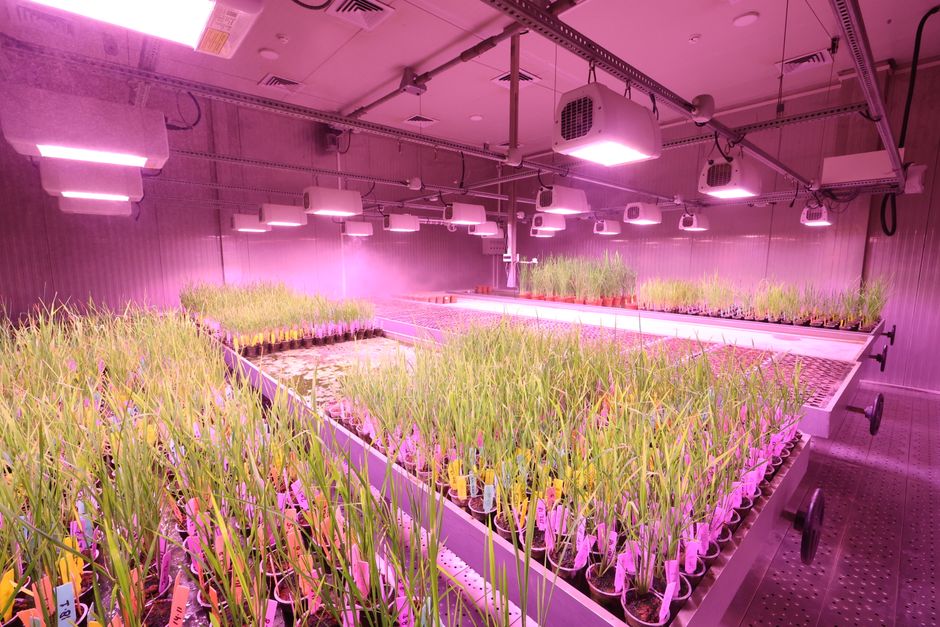
One of the best parts about growing microgreens indoors for profit is that you don’t need a greenhouse. A spare bedroom is actually better because you have total control over the environment.
When converting a room, focus on three things: power, water access, and flooring. You’ll be using several grow lights, so ensure your circuit can handle the load. Since you’ll be watering daily, waterproof flooring (or heavy-duty mats) is a lifesaver. For a deep dive into room conversion, see our Indoor Microgreens Setup for Beginners, Part 2, and Part 3.
Essential Tools for Growing Microgreens Indoors for Profit
Don’t get distracted by shiny gadgets. You need the basics, but you need them to be high quality.
- 10×20 Trays: Buy the “extra-strength” versions. The cheap ones crack when full of wet soil, wasting your product and your time.
- Full-Spectrum LEDs: Look for lights with 1700–2000 lumens. LEDs are 40-60% more efficient than old-school fluorescents.
- Digital Scales: Vital for measuring seed density and weighing your final harvest for sale.
- Misting Bottles & Bottom-Watering Trays: These prevent damage to delicate seedlings.
For a complete shopping list, check out Top Tools You Need for Growing Indoor Microgreens and Must-Have Indoor Gardening Tools for Microgreen Cultivation. Choosing the right trays is also a big decision, so we’ve compared the best options in Choosing the Best Microgreen Trays for Your Home Garden.
Climate Control and Troubleshooting
Microgreens are like Goldilocks—they like it “just right.”
- Temperature: Aim for 65–75°F. Anything over 75°F invites mold and disease.
- Humidity: Keep it between 40–60%.
- Airflow: This is the most underrated tool. Use oscillating fans to keep air moving across the trays at all times. This strengthens the stems and prevents “damping off” (a fungal disease).
Learn how to manage these variables in our guides on Maintaining Ideal Humidity for Indoor Microgreens Growth and Optimal Lighting Conditions for Indoor Microgreens. To keep your losses to a minimum, be sure to read Avoid These Common Mistakes in Microgreen Farming for Better Yield.
From Seed to Sale: The Step-by-Step Growing Process
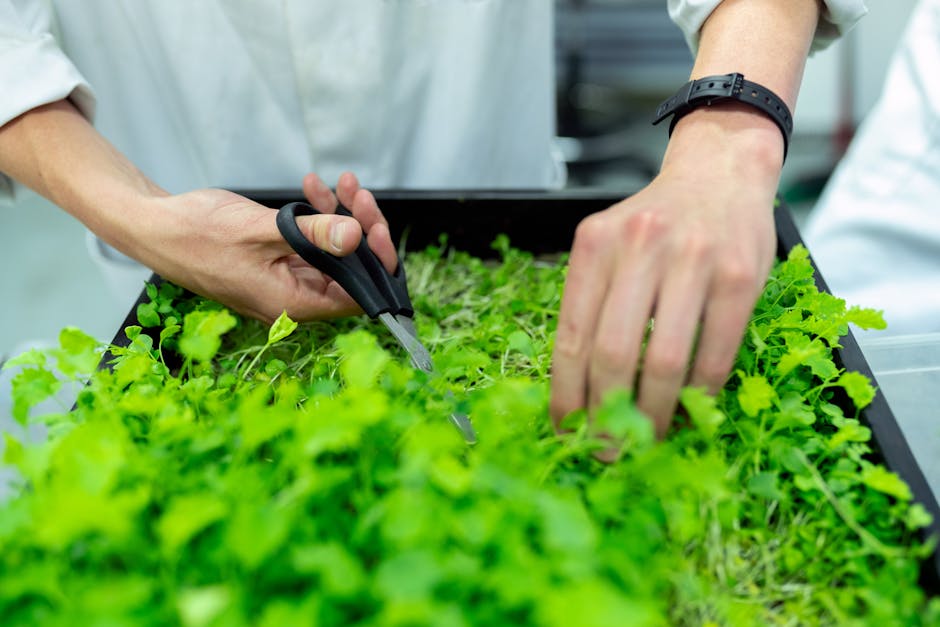
The process is a science, but it’s also an art. Here is the standard workflow we use for growing microgreens indoors for profit:
- Preparation: Fill your 10×20 tray with 1.5 to 2 inches of high-quality potting soil or a coconut coir medium. Tamp it down so it’s level.
- Sowing: Spread your seeds evenly. For small seeds (broccoli, radish), aim for 10–12 per square inch. For larger seeds (pea, sunflower), aim for 6–8.
- The Blackout Phase: Cover the seeds with another tray (weighted down) for 2–4 days. This forces the roots deep into the soil and makes the stems stretch, making them easier to harvest later.
- Light & Water: Once they are about an inch tall, remove the cover and turn on the lights for 12–16 hours a day.
- Bottom Watering: Never water from above after the blackout phase! Pour water into the bottom tray so the roots soak it up. This keeps the leaves dry and prevents mold.
For a more detailed walkthrough, see our Step by Step Microgreen Guide and our specific advice on The Watering Regimen for Thriving Microgreens and Part 2.
Selecting Varieties for Growing Microgreens Indoors for Profit
Not all microgreens are created equal when it comes to your bottom line. If you are a beginner, start with the “Big Four”:
- Radish: The fastest grower (7 days) and very hardy. Great for spicy flavor.
- Pea Shoots: High yield, crunchy, and very popular with chefs.
- Sunflower: A crowd favorite at farmers markets; tastes like nutty lettuce.
- Broccoli: Incredibly healthy and very easy to grow.
As you gain experience, you can move into “specialty mixes” which can have profit margins of 400–500%. Find out more about Easy Microgreens to Grow Indoors and Part 2. When you’re ready to buy, we’ve vetted the best sources in Where to Buy Organic Microgreen Seeds Online.
Harvesting and Post-Harvest Handling
Harvesting usually happens when the “cotyledons” (first leaves) are fully developed. Use a very sharp knife or electric scissors to cut the stems about half an inch above the soil.
Pro Tip: Do not wash your microgreens before selling them! Moisture is the enemy of shelf life. If they are dry when harvested and kept in a cool fridge (34–38°F), they can last 10–12 days. If they are wet, they might turn to mush in 48 hours.
Check out our tips on Fast Growing Microgreens at Home and Part 2 to optimize your harvest speed.
Marketing and Scaling Your Tiny Empire
You can be the best grower in the world, but if you can’t sell, you don’t have a business—you have an expensive hobby. Growing microgreens indoors for profit requires a “buyers first” mindset.
Finding Your First Customers
The most successful growers often secure commitments before they even plant their first commercial tray.
- Restaurants: Visit local chefs between 2 PM and 4 PM (their slow time). Bring free samples in professional packaging. Chefs love “standing orders”—regular weekly deliveries of the same items.
- Farmers Markets: This is where you build your brand. Offer “subscription boxes” where customers pay upfront for a month of weekly greens.
- Grocery Stores: Local, independent grocers are much easier to get into than big national chains.
Business Operations and Legal Requirements
To turn this into a legitimate business, you’ll need:
- Business License: Check your local city or county requirements.
- Food Handler’s Permit: Most states require this since you are handling “raw” food.
- Insurance: Product liability insurance is a must when selling food.
- Record Keeping: Track your seed lots, harvest dates, and sales. This isn’t just for taxes; it’s for food safety in case of a recall.
If you are working out of a very tight space, read Microgreens for Small Apartments and Part 2 for space-saving business tips.
Frequently Asked Questions about Indoor Microgreen Farming
Is the $2,000 per shelf profit claim realistic?
It is theoretically possible, but it requires perfect execution. To hit $2,000 per month from one 4-shelf rack, you would need to sell every single tray at premium retail prices (about $5 per ounce). Most beginners should expect more like $500–$800 per rack while they are learning the ropes and building a customer base. Don’t fall for the hype—focus on steady, repeatable growth.
Soil vs. Hydroponics: Which is better for profit?
While hydroponics is “cleaner,” most commercial growers prefer soil or peat-based mixes. Soil generally produces a higher yield, better flavor, and is more forgiving. Hydroponic systems can be prone to root rot and often require expensive liquid fertilizers to match the nutrient profile of soil-grown greens. For maximum profitability and flavor, soil is usually the winner.
How much time does a microgreens business require?
It’s not a “set it and forget it” business.
- Daily: 15–30 minutes for watering and checking for mold.
- Weekly: 4–8 hours for harvesting, packaging, and delivering.
- Administrative: 2 hours for invoicing and marketing. As you scale, labor becomes your biggest cost. Many growers find that 15–20 hours a week can sustain a very healthy side-hustle income.
Conclusion
Building a tiny empire through growing microgreens indoors for profit is a journey that combines the discipline of science with the thrill of entrepreneurship. It’s about more than just money; it’s about providing your community with nutrient-dense, flavorful food that was grown just a few miles (or blocks!) away.
At Financelyx, we believe that health and wealth go hand-in-hand. Whether you’re using your harvest to create nutritious snacks for your family or building a six-figure business, you are participating in a more sustainable and local food system. As our expert writer Elena Monroe often says, “The best time to plant a seed was yesterday; the second best time is today.”
Ready to start your journey? Dive into our More info about beginner guides to find everything you need to grow, sell, and thrive. Happy growing!
