
Small But Mighty: Why the Best Microgreens for Health Belong on Your Plate
The best microgreens for health pack an extraordinary amount of nutrition into a tiny package — research from the USDA and the University of Maryland found they can contain up to 40 times more nutrients than their fully grown counterparts.
Here’s a quick look at the top picks:
| Microgreen | Key Nutrient | Top Health Benefit |
|---|---|---|
| Broccoli | Sulforaphane | Cancer prevention, detox |
| Kale | Vitamin K | Bone and eye health |
| Red Cabbage | Anthocyanins | Heart health |
| Radish | Glucosinolates | Digestion, detox |
| Sunflower Shoots | Complete protein | Muscle support, energy |
| Pea Shoots | Folate, fiber | Immune and gut health |
| Arugula | Calcium, iron | Bone strength, circulation |
These are young seedlings — harvested just 7 to 21 days after germination, at only 1 to 3 inches tall. Despite their small size, they’re bursting with vitamins, minerals, and antioxidants.
They’re also surprisingly easy to grow at home, on a windowsill, in a small tray, with minimal equipment. For busy people who want more nutrition without overhauling their diet, microgreens are one of the simplest upgrades you can make.
Below, we cover the healthiest varieties, what makes each one special, and how to grow them yourself.

Why Microgreens are the Best Microgreens for Health
When we talk about the best microgreens for health, we aren’t just following a culinary trend. We are looking at biological powerhouses. But what exactly makes these tiny leaves so much more potent than the big vegetables we usually buy?
The secret lies in the seed. Every seed contains all the blueprints and concentrated energy needed to grow a massive plant. When we harvest these plants at the microgreen stage—just after the first “true leaves” appear—we are catching them at their nutritional peak. At this stage, the plant hasn’t yet “diluted” its nutrients across a large stalk or heavy root system. Instead, everything is concentrated in those first few inches of growth.
Scientific research from the USDA and the University of Maryland has confirmed this “tiny but mighty” status. Their studies showed that microgreens can contain significantly higher concentrations of vitamins and carotenoids than mature plants. For example, some varieties were found to have 4 to 40 times more vitamin C, E, and K than the adult versions.
By unlocking the nutritional powerhouse of microgreens, we gain access to high levels of polyphenols and antioxidants. These compounds are essential for neutralizing free radicals in our bodies, which helps prevent cellular damage. Furthermore, microgreens are alive with enzyme activity. These enzymes assist our bodies in breaking down food and absorbing nutrients more efficiently, making them a fantastic addition to any meal for those looking to optimize their gut health.
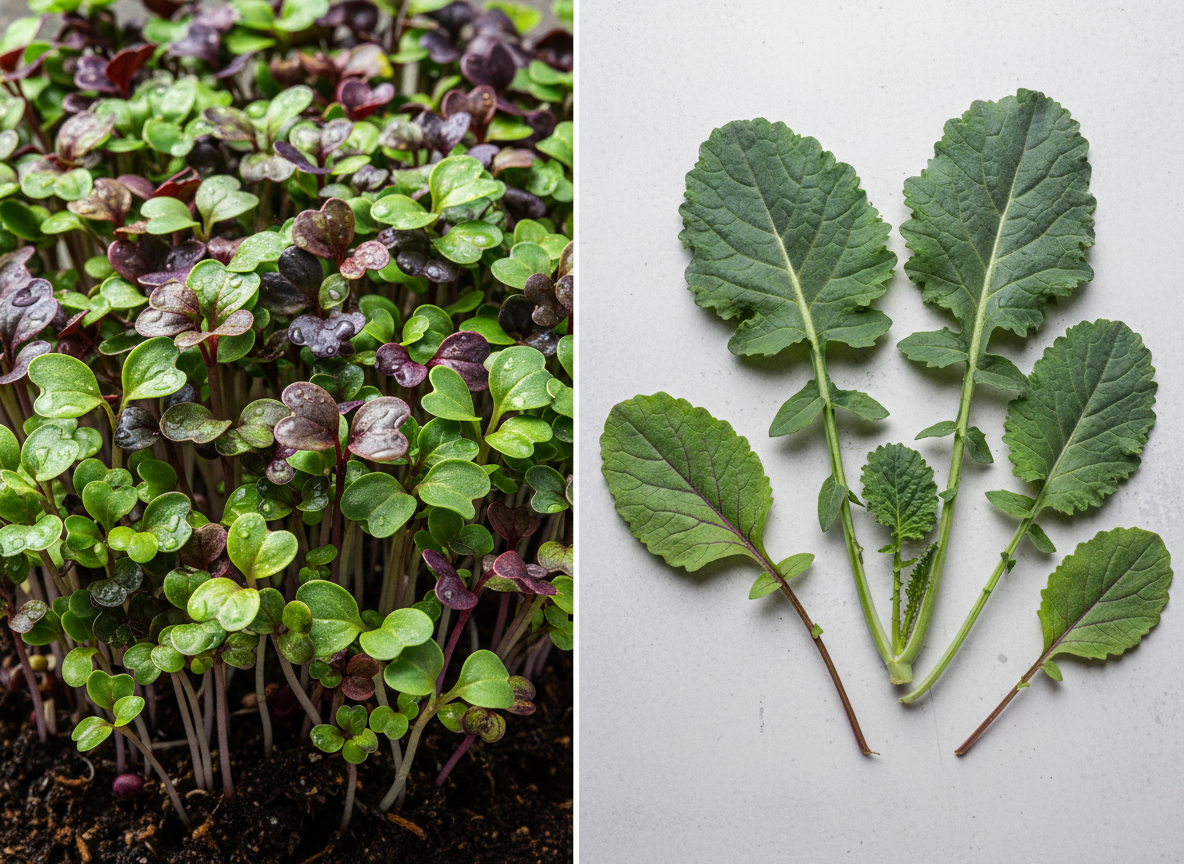
Top 7 Best Microgreens for Health and Longevity
To help you decide which seeds to start with, we’ve put together a comparison of some heavy hitters. Choosing the best microgreens for health often involves rotating your varieties to ensure you get a broad spectrum of phytochemicals.
| Microgreen (100g) | Vitamin C | Vitamin K | Beta-carotene (Vit A) |
|---|---|---|---|
| Broccoli | 89 mg | 102 µg | 31 µg |
| Red Cabbage | 69 mg | 92 µg | High Anthocyanins |
| Kale | 93 mg | 390 µg | 241 µg |
| Pea Shoots | 40 mg | 47 µg | 65 mg |
| Radish | 25 mg | 232 µg | 60 mg |
Broccoli: One of the Best Microgreens for Health and Detox
If we had to recommend just one variety to start with, it would be broccoli. It is often called the “King of the Microgreens,” and for good reason. Broccoli microgreens are famous for their high concentration of sulforaphane.
Sulforaphane is a potent sulfur-rich compound found in cruciferous vegetables. In microgreen form, broccoli can contain up to 100 times more sulforaphane than a mature head of broccoli! This compound is widely studied for its anti-cancer properties, as it helps the body trigger detoxification enzymes that protect against DNA damage.
When you are navigating the nutritional landscape of microgreens, you’ll find that broccoli also offers a significant boost in magnesium, manganese, and zinc. These minerals are crucial for chronic disease prevention and easing digestion. They have a mild, slightly “grassy” flavor, making them easy to hide in a smoothie if you aren’t a fan of the taste of greens.
Kale: A Vitamin K Powerhouse
Kale is the darling of the health world, but kale microgreens take things to a whole new level. They contain about four times the nutrients of adult kale. Specifically, they are a massive source of Vitamin K—essential for bone health and proper blood clotting.
By identifying microgreens as superior superfoods, we can see how kale supports more than just our bones. It is rich in lutein and zeaxanthin, two antioxidants that are critical for eye health and protecting against age-related macular degeneration. With 390 µg of Vitamin K per 100g, just a small handful provides over 300% of your daily value. They have a mild, nutty flavor that pairs perfectly with almost any salad or sandwich.
Red Cabbage: Heart Health Hero
Red cabbage microgreens are visually stunning with their purple stems and green leaves, but their real beauty is internal. They are packed with anthocyanins—the pigments that give them their color. Anthocyanins are powerful antioxidants linked to heart health and a reduction in chronic inflammation.
In a study by the University of Maryland, red cabbage microgreens were found to have the highest concentration of Vitamin C among 25 varieties tested. They also excel at cardiovascular support; research suggests they may help reduce LDL (bad) cholesterol and triglycerides. Reaping the health benefits of microgreens like red cabbage is as simple as sprinkling them over a taco or a bowl of soup for a peppery-sweet crunch.
Radish: The Best Microgreens for Health and Digestion
If you like a bit of a “kick” in your food, radish microgreens are for you. They taste exactly like a spicy radish bulb but are much easier to eat. They are one of the fastest-growing microgreens, often ready to harvest in just 4 to 6 days.
Radish microgreens are excellent for detoxification because they are high in glucosinolates and chlorophyll. These compounds help the liver process toxins and can improve overall skin health. We love to boost our immunity with microgreens like radish because they are also exceptionally high in Vitamin E, which protects our cells from oxidative stress. They add a wonderful zing to avocado toast or sushi rolls.
Sunflower Shoots: Complete Plant Protein
Sunflower shoots are the “heavyweights” of the microgreen world. They are thick, crunchy, and have a delicious nutty flavor that even kids usually enjoy. Unlike many other greens, sunflower shoots provide a complete plant protein, containing all the essential amino acids.
These shoots are a great choice when shedding pounds with microgreens because they are filling and nutrient-dense. They are high in zinc and selenium, which support immune function and thyroid health. They also contain healthy fats and Vitamin E, making them a great energy booster for those with active lifestyles.
Pea Shoots: High-Fiber Energy Boosters
Pea shoots are some of the most versatile microgreens in the kitchen. They are sweet, crunchy, and taste just like fresh sugar snap peas. Nutritionally, they are a fantastic source of folate and fiber, which are essential for heart health and keeping your digestive system running smoothly.
One of the coolest things about pea shoots is their regrowth potential. If you snip them just above the bottom leaf, they will often grow back for a second harvest! By unleashing the benefits of organic microgreens, specifically pea shoots, you get a high-quality source of plant-based protein and iron. They are perfect for stir-fries (add them at the very end!) or as a fresh side dish.
Arugula: The Peppery Bone Builder
Arugula microgreens (sometimes called rocket) provide that classic peppery bite but in a much more concentrated form. They contain eight times the calcium and five times the vitamins of iceberg lettuce. This makes them one of the best microgreens for health when it comes to bone strength.
Arugula is also high in natural nitrates. While we usually think of nitrates as “bad” (like in processed meats), naturally occurring nitrates from plants help improve blood flow and lower blood pressure by dilating blood vessels. When demystifying the daily intake of microgreens, we find that arugula is a top choice for athletes or anyone looking to improve their circulation and energy levels.
How to Grow the Healthiest Microgreens at Home
Growing your own supply is the best way to ensure you are getting the freshest, most nutrient-dense greens possible. You don’t need a green thumb or a backyard; a kitchen counter and a little bit of light will do!
Step 1: Choose Your Seeds and Medium
Start with high-quality, organic, non-GMO seeds specifically labeled for microgreens. For beginners, we recommend starting with radish, broccoli, or pea shoots as they are the most “forgiving.” You’ll also need a growing medium. You can use organic potting soil or a soilless option like coconut coir or hemp mats.
Step 2: Sowing
Fill a shallow tray (about 2 inches deep) with your medium and moisten it. Spread your seeds evenly across the surface. You want them to be close together but not overlapping. Lightly press them into the medium. Some larger seeds, like sunflower and peas, benefit from being soaked in water for 8–12 hours before planting.
Step 3: The Blackout Phase
Cover your tray with another tray or a dark cloth for the first 2–3 days. This “blackout phase” mimics being underground and encourages the seeds to stretch up, resulting in longer stems that are easier to harvest.
Step 4: Light and Air
Once the seeds have sprouted, move them to a sunny windowsill or under a grow light. They need about 6–8 hours of light a day. When demystifying the daily intake of microgreens 2, we emphasize that good airflow is critical. Use a small fan if the air in your home is stagnant to prevent mold from growing at the base of your plants.
Step 5: Watering
Water from the bottom if possible to keep the leaves dry. If you are using a tray with holes, place it inside another tray filled with an inch of water for a few minutes. If not, mist the soil gently every day, making sure it stays damp but not soggy.
Step 6: Harvesting
Your microgreens are ready when they are 1–3 inches tall and have their first set of true leaves (usually 7–14 days). Use clean scissors to snip them just above the soil line. Rinse them gently in cold water, and they are ready to eat!
Frequently Asked Questions about Microgreens
Are microgreens really healthier than mature vegetables?
Yes! As mentioned earlier, microgreens are much more nutrient-dense. Because they are harvested so young, they contain a higher concentration of vitamins, minerals, and antioxidants per gram than the full-grown version of the same plant. While you should still eat your “big” veggies for the bulk fiber, microgreens are like a concentrated supplement that you can actually eat.
Which microgreens are easiest for beginners to grow?
Radish is the absolute easiest. It germinates in 24–48 hours and is ready to eat in less than a week. Broccoli and pea shoots are also very reliable. We recommend avoiding “fussy” varieties like beets or cilantro until you have a few successful harvests under your belt, as they take longer to grow and can be more sensitive to moisture levels.
Can you eat microgreens every day?
Absolutely. We recommend a small handful (about 15-30 grams) daily to see the best health results. They are safe for most people, but as with any raw sprout or green, make sure you grow them in a clean environment to avoid bacterial contamination. If you have a specific health condition or are on blood-thinning medication (due to the high Vitamin K in greens like kale), it’s always a good idea to chat with your doctor first.
Conclusion
At Financelyx, we believe that small changes lead to big results. Incorporating the best microgreens for health into your daily routine is one of the most effective ways to supercharge your nutrition without spending hours in the kitchen. Whether you are blending kale into a morning smoothie or topping your dinner with a handful of spicy radish shoots, these tiny greens offer a world of flavor and wellness.
Our expert writer, Elena Monroe, loves experimenting with these “miniature powerhouses” to create nutrient-dense, flavorful recipes that make healthy eating feel like a treat rather than a chore. If you’re ready to take the next step in your health journey, why not start your first tray today?
For more tips on how to integrate these superfoods into your life, check out our guide on demystifying the daily intake of microgreens 3 or explore more growing tips to ensure your home garden thrives year-round. Happy growing!
