
Nutrition for the Golden Years
What Are the Best Nutrient Dense Foods for Elderly Adults?
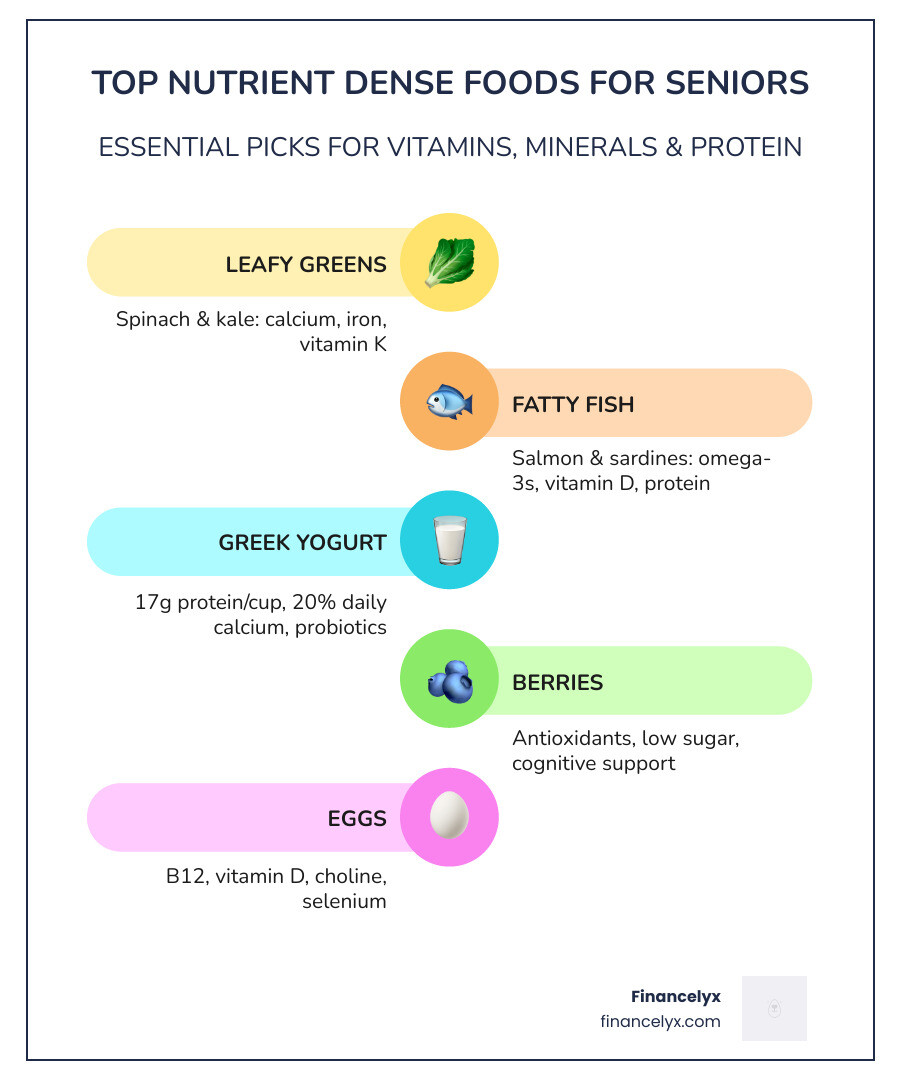
Nutrient dense foods for elderly adults are foods that pack a high amount of vitamins, minerals, and other nutrients into relatively few calories. Here are the top options to prioritize:
- Leafy greens (spinach, kale) – calcium, iron, vitamin K
- Fatty fish (salmon, sardines) – omega-3s, vitamin D, protein
- Greek yogurt – 17g protein per cup, 20% daily calcium, probiotics
- Berries – antioxidants, low sugar, cognitive support
- Eggs – B12, vitamin D, choline, selenium
- Legumes (lentils, beans) – fiber, plant protein, iron
- Whole grains (oatmeal, brown rice) – fiber, B vitamins, sustained energy
- Nuts and seeds – healthy fats, magnesium, vitamin E
- Sweet potatoes – beta-carotene, potassium, fiber
- Avocados – healthy monounsaturated fats, folate, potassium
Getting older doesn’t mean eating less well. It means eating smarter.
As metabolism slows with age, the body needs fewer calories but actually more of certain key nutrients – like calcium, vitamin D, protein, and B12. That’s a tricky balance to strike.
The stakes are real. Around 10 million Americans over 50 have osteoporosis. One in three seniors struggles with constipation each year. Muscle loss accelerates after age 60. And many older adults simply aren’t eating enough fruit or nutrient-rich food to meet their daily needs.
The good news? A focused shift toward nutrient-dense eating can address most of these issues – without requiring a complete diet overhaul or hours in the kitchen.
This guide covers the best nutrient-dense foods for seniors, how to work them into daily meals, and practical strategies for common challenges like reduced appetite, swallowing difficulties, and tight budgets.
Handy nutrient dense foods for elderly terms:
Why Nutrient Dense Foods for Elderly Adults Matter
As we journey into our golden years, our bodies undergo significant physiological changes. One of the most notable shifts is in our metabolism. It slows down, meaning we require fewer total calories to maintain our weight. However, while our “fuel” needs decrease, our “maintenance” needs—the vitamins and minerals that keep our systems running—actually stay the same or even increase. This makes Scientific research on nutrition for seniors absolutely vital for maintaining independence and vitality.
One of the biggest hurdles we face as we age is the loss of bone density and muscle mass. Sarcopenia, the age-related loss of muscle, can begin as early as our 40s and accelerates significantly once we hit 60. To combat this, we need high-quality proteins. Similarly, the risk of osteoporosis is high; with 10 million Americans over 50 already suffering from it, getting enough calcium and Vitamin D is no longer optional—it’s a necessity.
Another silent change is the decline in Vitamin B12 absorption. Our stomach acid production often decreases with age, making it harder for the body to pull B12 from food. This nutrient is essential for energy and neurological function. Furthermore, cognitive health and immune resilience become top priorities. By identifying microgreens as superior superfoods, we can find concentrated sources of antioxidants that protect the brain and heart. These tiny greens are a perfect example of nutrient density, offering a massive nutritional punch in a very small serving, which is ideal for those with smaller appetites. Reaping the health benefits of microgreens allows us to support our immune systems effectively without feeling overly full.
Top 10 Nutrient Dense Foods for Elderly Health
When we talk about the “best” foods, we are looking for “rockstars” that save on calories but go big on benefits. Variety is key because no single food provides everything we need.

Here is a deeper look at the 10 of the Top Nutrient-Dense Foods for Seniors and how they help us stay strong:
- Leafy Greens: Spinach, kale, and swiss chard provide Vitamin K for bone health and folate for heart health. If you find these hard to chew, unlocking the nutritional powerhouse of microgreens provides a softer, even more potent alternative.
- Fatty Fish: Salmon and sardines are rich in Omega-3s, which are essential for brain health and reducing inflammation.
- Greek Yogurt: This is a protein powerhouse. One cup can provide 17g of protein, helping to keep muscles strong.
- Berries: Blueberries and raspberries are packed with anthocyanins, which have been linked to better memory and cognitive performance.
- Eggs: Don’t fear the yolk! Eggs provide Vitamin D, B12, and choline, which is vital for mood and memory.
- Avocados: These are great for heart health and providing healthy fats that help us absorb other vitamins.
- Whole Grains: Oatmeal and brown rice provide the fiber we need to keep our digestion moving.
- Legumes: Beans and lentils are affordable, anti-inflammatory protein sources that also provide iron.
- Cruciferous Vegetables: Broccoli and cauliflower are cancer-fighting champions.
- Sweet Potatoes: These provide beta-carotene for eye health and potassium to help manage blood pressure. Unleashing the benefits of organic microgreens like radish or broccoli sprouts can complement these veggies by adding a spicy kick and extra enzymes.
Lean Proteins and Fatty Fish for Muscle Maintenance
Muscle is the currency of aging. If we want to stay mobile and avoid falls, we must prioritize protein. Most experts recommend that seniors aim for at least 65 grams of protein daily. Salmon is particularly effective here because it combines high-quality amino acids with Omega-3 fatty acids. These fats don’t just help the heart; they also support muscle protein synthesis.
Understanding how microgreens can boost your brain and heart health is a great way to see how small dietary additions can support these major organs. When we eat enough protein, our body has the “bricks” it needs for tissue repair. Whether it’s a piece of grilled fish or a scoop of lentils, protein should be a cornerstone of every meal to prevent sarcopenia.
Calcium-Rich Nutrient Dense Foods for Elderly Bone Density
With 10 million Americans facing osteoporosis, bone health is a major concern. We need about 1,200mg of calcium daily after age 50. While dairy is the most famous source, it’s not the only one. Leafy greens, fortified plant milks, and even canned fish with bones (like sardines) are excellent contributors.
| Food Source | Calcium Content (Approx.) | Key Benefit |
|---|---|---|
| Greek Yogurt (1 cup) | 250-300mg | Probiotics for gut health |
| Fortified Soy Milk (1 cup) | 300mg | Low saturated fat |
| Cooked Spinach (1 cup) | 240mg | High in Vitamin K |
| Sardines (3 oz) | 325mg | Includes Vitamin D |
To ensure that calcium actually makes it into your bones, you need Vitamin D. Since many of us spend less time in the sun as we age, we might need to look toward eggs, fatty fish, or supplements. Demystifying the daily intake of microgreens can also show how these tiny plants contribute to our mineral totals in a way that is easy on the digestive system.
Overcoming Challenges: Appetite, Swallowing, and Hydration
Sometimes, the spirit is willing, but the appetite is weak. Many seniors experience a diminished sense of taste or smell, which can lead to a lack of interest in food. Others may struggle with dysphagia (swallowing difficulties).
Hydration is another “sneaky” challenge. Our thirst reflex weakens as we age, meaning we might be dehydrated without even feeling thirsty. We should aim for about 64 ounces of fluid daily. If plain water feels boring, try infusing it with cucumber or berries.
Nutrient-Dense Meals for Elderly don’t have to be boring. Using herbs and spices instead of salt can make food exciting again without raising blood pressure. We also recommend social eating—sharing a meal with a friend or family member can significantly boost how much a senior eats. If a full meal feels overwhelming, try five or six small, frequent snacks throughout the day. You can also boost your immunity with microgreens by adding a handful to a smoothie or soup; they disappear into the blend but provide a massive health boost.
Preparing Nutrient Dense Foods for Elderly with Swallowing Difficulties
If chewing or swallowing is a struggle, texture modification is your best friend. You don’t have to sacrifice nutrition for a softer consistency.
- Smoothies: Blend Greek yogurt, spinach, berries, and a little avocado for a complete meal in a glass.
- Pureeing: Most stews and soups can be pureed into a silky, easy-to-swallow consistency.
- Soft Proteins: Scrambled eggs, moist ground meats (like turkey), and silken tofu are excellent options.
- Mashing: Sweet potatoes and avocados are naturally soft and can be mashed to a smooth texture.
Navigating the nutritional landscape of microgreens is helpful here, as microgreens are much more tender than their full-grown counterparts, making them easier to incorporate into soft diets. Even applesauce can be a carrier for ground flaxseeds or hemp hearts to add healthy fats.
Practical Meal Planning and Budgeting for Seniors
Eating well shouldn’t break the bank. We know that many seniors live on a fixed income, with the average SNAP benefit for a one-person senior household being around $188 per month. That’s about $6 a day.
To make the most of your budget, follow the USDA Dietary Guidelines for Seniors and the MyPlate method: fill half your plate with fruits and vegetables, a quarter with whole grains, and a quarter with lean protein.
- Buy Frozen or Canned: Frozen vegetables are just as nutritious as fresh and last much longer. Canned beans and tuna are budget-friendly protein staples.
- Batch Cooking: Make a large pot of lentil soup or chicken stew and freeze portions for later.
- Fiber Focus: Since 1 in 3 seniors struggles with constipation, fiber is a non-negotiable. Legumes and whole grains are the most cost-effective ways to get your 21-30g of daily fiber.
Demystifying the daily intake of microgreens-2 can help you understand how to grow these at home on a windowsill, providing a constant, low-cost source of fresh produce. Demystifying the daily intake of microgreens-3 further explores how these can be a sustainable part of a senior’s long-term health plan.
Frequently Asked Questions about Senior Nutrition
What foods should be avoided to maximize nutrient density?
To make every calorie count, we should limit “empty calories.” This includes ultra-processed snacks (like chips and cookies), high-sodium canned goods that can worsen water retention and blood pressure, and drinks with added sugars. Alcohol should also be limited, as it can interfere with medications and increase the risk of falls.
How can seniors increase their B12 intake naturally?
Since absorption drops with age, focus on B12-rich foods like eggs, lean meats, and fish. Many cereals and plant milks are also fortified with B12. It’s a good idea to ask your doctor for a B12 screening during your annual wellness visit to see if a supplement is necessary.
Why is fiber so important for older adults?
Fiber is the “clean-up crew” for our digestive system. It prevents constipation, which is a common and uncomfortable issue for seniors. Beyond that, fiber helps control blood sugar levels and can even lower cholesterol, supporting heart health. Aim for a goal of 21g for women and 30g for men daily.
Conclusion
At Financelyx, we believe that the “Golden Years” should be lived with energy and joy. Our expert writers, like Elena Monroe, are dedicated to bringing you the most flavorful and nutrient-dense recipe ideas to help you age with grace. Whether you are adding a sprinkle of microgreens to your morning eggs or choosing a piece of salmon for dinner, every small choice adds up to a healthier, stronger you.
Healthy aging starts on your plate. By prioritizing nutrient dense foods for elderly health, you aren’t just eating; you are investing in your future independence. For more info about healthy eating for seniors, stay tuned to our latest guides and recipes!
