
Why Budget Friendly Healthy Meal Prep Is the Smartest Move You Can Make
Budget friendly healthy meal prep means cooking nutritious meals in batches ahead of time — so you spend less money, waste less food, and always have something good to eat.
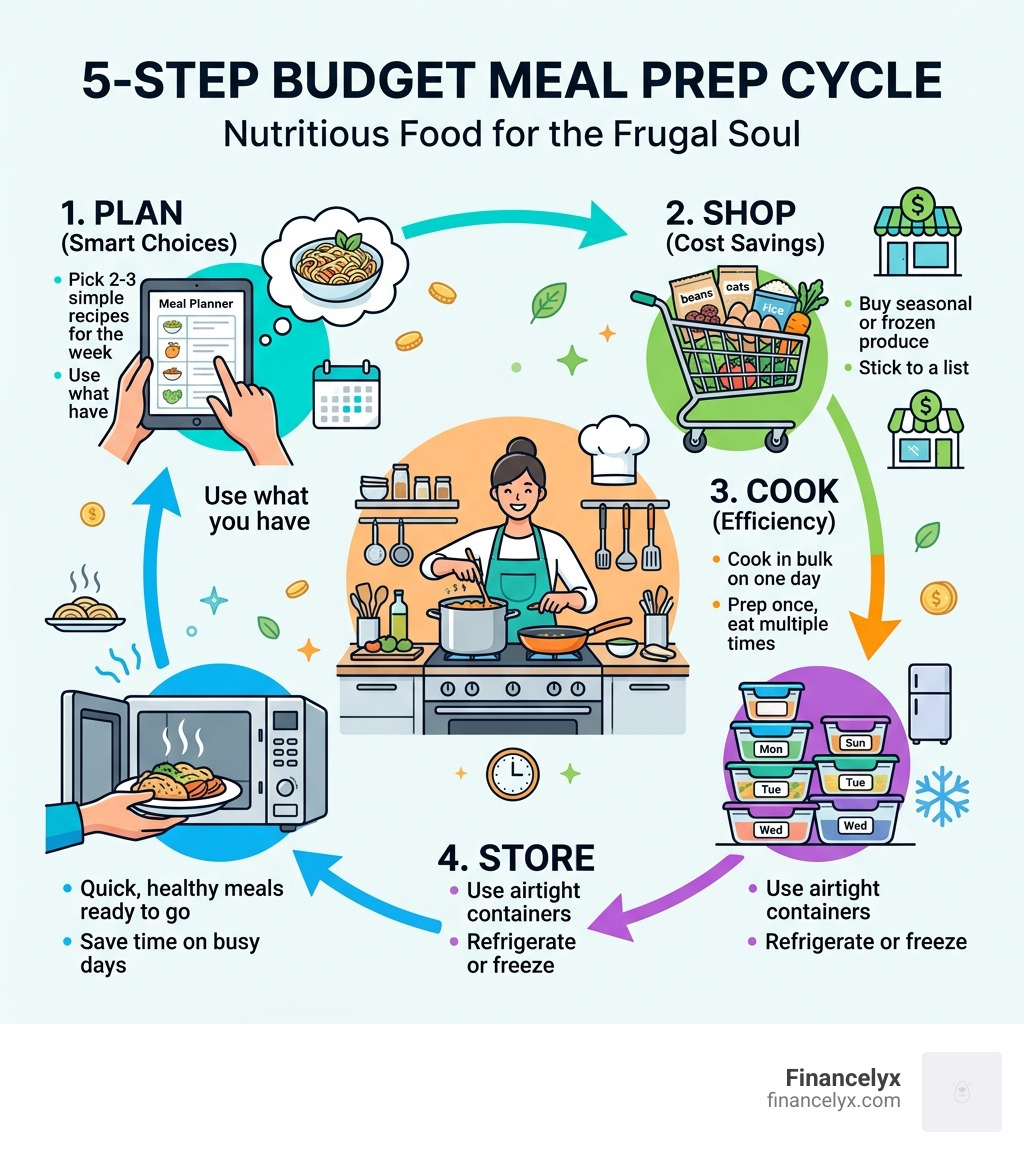
Here’s the quick version of how to do it:
- Pick 2-3 simple recipes for the week
- Shop pantry staples first — beans, oats, rice, eggs, frozen vegetables
- Buy seasonal or frozen produce to cut costs
- Cook in bulk on one day (usually Sunday)
- Store in airtight containers and refrigerate or freeze
Some meals cost as little as $1.33 per serving (like a cold peanut noodle salad) or $0.40 for a full batch of overnight oats. Even heartier meals like chicken and sweet potato bowls come in around $2.36 per serving.
Eating healthy often feels expensive. And after a long day, cooking from scratch feels impossible.
But here’s the truth: you don’t need a big budget or a lot of time to eat well.
The problem most people run into isn’t a lack of willpower — it’s a lack of a simple system. Without one, you end up ordering takeout, wasting groceries, or skipping meals altogether.
Meal prepping fixes all three of those problems at once. It saves you money by reducing food waste and impulse buys. It saves you time by cutting daily cooking down to minutes. And it keeps you eating nutritious food even on your busiest days.
This guide gives you everything you need — recipes, strategies, tools, and real cost breakdowns — to make it work on a tight budget.
Handy budget friendly healthy meal prep terms:
The Foundations of Budget Friendly Healthy Meal Prep
When we talk about budget friendly healthy meal prep, we aren’t talking about eating bland, boring food. We are talking about building a foundation of versatile, nutrient-dense ingredients that don’t break the bank. The secret to success lies in your pantry and your ability to save time and money with these 3 batch cooking methods.

Scientific research, such as studies highlighted by the Mayo Clinic, consistently highlights the benefits of fiber-rich legumes and whole grains. These aren’t just “filler” foods; they are nutritional powerhouses. Legumes like lentils and chickpeas provide plant-based protein and significant fiber, which keeps us full longer and stabilizes blood sugar. Brown rice and oats offer complex carbohydrates that fuel our brains without the “crash” associated with refined sugars.
By focusing on these staples, we create a “safety net” in our kitchen. If we have a bag of rice, a carton of eggs, and some frozen spinach, we have a healthy meal ready in ten minutes. This prevents the “I have nothing to eat” panic that leads to expensive food delivery.
Essential Low-Cost Ingredients
To master budget friendly healthy meal prep, we need to keep our grocery lists focused on “high-yield” items. These are ingredients that are cheap to buy but can be used in dozens of different ways.
- Canned Chickpeas: A true MVP. You can roast them for a snack, toss them into a salad, or blend them into hummus. They are incredibly shelf-stable and usually cost less than a dollar per can.
- Lentils: These are even cheaper than canned beans when bought dry. They cook faster than other beans and are perfect for hearty soups or “meatless” taco fillings.
- Sweet Potatoes: These provide vitamin A and fiber. They roast beautifully and can serve as the base for a breakfast bowl or a dinner side.
- Cabbage: Often overlooked, cabbage is one of the cheapest vegetables per pound. It lasts for weeks in the fridge and can be sautéed, used in slaws, or added to soups to provide volume and crunch.
- Bananas and Peanut Butter: The ultimate duo for the best healthy snack ideas for beginners. They are affordable, filling, and require zero cooking.
Smart Shopping Strategies
Before we even step foot in a store, we need a plan. The most expensive way to shop is to walk into a supermarket without a list.
- The Pantry-First Approach: Before writing your list, look at what you already have. Do you have a half-box of pasta? A jar of marinara? Build your week’s meals around those items first to avoid buying duplicates.
- Unit Pricing is Your Best Friend: Don’t just look at the total price. Look at the “price per ounce” or “price per pound” on the shelf tag. Often, the larger bag of rice is significantly cheaper in the long run.
- Embrace Generic Brands: In almost every case, the store-brand canned beans, frozen veggies, and oats are identical in quality to the name brands but cost 30-50% less.
- Shop the Perimeter: The middle aisles are where the expensive, processed foods live. Stick to the outer edges for produce, proteins, and dairy. For more advanced tips, check out the broke gourmets guide to budget friendly meal prep.
Top 5 Budget Friendly Healthy Meal Prep Recipes Under $5
One of the biggest myths about healthy eating is that it costs more. We’ve crunched the numbers, and the data proves otherwise. You can easily eat a protein-packed, veggie-rich meal for less than the price of a coffee.
To keep costs low, we focus on portion control and balancing expensive proteins with cheaper fibers. For example, the best lean chicken preps to help you shed pounds often use chicken breast, which is affordable, but we can make it go even further by mixing it with high-volume veggies like broccoli.
| Protein Base | Average Cost Per Serving | Nutritional Highlight |
|---|---|---|
| Chicken Breast | $2.90 | High Protein, Low Fat |
| Chickpeas | $1.20 | High Fiber, Plant-Based |
| Ground Turkey | $1.61 | Lean Protein, Versatile |
| Eggs | $0.47 | High Protein, Vitamin D |
| Tofu | $1.50 | Complete Plant Protein |
Breakfast and Lunch Ideas for Under $2
Mornings are usually when we are most tempted to grab something on the go. By prepping these items, we save ourselves from $10 breakfast sandwiches.
- Overnight Oats ($0.40 per serving): Mix 1/2 cup oats with 1/2 cup milk (or water) and a spoonful of peanut butter. Let it sit overnight. It’s a grab-and-go masterpiece. You can find more inspiration in the ultimate guide to nutritious breakfasts and immune-boosting snacks.
- Egg Muffins ($0.47 per serving): Whisk eggs with whatever leftover veggies are in your drawer (spinach, onions, peppers), pour into a muffin tin, and bake. These freeze perfectly.
- Cold Peanut Noodle Salad ($1.33 per serving): Use spaghetti or rice noodles, toss with a sauce made of peanut butter, soy sauce, and lime, and add shredded cabbage. It’s delicious cold, meaning no microwave is needed at work!
Filling Dinner Recipes for the Frugal Soul
Dinner should be the meal we look forward to, and these recipes prove that “frugal” doesn’t mean “tasteless.”
- Ground Turkey Stir-Fry ($1.61 per serving): Brown the turkey with ginger and garlic, then toss in a bag of frozen “stir-fry blend” vegetables. Serve over brown rice for a complete meal.
- Burrito Bowls ($2.26 per serving): This is the easiest budget friendly healthy meal prep ever. Combine rice, canned black beans, frozen corn, salsa, and a little cheese. No chopping required if you use frozen and canned goods!
- Chicken Adobo ($2.52 per serving): A classic for a reason. Simmer chicken thighs in soy sauce, vinegar, and garlic. It’s incredibly flavorful and actually tastes better the next day after the flavors have melded. For more legume-based ideas, explore these quick and healthy chickpea recipes for busy weeknights.
Pro Strategies for Maximizing Your Grocery Budget
To truly master budget friendly healthy meal prep, we need to think like professional chefs. They don’t just buy food; they manage inventory.
Bulk Buying and Seasonal Produce
Buying in bulk is a double-edged sword. It’s only a deal if you actually use it. We recommend buying dry goods like rice, beans, and oats in bulk from wholesale clubs or the bulk bins at your local grocer.
When it comes to produce, “seasonal” is the magic word. In the fall, sweet potatoes and squash are pennies on the dollar. In the summer, zucchini and tomatoes are practically being given away. If a fresh vegetable is too expensive, go to the freezer aisle. Scientific research shows that frozen produce is often more nutritionally dense than fresh produce because it is picked and frozen at peak ripeness, whereas “fresh” produce may have sat on a truck for a week.
Root vegetables like carrots and potatoes are year-round budget stars. They are filling, nutritious, and have a long shelf life. For more tips on scaling up your portions, read about how to bulk up the easy way.
Minimizing Food Waste
The average household throws away nearly 30% of the food they buy. That is literally throwing money in the trash. Budget friendly healthy meal prep eliminates this by giving every ingredient a “job.”
- Core Recipes: Instead of trying five new recipes a week, pick 2-3 “core” recipes. This allows you to buy ingredients in larger, cheaper quantities and ensures you use them all up.
- Ingredient Prepping: If you don’t want to commit to full meals, just prep ingredients. Roast a big tray of veggies, cook a pot of quinoa, and grill some chicken. You can mix and match these all week so you don’t get bored.
- The “Everything” Soup: At the end of the week, take any wilting veggies and toss them into a pot with broth and beans. It’s a great way to meal prep your way to better health while clearing out the fridge.
- Freezer-Friendly Meals: If you find you’ve made too much, freeze it immediately. Most soups, stews, and casseroles last for months in the freezer.
If you are feeling overwhelmed, you can stop spending hours in the kitchen with these 30 minute meal preps.
Essential Tools and Storage for Budget Friendly Healthy Meal Prep
You don’t need fancy gadgets to meal prep, but a few key items will make your life much easier and keep your food tasting fresh.
Affordable Kitchen Gear
We recommend starting with the basics. You don’t need a $500 blender; you need a good sheet pan and a set of containers.
- Airtight Containers: These are non-negotiable. Glass containers (like Pyrex) are fantastic because they don’t stain, they are microwave-safe, and they last forever. If you are on a very tight budget, high-quality BPA-free plastic containers work too.
- Mason Jars: Perfect for overnight oats or layered salads (put the dressing on the bottom so the greens don’t get soggy!).
- Sheet Pans: Most of our favorite budget friendly healthy meal prep recipes are “set it and forget it” oven meals. A sturdy sheet pan is essential for roasting vegetables and proteins simultaneously.
- Slow Cooker: If you can find one at a thrift store, grab it! It’s the best tool for turning cheap, tough cuts of meat or dry beans into delicious meals while you’re at work. For more beginner-friendly advice, see the broke girls guide to healthy weight loss meal prep.
Reheating and Freshness Tips
Nothing ruins a meal prep routine faster than “soggy leftovers.” Here is how we keep things fresh:
- Separate the Sauces: If a recipe calls for a dressing or sauce (like ranch or soy sauce), store it in a separate small container. Drizzle it on only after you’ve reheated the main meal.
- The Microwave Trick: When reheating rice or pasta, add a tiny splash of water or place a damp paper towel over the container. This creates steam and prevents the grains from becoming hard and crunchy.
- Cool Before Closing: Never put a steaming hot lid on a container. The steam will turn into moisture, which makes your vegetables mushy. Let the food reach room temperature before sealing.
- Microwave Safety: Ensure your containers are labeled as microwave-safe to avoid chemicals leaching into your clean eating snacks to fuel your day.
If you’re really short on time, you might even consider fast food reimagined: 10 easy healthy meals you can make in minutes.
Frequently Asked Questions about Affordable Prepping
How much does healthy meal prep typically cost per serving?
On average, a well-planned budget friendly healthy meal prep costs between $1.50 and $3.50 per serving. Compare this to the $12-$15 you might spend on a “healthy” fast-casual bowl or the $20+ for food delivery, and the savings become astronomical — often over $200 a month for a single person.
What are the best ways to add variety without increasing costs?
The easiest way is through seasoning and sauces. You can take the same base of chicken, rice, and broccoli and make it “Mexican” with taco seasoning and salsa, or “Asian” with ginger, garlic, and soy sauce. Switching up your spices costs pennies but completely changes the flavor profile. You can also swap proteins; using chickpeas instead of chicken can drop the price of a meal by nearly 50% while still providing plenty of protein.
How long can I safely store prepped meals in the fridge?
Most cooked meals stay fresh and safe for 3 to 4 days in the refrigerator. If you are prepping for a full 7-day week, we recommend storing the first 3 days in the fridge and putting the remaining 4 days in the freezer. Just move a container from the freezer to the fridge the night before you plan to eat it!
Conclusion
At Financelyx, we believe that financial wellness and physical health go hand in hand. You shouldn’t have to choose between your bank account and your well-being. By embracing budget friendly healthy meal prep, you are taking control of your time, your money, and your nutrition.
Our expert writers, including Elena Monroe, are dedicated to bringing you nutrient-dense, flavorful recipe ideas that fit into a real-world budget. Whether you’re interested in incorporating microgreens or just trying to survive a busy work week, the key is to start small. Don’t try to prep 21 meals this Sunday. Just try prepping three lunches. Once you see the extra money in your account and the extra time in your evening, you’ll never want to go back.
Ready to take the next step? Check out more guides for beginners to start their health journey and start your path to a healthier, wealthier you.
