
Fresh Greens in 10 Days: What You Need to Know About Growing Pea Shoots in Water
Growing pea shoots in water is one of the easiest ways to add fresh, nutrient-rich greens to your meals – no soil, no garden, no fuss.
Here’s the quick version:
- Soak dried peas for 6-24 hours in water
- Spread soaked peas in a single layer in a mesh tray
- Add water just enough to touch the bottom of the seeds
- Cover for 5-6 days (the blackout period)
- Expose to light and check water daily
- Harvest at 3-4 inches tall – usually around day 10
That’s it. No special equipment. No grow medium. Just peas, water, and a little patience.
Pea shoots are packed with vitamin C, protein, fiber, and antioxidants. And growing them at home costs a fraction of what you’d pay at a store – a 250g bag of dried peas can run as little as $0.50 and produce far more shoots than a $4 grocery store pack.
Whether you’re short on time, short on space, or just want fresher greens on your plate, this water-only method is one of the fastest and most rewarding things you can grow indoors.
Understanding Pea Shoots vs. Sprouts and Microgreens
Before we dive into the “how-to,” we need to clear up some common confusion. In indoor gardening, terms like sprouts, microgreens, and shoots are often used interchangeably, but they actually represent different stages of a plant’s life.
- Pea Sprouts: These are the very first stage. You grow them in a jar by soaking and rinsing. You eat the whole thing—the seed, the tiny white root, and the beginning of a stem. They are usually ready in just 2 to 3 days.
- Pea Microgreens: These are slightly older. They are harvested after the first “true leaves” appear. While some people distinguish between microgreens and shoots based on height, in many culinary circles, they are essentially the same thing.
- Pea Shoots: This is the stage we are focusing on. These are immature pea plants grown to about 3 to 6 inches tall. We harvest the tender stems, leaves, and those curly, crunchy tendrils.
The beauty of growing pea shoots in water is that it bridges the gap between simple sprouting and traditional gardening. You get the leafiness of a mature plant with the speed and cleanliness of a water-only system. If you’re interested in exploring other methods, you can learn more info about growing microgreens in jars to see which style fits your kitchen best.
Essential Supplies for Growing Pea Shoots in Water
One of our favorite things about this method is that it doesn’t require a trip to a specialized farm supply store. Most of what you need is likely already in your kitchen or can be repurposed from the recycling bin.
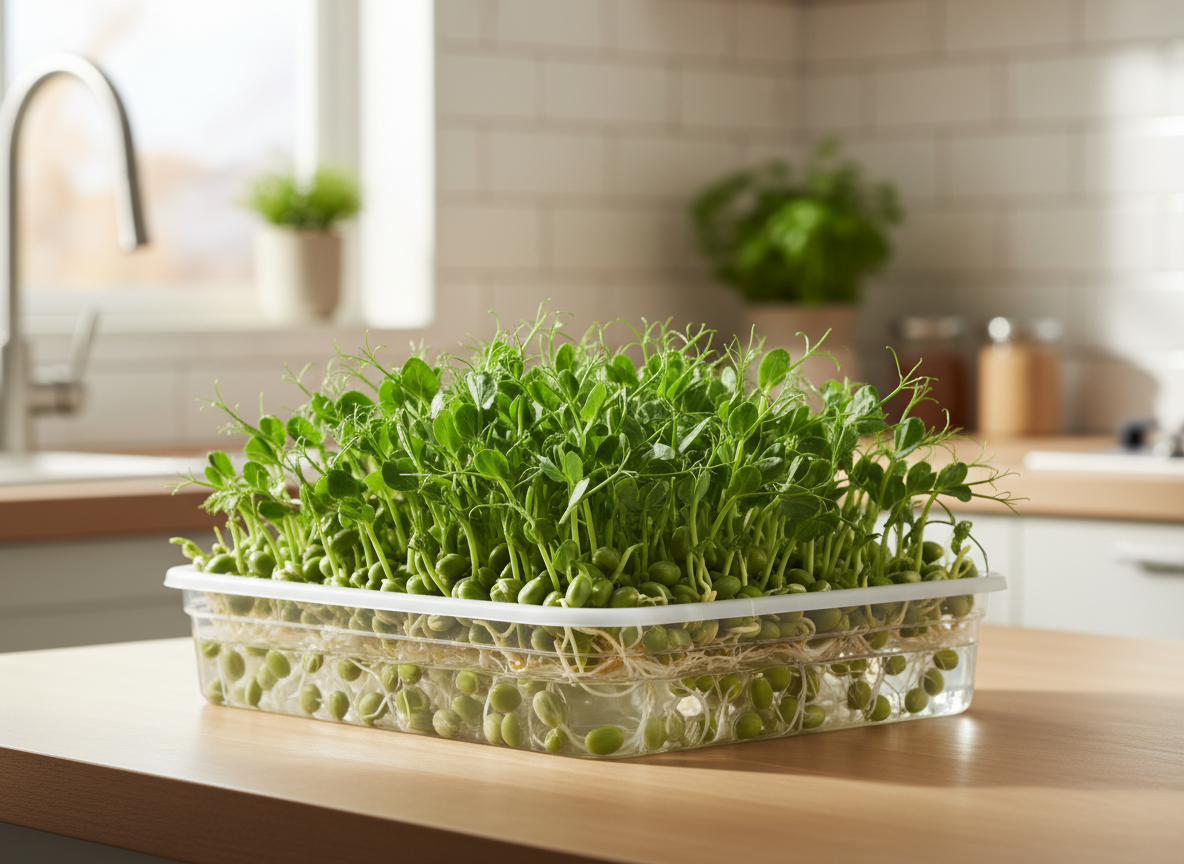
To get started, you will need:
- Mesh Trays: This is the “secret sauce” for water-only growing. You need a tray with holes (to hold the seeds) that nests inside a solid reservoir tray (to hold the water). This allows the roots to reach down into the water while keeping the seeds themselves from drowning.
- Reservoir Containers: A simple plastic tray or even a recycled take-away container can work as the bottom layer.
- Non-chlorinated Water: While tap water works (and the chlorine can actually help prevent mold), some growers prefer filtered or distilled water for the cleanest taste.
- Spray Bottle: Essential for misting the seeds during the first few days.
- Weights: Something to press down on the seeds (more on why later!).
If you’re looking for a more “all-in-one” solution, understanding hydroponic microgreen kits and their benefits can help you decide if a professional setup is worth the investment for your home.
Selecting the Best Seeds for Growing Pea Shoots in Water
You don’t need “magic” seeds to grow great shoots. In fact, some of the best results come from the most humble sources.
- Grocery Store Peas: You can actually use regular dried marrowfat peas or whole green peas from the grocery store. Just ensure they are “whole” and not “split.” Split peas will not grow because the embryo has been destroyed.
- Organic Sprouting Seeds: For the best germination rates and peace of mind regarding chemicals, we recommend organic seeds specifically labeled for sprouting or microgreens.
- Varieties: “Dwarf Grey Sugar” is a popular choice because it stays tender and sweet. “Speckled Peas” are also a favorite for their robust growth and beautiful tendrils.
Pro Tip: Before planting a huge batch, do a quick germination test. Soak 10 seeds overnight and place them on a damp paper towel. If 8 or 9 sprout within a few days, your seeds are good to go!
Step-by-Step Guide to Growing Pea Shoots in Water
Now, let’s get our hands (slightly) wet. Growing pea shoots in water is a process of managing moisture and light.
| Stage | Duration | Action |
|---|---|---|
| Soaking | 6–24 Hours | Submerge seeds in water to “wake them up.” |
| Blackout | 4–6 Days | Keep seeds dark and weighted to encourage deep roots. |
| Light Phase | 4–5 Days | Move to a windowsill or under grow lights to turn green. |
| Harvest | Day 10–14 | Snip and enjoy! |
The Soaking Process
Start by measuring out your seeds. A good rule of thumb is to fill your tray with a single layer of dry seeds, then remove about 20% of them. This accounts for the fact that peas swell significantly when they absorb water. Soak them in a bowl of room-temperature water. After 12 hours, you’ll notice they’ve doubled in size and turned a more vibrant green.
Tray Arrangement and Water Levels
Drain and rinse your soaked peas. Spread them evenly across your mesh tray. You want them to be dense—almost touching—but not piled on top of each other. Fill your bottom reservoir with enough water so that it just touches the bottom of the mesh tray. The seeds should be damp, but not fully submerged, or they will rot. For more alternatives to soil, check out more info about growing microgreens without soil.
The Importance of the Blackout Period and Weights
This is the part that feels counter-intuitive to most new gardeners. Once your seeds are in the tray, you need to cover them and put a weight on top.
- Why Darkness? The “blackout period” mimics being underground. It forces the plant to stretch upward in search of light, resulting in longer, more tender stems.
- Why Weights? Placing a weight (like another tray with a heavy book or a Ziploc bag filled with sand) on top of the seeds does two things. First, it ensures the seeds stay in contact with the moisture below. Second, it stresses the plant just enough to encourage it to grow strong, thick stems and deep, vigorous roots.
Keep the seeds weighted and in the dark for about 5 days. By day 3 or 4, you’ll be amazed to see the tiny shoots actually lifting the weight!
Lighting and Maintenance for Growing Pea Shoots in Water
Once your shoots are about an inch tall and have pushed the weight up, it’s time for their “big reveal.” Remove the cover and move them into the light.
- Windowsill vs. Grow Lights: A bright windowsill with 1-2 hours of direct sun is often enough. However, if your home is dark, a simple LED grow light kept on for 12-16 hours a day will prevent the shoots from becoming too “leggy.”
- Water Changes: This is the most important maintenance step. Every 1-2 days, lift the mesh tray and pour out the old water. Replace it with fresh, cool water. This prevents the water from becoming stagnant and discourages mold growth.
- Temperature: Pea shoots love “room temperature” (around 65-75°F). If it’s too hot, you risk mold; too cold, and they will grow very slowly.
When choosing your setup, it’s helpful to understand the pros and cons of different systems. We’ve put together a guide comparing soil vs hydroponic trays for microgreens to help you optimize your indoor farm.
Harvesting and Maximizing Your Yield
The moment of truth arrives around day 10. Your shoots should be 3 to 5 inches tall with beautiful green leaves and those iconic curly tendrils.
- How to Harvest: Use sharp kitchen shears to snip the shoots just above the seed level. If you want to try for a second harvest, leave the bottom set of leaves intact.
- Regrowth: While the second harvest is usually smaller and a bit tougher, many growers find they can get two or even three “flushes” of growth from a single tray of peas before the seeds’ energy is completely spent.
- Storage: Pea shoots are best eaten immediately, but they store surprisingly well. Place them in a Ziploc bag with a dry paper towel to absorb excess moisture and keep them in the crisper drawer of your fridge. They will stay crunchy for up to a week.
Nutritional Punch: These little greens are powerhouses. They contain significantly more Vitamin C and Folate than mature peas, and they are an excellent source of plant-based protein for such a small serving.
Frequently Asked Questions about Hydroponic Pea Shoots
Can I use regular dried peas from the grocery store?
Yes! As we mentioned earlier, whole dried marrowfat peas from the supermarket are a fantastic, budget-friendly option. Just avoid split peas. While the germination rate might be slightly lower than professional sprouting seeds, the cost-effectiveness makes it a great “entry point” for beginners.
Why are my pea shoots growing moldy or falling over?
Mold is usually caused by two things: poor air circulation or overwatering. If you see white “fuzz” on the roots, it might actually be root hairs (which are healthy!). If the fuzz is on the seeds themselves and smells sour, it’s mold. To prevent this, ensure you are changing the water regularly and don’t keep the seeds too deep in the water. If they are falling over, they likely need more light or a longer weighted period to strengthen the stems.
Do I need to add nutrients to the water?
For a quick 10-day harvest, no nutrients are required. The pea seed itself is a giant “battery” packed with all the energy and nutrients the plant needs to reach the shoot stage. If you plan on growing them much larger or want multiple harvests, you could add a very diluted hydroponic fertilizer, but for most home growers, plain water is perfect.
Conclusion
At Financelyx, we believe that healthy eating shouldn’t be complicated or expensive. Growing pea shoots in water is the ultimate “low-barrier” gardening project. It turns your kitchen windowsill into a mini-superfood factory, providing you with crunchy, sweet, and nutrient-dense snacks whenever you need them.
Whether you’re following a recipe from Elena Monroe or just looking for a way to spruce up your morning avocado toast, these shoots are a game-changer. They represent the best of what we stand for: simple, sustainable, and incredibly healthy living.
Ready to start your next indoor garden adventure? Check out our guides for beginners for more tips on growing your own food at home.
