
Tiny Greens, Big Payoff: What You Need to Know Before Your First Tray
Microgreens growing tips are exactly what you need if you want fresh, nutrient-dense greens on your plate in less than two weeks — no garden, no experience required.
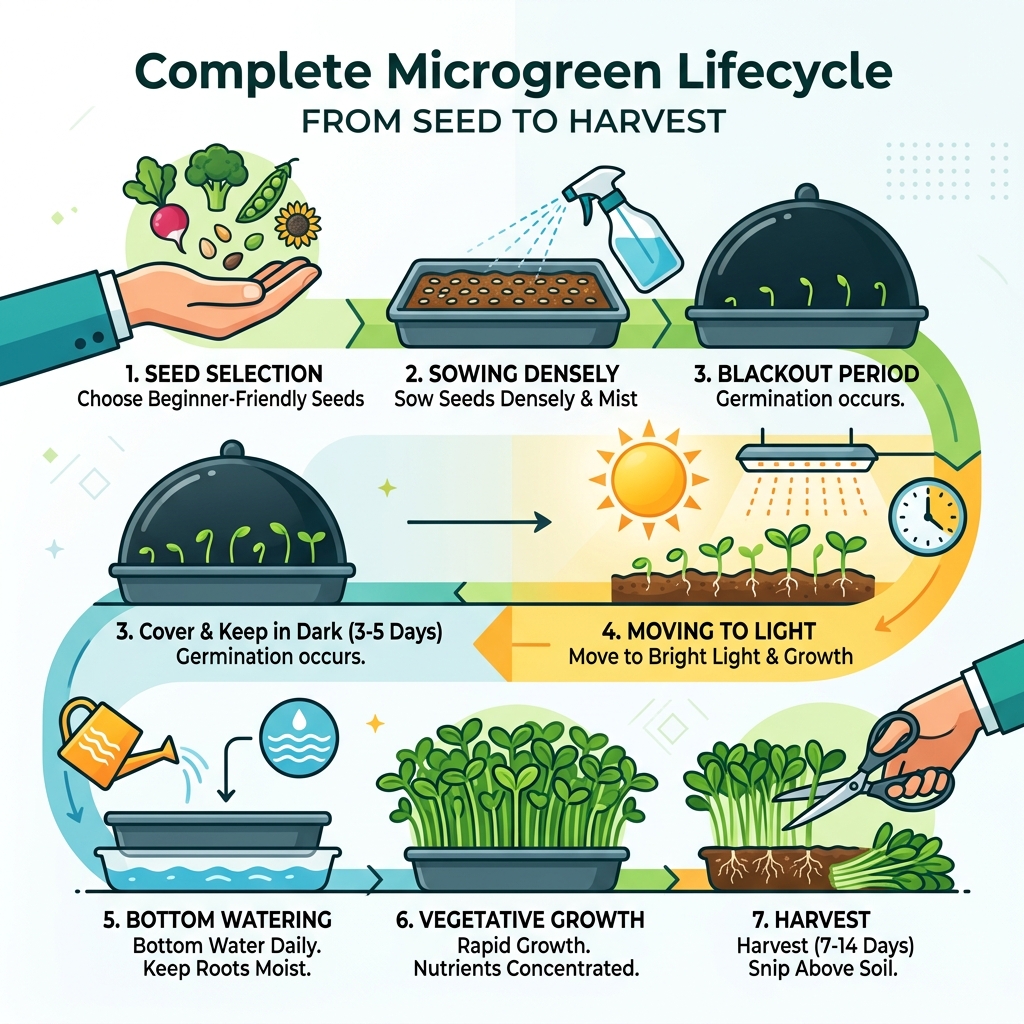
Quick-start microgreens growing tips:
- Pick beginner-friendly seeds — radish, broccoli, pea shoots, or sunflower
- Use a shallow tray (about 1-2 inches of soil depth) with drainage holes
- Sow seeds densely and evenly across the surface, then mist well
- Cover for 3-5 days in a dark spot to kick off germination
- Move to light — a bright window or LED grow light running 12-16 hours a day
- Bottom water daily once sprouts emerge to keep mold away
- Harvest in 7-14 days by snipping just above the soil line
Microgreens are young seedlings of common edible plants — harvested right after the first leaves appear, before they ever grow into full plants. They sit between sprouts and baby greens on the growth timeline.
What makes them worth your time? Research shows microgreens can contain 4 to 40 times the concentration of vitamins and antioxidants found in their fully grown counterparts. Broccoli microgreens alone pack significantly more sulforaphane than a mature head of broccoli.
And the cost math works in your favor. A single tray costs roughly $2-4 in supplies and produces an amount that would run you $10-20 at a farmers market.
The best part? You only need about 1 to 5 minutes of attention per day.
Whether you’re tight on time, short on counter space, or just tired of paying premium prices for a tiny clamshell of greens at the grocery store — microgreens are one of the simplest, fastest ways to upgrade your meals.
Why You Should Start Growing Microgreens Today
We often get asked if growing these tiny plants is actually worth the effort. At Financelyx, we believe that the return on investment for your health and your wallet is staggering. When we look at the nutritional profile of these greens, we are looking at a phenomenon called “juvenile vigor.”
In their earliest stages, plants are packed with the energy and nutrients required to grow into a large, mature organism. By harvesting them at this peak, we capture concentrated levels of vitamins A, C, K, E, B6, and folate. In fact, Grow Your Own Microgreens | USU notes that microgreens generally have much higher concentrations of vitamins than mature plants. For example, red cabbage microgreens have been found to have 40 times more vitamin E and 6 times more vitamin C than the full-grown cabbage.
Beyond nutrition, there is the undeniable benefit of year-round gardening. When it is bitterly cold outside or the summer sun is scorching your outdoor lettuce into a bitter mess, your indoor microgreens are thriving in a controlled 65-70°F environment. They are incredibly space-efficient; you can grow enough greens to fill two salad bowls daily in just one square foot of counter space.
Finally, let’s talk flavor intensity. Microgreens aren’t just a garnish; they are flavor bombs. Radish microgreens taste like a concentrated, spicy radish bulb, while pea shoots offer a sweet, crunchy snap that kids absolutely love. It’s a culinary “cheat code” that elevates a simple tuna sandwich or a morning omelet to restaurant quality.

Essential Supplies and Microgreens Growing Tips for Beginners
To get started without turning your kitchen into a mud pit, you need the right gear. While you can repurpose plastic berry containers (which we love for their built-in drainage), a standard setup usually involves a 10×20 “1020” tray system.
Here is the gear we recommend for a professional-grade home setup:
- Trays: We use a “two-tray system.” One tray has drainage holes, and the other is solid. This allows for bottom watering, which is our #1 secret for preventing mold.
- Growing Medium: You can use organic potting soil or coconut coir. We find that soil often produces more robust growth for larger seeds like sunflower and pea.
- Lighting: While a south-facing window can work, LED grow lights provide the consistency needed for “market-quality” greens. Aim for full-spectrum lights.
- Watering Tools: A simple spray bottle for the germination phase and a small pitcher for bottom watering later on.
- Kitchen Scale: Essential for weighing your seeds. Using the right seed density is one of the most important microgreens growing tips to prevent overcrowding and disease.
- Sharp Scissors: You want clean cuts to maximize the shelf life of your harvest.
For more detailed advice on setting up your space, check out our More info about growing tips.
Choosing the Best Seeds and Microgreens Growing Tips
Not all seeds are created equal. We always suggest starting with the “Easy Four”:
- Radish: The “Formula 1” of microgreens. They germinate in 2 days and can be harvested in 6. They are spicy, crunchy, and nearly impossible to mess up.
- Broccoli: Mild flavor, incredibly healthy, and very reliable growers.
- Pea Shoots: These are the favorites of the Financelyx team. They are sweet, crunchy, and high in protein.
- Sunflower: These have a nutty flavor and a satisfying “snap.” They do require a bit more work (soaking and weighted germination), but they are worth it.
Crucial Warning: Never grow microgreens from the nightshade family. This includes tomatoes, peppers, potatoes, and eggplants. The stems and leaves of these plants contain alkaloids that are toxic to humans. Stick to brassicas, herbs, and legumes.
Step-by-Step Guide to Sowing and Germination
Success starts with the prep. Here is a quick reference table for our favorite varieties:
| Variety | Pre-Soak Time | Blackout Period | Days to Harvest |
|---|---|---|---|
| Radish | None | 2-3 Days | 6-10 Days |
| Broccoli | None | 3 Days | 8-12 Days |
| Pea Shoots | 8-12 Hours | 3-4 Days | 10-14 Days |
| Sunflower | 8-12 Hours | 3-5 Days | 10-14 Days |
| Arugula | None | 3 Days | 7-10 Days |
Tray Preparation and Sowing
Start by filling your drainage tray with 1-2 inches of moistened growing medium. You want it to be the consistency of a wrung-out sponge. Tamp the soil down with a flat object to create a level surface; this ensures all seeds have equal access to moisture.
According to A Step-By-Step Guide for Growing Microgreens at Home, even distribution is key. We like to broadcast seeds starting from the edges and working toward the middle. For a standard 10×20 tray, aim for about 10-15 grams of small seeds (like broccoli) or up to 350 grams for large seeds (like peas).
The Blackout and Weighted Germination
Once sown, mist the seeds generously. Now, here is the “pro-intel”: place a second, solid tray directly on top of the seeds and put a weight (like a brick or a heavy book) on top. This “weighted germination” forces the roots to dive deep into the soil and helps the seedlings shed their seed hulls. Keep them in this dark, weighted state for 3-5 days.
Managing Light and Water with Microgreens Growing Tips
Once the sprouts are about an inch tall and pushing up the top tray, it’s time to introduce light.
Lighting: We recommend 12-16 hours of light per day. If using LEDs, keep them 6-12 inches above the plants. This prevents “leggy” growth, where the plants stretch too much and become weak.
Watering: Stop misting the tops! Once the plants have leaves, moisture on the foliage is an invitation for mold. Instead, pour water into the bottom (solid) tray. The soil will wick up exactly what it needs. This keeps the stems dry and the roots hydrated.
Environment: Aim for a temperature of 65-75°F. If your house is very humid, a small fan for airflow can be a lifesaver. Good airflow is the best defense against damping-off, a fungal disease that can collapse a whole tray overnight.
Harvesting and Storing Your Homegrown Greens
You’ll know it’s time to harvest when the “cotyledons” (the first set of leaves) are fully open and vibrant. Some growers wait for the first “true leaves” to appear for a more complex flavor, but don’t wait too long, or the stems can become woody.
The Harvest Process:
- Timing: We find that harvesting in the morning is best. The plants are at their most hydrated and crisp after a night of “rest.”
- Method: Gently grasp a clump of greens and snip with sharp, clean scissors about a half-inch above the soil line. Avoid getting soil on the greens to minimize washing.
- Cleaning: If you grew them cleanly, you might not even need to wash them. If you do, use cold water and dry them completely using a salad spinner or paper towels. Moisture is the enemy of storage.
Storage Tips: Store your unwashed microgreens in an airtight container or a silicone bag in the refrigerator. We always tuck a dry paper towel inside the container to absorb any stray moisture. While they can last up to 10-14 days if kept at a steady 41°F, we recommend eating them within 5-7 days for peak flavor and nutrition.
Troubleshooting Common Indoor Growing Issues
Even experts run into hiccups. Here is how we handle the most common “gremlins” in the grow room:
- Mold vs. Root Hairs: This is the most common panic for beginners. If you see fuzzy white growth only at the base of the stem, those are likely root hairs—perfectly healthy! If the fuzz is spiderweb-like and climbing up the plants, it’s mold.
- Mold Fix: If you catch mold early, a light mist of 3% hydrogen peroxide diluted in water can often stop it. Moving forward, increase airflow and decrease your seeding density.
- Leggy Growth: If your greens look like pale, skinny giraffes, they aren’t getting enough light. Move your light source closer or increase the duration.
- Yellowing Leaves: This usually points to overwatering or a lack of light. Ensure your soil isn’t sitting in a pool of water in the bottom tray.
- Seed Hulls Sticking: If your sunflower or cilantro seeds won’t let go of their “hats,” give them a heavy misting and cover them with a dome for 12 hours to soften the shells.
Frequently Asked Questions about Microgreens
Do microgreens regrow after cutting?
Generally, no. Most microgreens are a one-and-done crop because we harvest them before they have the structural nodes required for regrowth. The one notable exception is pea shoots. If you cut them just above the lowest leaf node, you might get a second, smaller harvest, but the flavor is rarely as good as the first. We recommend composting the spent soil and starting fresh.
How do I tell the difference between mold and root hairs?
We use the “mist test.” If you spray the fuzzy area with a little water and the fuzz “disappears” or flattens against the root, it’s root hairs. Mold is structural and will remain visible. Also, give it a sniff—healthy microgreens should smell like fresh veggies; mold will have a musty, unpleasant odor.
Can I grow microgreens without a sunny window?
Absolutely—in fact, we prefer it! Natural sunlight is inconsistent, especially in winter. Using full-spectrum LED grow lights gives you total control over the “Daily Light Integral” (DLI), ensuring your greens are thick, vibrant, and nutrient-dense every single time.
Conclusion
At Financelyx, we are passionate about making healthy living accessible and sustainable. Growing your own microgreens is more than just a hobby; it’s a way to take control of your nutrition and bring a bit of “living” food into your kitchen daily.
Our lead writer, Elena Monroe, often says that a handful of home-grown radish greens is worth more than a bottle of multivitamins. We hope these microgreens growing tips have given you the confidence to sow your first tray. You don’t have to be perfect; you just have to get started.
Ready to dive deeper into nutrient-dense living? Start your garden today and join our community of home growers. Happy planting!
