
Why an Urban Vertical Garden Is the Smartest Move for City Living
An urban vertical garden is a growing system that uses vertical wall space, balconies, or indoor surfaces to grow plants upward instead of outward — making it ideal when floor space is limited.
Here’s what you can do with a vertical garden in a small city apartment:
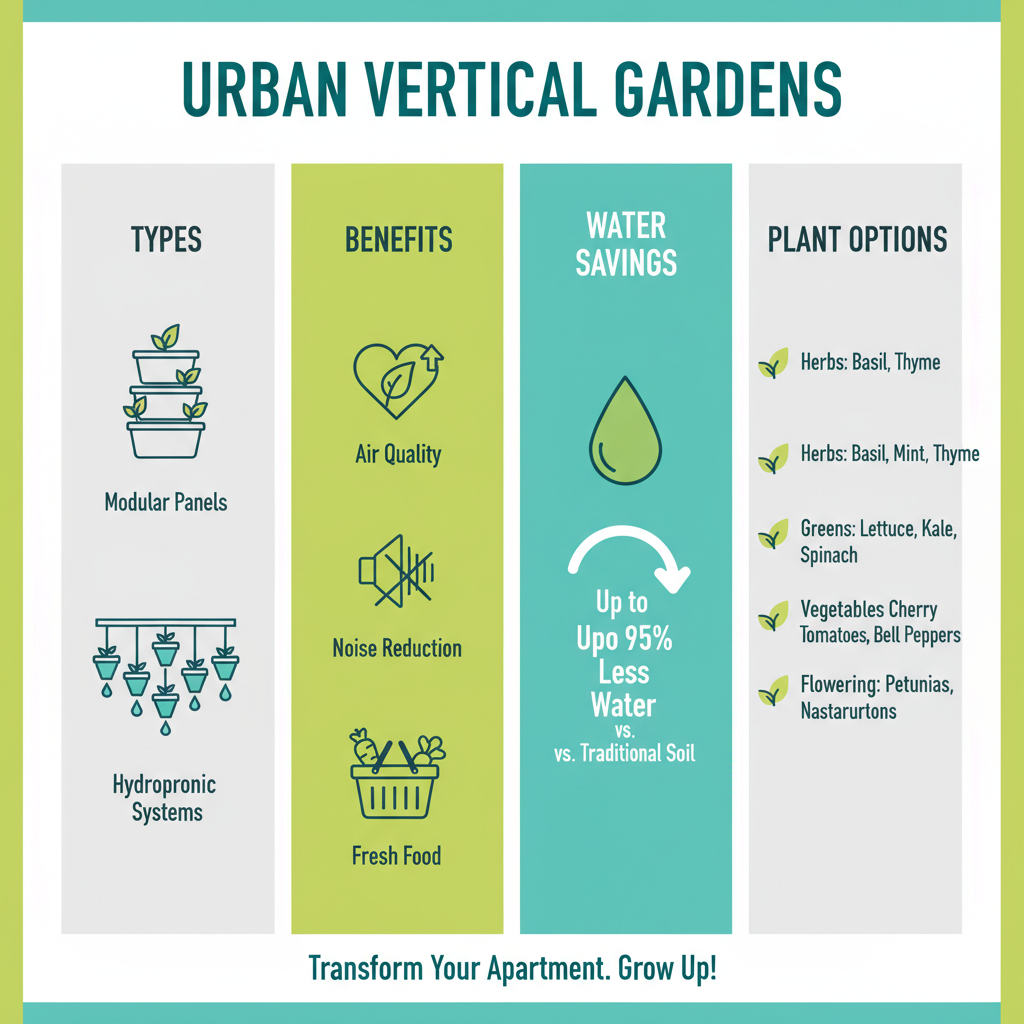
- Grow fresh herbs, greens, and vegetables on a single wall or balcony
- Purify indoor air and reduce ambient noise
- Use up to 95% less water than traditional soil-based gardening
- Harvest food year-round with hydroponic or soil-based setups
- Start small for as little as $50 with DIY upcycled materials
Urban apartments leave little room for traditional gardening. But walls, fences, balconies, and even ceilings are untapped growing space.
The idea isn’t new. Architects and city planners have been scaling it up for years — Milan’s Bosco Verticale packs the equivalent of 2 hectares of woodland onto a pair of residential towers. But you don’t need a skyscraper to get started.
Whether you want a simple herb wall in your kitchen or a full hydroponic tower in your living room, vertical gardening makes fresh, nutrient-rich food surprisingly accessible — even in the tiniest apartments.
The Environmental Impact of an Urban vertical garden
When we talk about an urban vertical garden, we aren’t just talking about a few pretty pots on a shelf. We are talking about a powerful tool for environmental regeneration. In dense cities like Denver, Barcelona, or Milan, where concrete often outnumbers trees, these gardens act as “green lungs.”
The statistics behind large-scale projects like the Bosco Verticale are staggering. This “Vertical Forest” in Milan hosts over 700 trees, 5,000 shrubs, and 11,000 perennials. To put that in perspective, that is the equivalent of 2 hectares (nearly 5 acres) of woodland concentrated into just a few hundred square meters of urban footprint.
But how does this help you in a small apartment?
- Air Purification: Plants are natural filters. A single vertical forest can absorb 20,000 kg of carbon annually. In your home, a living wall helps capture dust and volatile organic compounds (VOCs).
- Noise Reduction: Living walls are incredible acoustic barriers. They can reduce ambient noise by up to 15dB, which is a lifesaver if you live near a busy intersection or a construction site.
- Temperature Regulation: Vegetation acts as a thermal insulator. On a city-wide scale, vertical gardens can reduce the temperature between the outside and inside of a building by nearly 3 degrees Celsius. In the summer, they can decrease facade heating by a whopping 30 degrees.
- Biodiversity Net Gain: Even a small balcony garden supports urban biodiversity. Using native seed mixes can bring pollinators back into the heart of the city, creating “stepping stones” for birds and insects.
Designing Your Space: DIY and Professional Structures
Designing an urban vertical garden requires looking at your apartment through a new lens. Instead of looking at the floor, we look at the walls, the railings, and even the ceiling. The goal is to maximize every square inch without making the space feel cluttered.
Professional systems offer sleek, “no-drill” solutions perfect for renters. For example, some systems use pressure-lock telescopic stands that extend up to 285 cm (or even 3.65 m with extensions), allowing you to stack plants vertically without damaging the floor or ceiling. Many of these modern designs favor eco-friendly materials like coconut coir pots, which are naturally porous and promote “air pruning” for healthier root systems.
DIY Structures for an Urban vertical garden
If you’re on a budget, you don’t need to buy a high-end system to get started. Some of the most productive gardens are built from upcycled materials.
- Pallet Gardens: A classic DIY favorite. By stapling landscape fabric to the back of a wooden pallet, you create a series of pockets for soil. It’s an easy way to create a massive wall of greenery for the cost of some nails and dirt.
- Gutter Gardens: Lengths of PVC or metal gutters mounted to a wall or balcony railing make excellent shallow planters for lettuce and strawberries.
- Shoe Organizers: Those over-the-door fabric shoe organizers are perfect for herbs. Each pocket holds a single plant, and the fabric allows for decent drainage.
- Hanging Baskets and Recycled Bottles: You can transform old plastic bottles into “window farms.” By cutting out the side and stringing them together, you can create a cascading hydroponic-style setup right in front of your glass.
For those specifically interested in high-yield, small-batch greens, checking out a diy-microgreen-setup-on-your-balcony-a-step-by-step-guide is a great way to start with minimal equipment.
Choosing Plants for Your Urban vertical garden
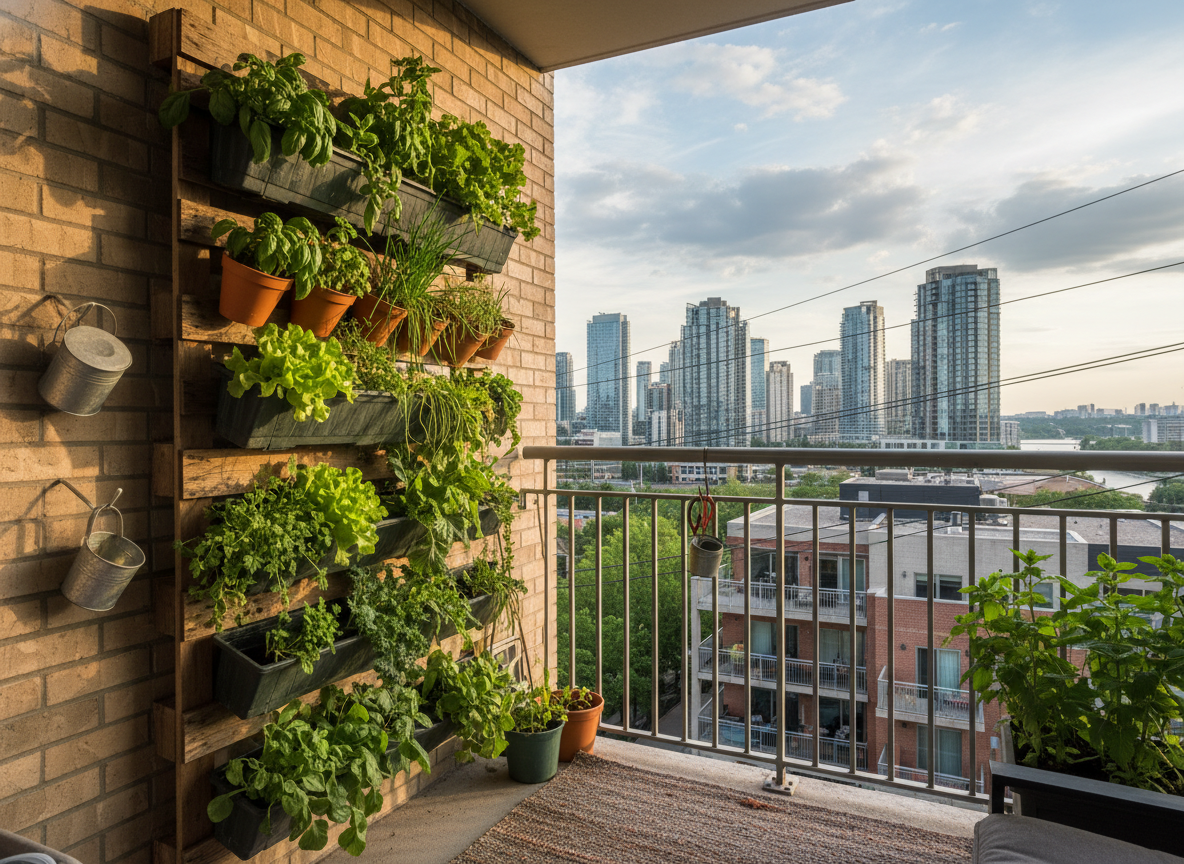
Not every plant is a “climber,” and not every plant thrives in the unique microclimate of a vertical setup. When selecting your greenery, we recommend considering three factors: light, weight, and maintenance.
- Vining Vegetables: If you have a sturdy trellis, go for pole beans, peas, or small cucumbers. These plants naturally want to go up, saving you precious horizontal space.
- Native Species: Especially for outdoor balconies, native plants are more resilient to local weather and require less water.
- Low-Maintenance Herbs: Mint, thyme, and rosemary are hardy and smell amazing.
- Shade-Tolerant Plants: If your apartment doesn’t get much sun, stick to ferns, mosses, or pothos.
For apartment dwellers, microgreens are often the “holy grail” of vertical gardening. They are nutrient-dense, grow fast, and take up almost no space. You can learn more about selecting varieties in these guides:
- microgreens-for-small-apartments
- microgreens-for-small-apartments-2
- microgreens-for-small-apartments-3
Hydroponics and Indoor Technology for City Dwellers
If you don’t have a balcony or a sunny window, don’t worry. The future of the urban vertical garden is soilless. Hydroponic and aeroponic systems allow us to grow food in the middle of a dark living room using LED technology.
Modern modular systems often feature towers or recirculating steps that deliver water and nutrients directly to the roots.
Why go hydroponic?
- Water Conservation: These systems use up to 95% less water than soil because the water is captured and reused rather than draining away.
- Speed: Plants often grow 30-50% faster in a controlled hydroponic environment.
- Space: You can grow up to 50 plants in just 4 square feet of floor space.
To make this work indoors, you’ll need to invest in the right gear. Choosing the right trays for vertical microgreen growth is essential for organization. More importantly, since city apartments often lack natural light, you’ll want to look into the best-grow-lights-for-small-apartments-with-limited-space to ensure your plants don’t become leggy and weak.
If you are a complete novice, starting with an indoor-microgreens-setup-for-beginners is the safest way to see results within just 7 to 10 days.
Implementation and Sustainable Maintenance
Setting up your garden is the fun part, but keeping it alive requires a bit of strategy. Vertical gardens dry out faster than traditional ones because they are exposed to more airflow.
| Feature | Soil-Based Vertical Garden | Hydroponic Vertical Garden |
|---|---|---|
| Watering | Needs frequent (daily) watering | Automated; uses 95% less water |
| Weight | Heavy; requires sturdy mounting | Lightweight; mostly water/plastic |
| Nutrients | Found in potting mix/compost | Must be added to water reservoir |
| Maintenance | Weeding and soil replacement | Cleaning pumps and checking pH |
| Best For | Balconies and sunny walls | Indoors and low-light areas |
Sustainable Practices for Success:
- Automated Irrigation: If you can, install a simple drip system with a timer. It ensures your plants get water even when you’re at work.
- Proper Drainage: Ensure every level of your garden has drainage holes. You don’t want the top plant to be happy while the bottom one drowns.
- Organic Pest Control: In small spaces, we avoid harsh chemicals. Neem oil or a simple mixture of water and organic dish soap works wonders on aphids and spider mites.
- Pruning: Regularly prune lower leaves to increase airflow. This is a “secret weapon” for preventing fungus and disease in crowded vertical setups.
Global Inspiration: Vertical Forests and Beyond
We can learn a lot from the world’s most ambitious green projects. The Vertical Forest manifesto by Stefano Boeri suggests a new living standard: 2 trees, 8 shrubs, and 40 bushes per human being. While we might not fit two oak trees in our studio apartments, the principle of “densifying nature” remains the same.
In Milan, the Bosco Verticale has become a sanctuary for over 20 species of birds. In Barcelona and Madrid, “green corridors” are being built to combat the urban heat island effect. These cities are proving that vertical growth isn’t just an architectural trend; it’s a necessity for urban survival.
When we build an urban vertical garden in our own homes, we are participating in this global movement. We are turning “mineral cities” of glass and steel into living, breathing ecosystems.
Frequently Asked Questions about Urban Gardening
How much does it cost to start a vertical garden?
You can start a DIY project for as little as $50 using upcycled pallets or plastic bottles. Professional modular kits usually range from $150 to $500, while high-end automated hydroponic towers can cost between $500 and $3,000.
Can I grow a vertical garden in a shaded apartment?
Absolutely! The key is plant selection. Choose shade-tolerant species like ferns, English ivy, or moss. If you want to grow edibles in the shade, focus on leafy greens like spinach or kale, and supplement with LED grow lights.
How do I prevent pests in an indoor vertical setup?
Prevention is better than cure. Inspect new plants before bringing them inside. Maintain good airflow by not overcrowding your plants, and use natural deterrents like neem oil at the first sign of trouble.
Conclusion
At Financelyx, we believe that healthy living starts with the food you grow and the environment you create. An urban vertical garden is more than just a hobby; it is a step toward a more sustainable, nutrient-dense lifestyle. Whether you are following the advice of experts like Elena Monroe to grow your own microgreens for flavorful recipes or simply looking to brighten a dark corner of your flat, vertical gardening offers a solution.
By maximizing your space and embracing innovative technology, you can enjoy the physical and mental health benefits of nature, no matter how high up you live. Ready to get your hands dirty? Explore professional tools and supplies to start your journey today.
