
Why Shallow 1020 Trays Are a Game-Changer for Growing Microgreens at Home
Shallow 1020 trays are the standard growing tray used by home growers and commercial microgreen producers alike. Here’s a quick overview of what makes them worth knowing about:
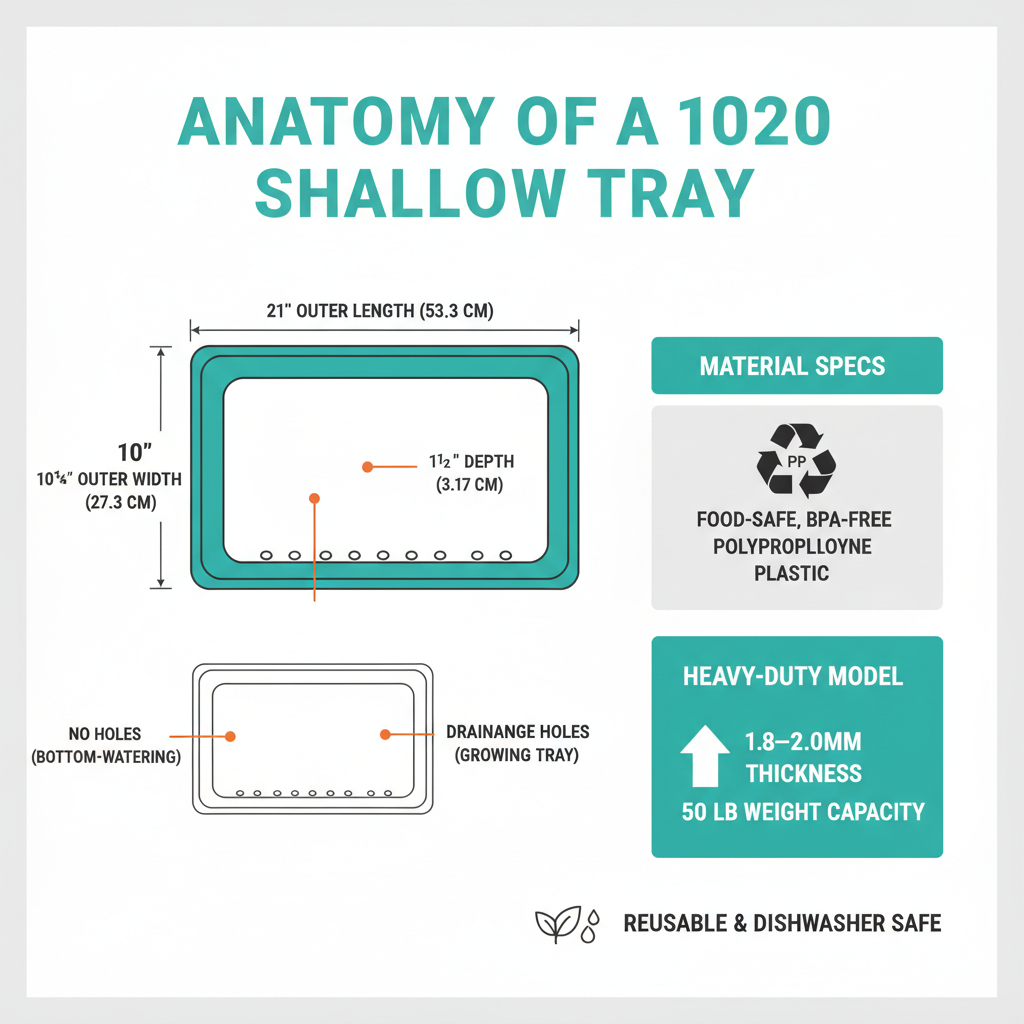
- Size: Roughly 10×20 inches (outer dimensions: 21″ x 10¾”; depth: 1¼”)
- Depth: 1 to 1.25 inches — shallow enough to harvest microgreens close to the root
- Material: Food-safe, BPA-free #5 PP (polypropylene) plastic
- Two main types: Trays with drainage holes (for growing) and trays without holes (for bottom-watering)
- Heavy-duty models: 1.8–2.0mm thick, up to 50-pound weight capacity, often backed by a 2-year warranty
- Reusable: Dishwasher safe and designed to last through hundreds of grow cycles
If you’re trying to add more nutrient-dense greens to your diet but don’t have much time or space, these trays make it surprisingly simple. You don’t need a greenhouse or a big garden. A couple of trays on a countertop or windowsill is enough to grow a steady supply of fresh microgreens.
The shallow depth isn’t a limitation — it’s the whole point. Less growing medium, better airflow, easier harvesting, and less water use. It’s a smarter setup for a faster, cleaner crop.
Cheap, flimsy trays bend under the weight of wet soil and break when you wash them. Heavy-duty 1020 shallow trays are built to handle repeated use without warping or cracking.
The Advantages of Using Shallow 1020 Trays for Indoor Gardening
When we first start our indoor gardening journey, it is tempting to grab whatever plastic container is lying around. However, serious growers quickly migrate to the shallow 1020 trays for a reason. The “1020” designation refers to the approximate dimensions—10 inches by 20 inches—which has become the industry standard for professional shelving and lighting systems.
The most critical feature of these trays is their 1.25-inch depth. While traditional seedling flats are often 2.5 inches deep, the shallow profile is specifically engineered for crops that are harvested young. By using a shallower tray, we significantly reduce the amount of growing medium required. This doesn’t just save money; it creates a more efficient environment for the roots of microgreens, which don’t need deep soil to thrive.
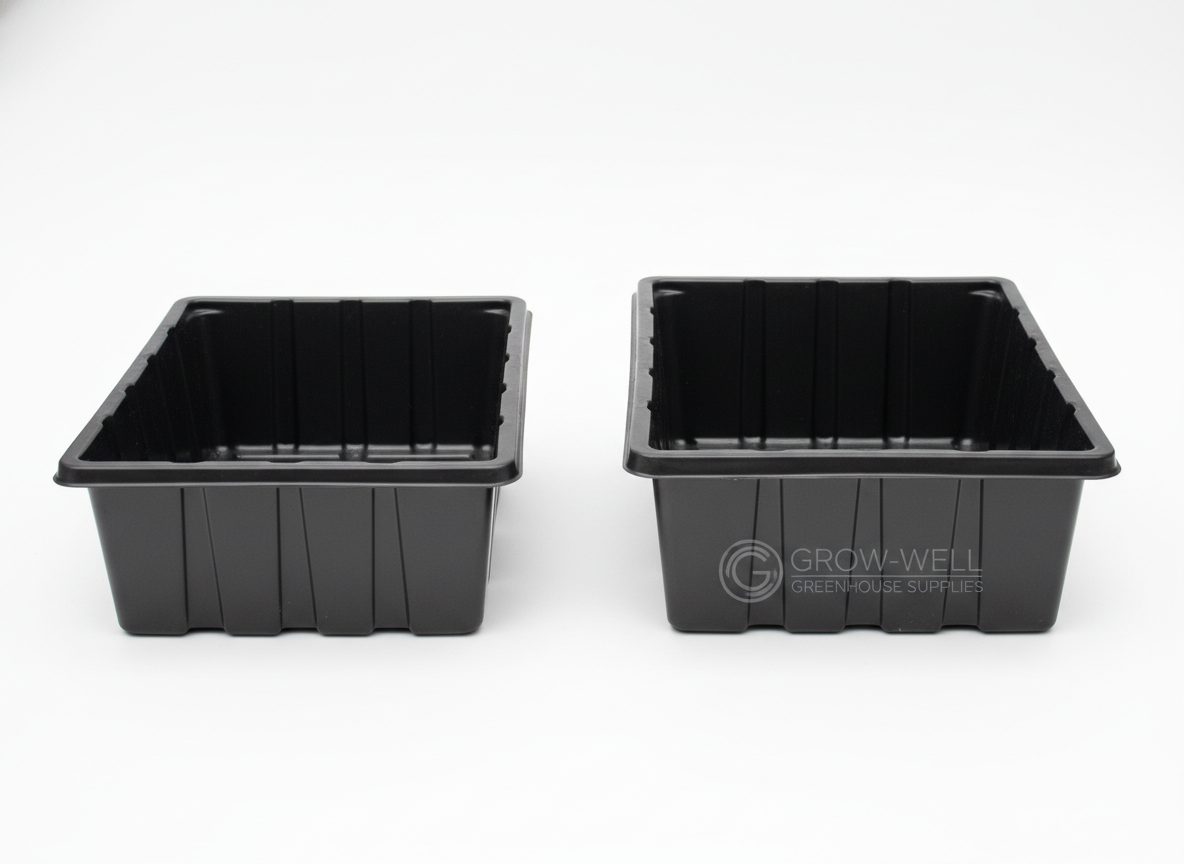
Using these trays allows for better choosing the best microgreen trays for your home garden because they fit perfectly into vertical racking systems. For those looking for high-quality options, the 1020 Shallow Tray – Greenhouse Megastore provides a reliable baseline for what a professional tray should look like.
Optimizing Airflow with Shallow 1020 Trays
One of the biggest enemies of an indoor grower is mold. In deeper trays, humidity can pool around the base of the stems, creating a stagnant “micro-climate” that invites fungus and damping-off disease.
Because shallow 1020 trays have lower sidewalls, air can circulate much more freely across the surface of the growing medium. This increased CO2 exchange and evaporation prevent moisture from sitting too long on the stems. When we prioritize finding easy-to-clean microgreen trays for your home garden, we are essentially investing in the health of our plants by reducing the risk of crop failure due to rot.
Why Professional Growers Prefer Shallow 1020 Trays
Efficiency is the name of the game in professional cultivation. Shallow trays allow for “low-cut” harvesting. When your tray walls are only 1.25 inches high, you can run a sharp knife or scissors horizontally right across the top of the tray. This allows you to cut the microgreens at the very base of the stem, maximizing your harvest weight and ensuring a clean, professional presentation.
Furthermore, by using less soil or coconut coir, we reduce the overall weight of the setup. This is vital when choosing the right trays for vertical microgreen growth, as it puts less strain on shelving units and makes the daily task of moving trays much easier on our backs.
Standard Dimensions and Heavy-Duty Specifications
Precision matters when you are setting up a grow room. A standard shallow 1020 tray usually features outer dimensions of approximately 21″ x 10¾” x 1¼”. The inner bottom dimensions typically sit around 19¾” x 9½”. These measurements ensure that the trays fit into standard 1020 “flats” or flood tables without sliding around.
The difference between a “cheap” tray and a “heavy-duty” tray is found in the thickness of the plastic. Most flimsy trays found at big-box stores are less than 1mm thick—they feel like a disposable water bottle. In contrast, professional-grade heavy-duty trays feature 1.8mm to 2.0mm sidewalls and bottoms.
| Feature | Standard “Flimsy” Tray | Heavy-Duty Shallow Tray |
|---|---|---|
| Thickness | 0.5mm – 0.8mm | 1.8mm – 2.0mm |
| Weight Capacity | 5 – 10 lbs (bends easily) | Up to 50 lbs |
| Longevity | 1 – 2 uses | Years of repeated use |
| Material | Often unknown plastics | Food-safe #5 PP Plastic |
| Warranty | None | Often 2-year limited warranty |
A heavy-duty tray won’t flop over when you pick it up with one hand, even when filled with wet soil and a dense mat of greens. This 50-pound weight capacity is a hallmark of quality that prevents the “taco effect” (where the tray folds in the middle), which often leads to spilled soil and ruined crops.
Material Safety and Long-Term Durability
Since we are growing food that we intend to eat for its health benefits, the material of the tray is just as important as the seeds themselves. High-quality shallow 1020 trays are made from #5 Polypropylene (PP) plastic. This material is widely recognized as food-safe and is naturally BPA-free.
Many professional-grade trays are also made from recycled post-consumer plastic, making them a more sustainable choice for the eco-conscious gardener. However, even the toughest plastic has an enemy: the sun. UV degradation can make plastic brittle over time. To ensure your trays last for the full duration of their 2-year warranty (and beyond), we recommend storing them out of direct sunlight when they aren’t in use.
When comparing soil vs hydroponic trays for microgreens, you’ll find that #5 PP plastic performs exceptionally well in both environments. It doesn’t leach chemicals into the water or the soil, ensuring that your nutrient-dense snacks remain pure and healthy.
Mastering Bottom-Watering and Maintenance
If you want to grow microgreens like a pro, you need to master the “two-tray system.” This involves nesting a tray with drainage holes inside a tray without holes.
There are two main types of drainage designs:
- The 36-Hole Model: These holes are small enough to hold most growing media (like soil or coco coir) while still allowing water to pass through.
- The 385-Mesh Model: These feature hundreds of tiny holes, making them ideal for hydroponic mats or very fine media where maximum drainage and airflow are required.
To bottom-water, you simply pour water into the bottom (no-hole) tray. The water is then wicked up through the drainage holes into the soil of the top tray. This keeps the leaves of the microgreens dry, which is the single best way to prevent mold and “damping off.” Many heavy-duty trays now include “easy lift indents” or side cutouts, which allow us to lift the inner tray easily to check water levels or add more moisture to the reservoir.
Following the steps to set up a diy microgreens tray will help you get the nesting height just right, ensuring the roots have constant access to moisture without being drowned.
Cleaning and Reusing Your Equipment
One of the best things about investing in heavy-duty shallow 1020 trays is that they are built to be reused hundreds of times. However, you must clean them thoroughly between crops to prevent the carryover of pathogens.
Most high-quality #5 PP trays are dishwasher safe (top rack only). It is important to note that these plastics typically become pliable at 150°F and can melt at 266°F, so we recommend avoiding the “heated dry” cycle. For manual cleaning:
- Hose off any remaining soil or root matter.
- Wash with hot, soapy water.
- Sterilize using a weak bleach solution or food-grade hydrogen peroxide.
- Air dry completely before stacking.
Proper storage is also key. Stacking trays of the same depth ensures they nest tightly, saving space in your garage or grow room.
Frequently Asked Questions about Shallow 1020 Trays
Are these trays compatible with standard humidity domes?
Yes! Most shallow 1020 trays are designed with a standard outer lip that allows them to fit perfectly with 2-inch, 6-inch, or 7-inch humidity domes. This is essential during the germination phase to keep seeds moist before they sprout. You can even use a second no-hole tray flipped upside down as a “blackout dome” to encourage stems to stretch during the early growth phase.
Can I use these trays for wheatgrass and fodder?
Absolutely. While they are marketed for microgreens, these trays are excellent for wheatgrass, sprouting seeds, and even small-scale fodder systems. The heavy-duty construction is particularly useful for wheatgrass, as the root mats can become quite heavy and dense. The drainage holes in the mesh-style trays provide the high level of oxygenation that wheatgrass roots crave.
How many smaller 5×5 inserts fit into one 1020 tray?
The 1020 tray is a modular “mother” tray. You can fit exactly eight 5×5 inch inserts or four 5×10 inch inserts inside a single 1020 tray. This is a fantastic strategy for home growers who want to grow several different varieties of microgreens (like radish, broccoli, and kale) at the same time while using just one bottom-watering reservoir.
Conclusion
At Financelyx, we believe that healthy eating should be accessible and sustainable. By using professional-grade shallow 1020 trays, you are setting yourself up for success in growing the most nutrient-dense greens possible right in your own kitchen. Our expert writers, like Elena Monroe, often emphasize that the quality of your tools dictates the quality of your harvest.
Investing in heavy-duty, BPA-free equipment isn’t just about durability; it’s about creating a reliable system for producing flavorful, healthy snacks for your family. Whether you are a beginner or a serious grower looking to scale up, these trays are the foundation of a successful indoor garden.
For more information on the best gear for your home garden, check out our more info about tools and supplies page to find everything you need to start your growing journey today.
