
Turn Your Morning Coffee Waste Into a Nutrient-Dense Harvest
Coffee grounds for microgreens is a simple, sustainable way to reuse kitchen waste while growing fast, nutrient-packed greens at home — often ready to harvest in just 7-10 days.
Quick answer: How to use coffee grounds for microgreens:
- Use spent (used) grounds only — fresh grounds contain too much caffeine and can harm seedlings
- Mix, don’t substitute — combine 1 part coffee grounds with 3 parts potting soil or coconut coir
- Dry the grounds first — spread on a paper towel overnight to prevent mold
- Sow seeds on top — sprinkle densely without burying
- Mist lightly — avoid overwatering; coffee grounds retain moisture well
- Cover for 2-3 days — create a dark, humid dome for germination
- Move to light — provide 10-12 hours of indirect light or grow light daily
- Harvest at 2-3 inches — typically within 7-10 days
Every day, millions of households throw away spent coffee grounds without a second thought. But those dark, earthy leftovers are actually loaded with nitrogen, potassium, magnesium, and trace minerals — exactly what young plants need to grow strong.
The catch? Coffee grounds can’t do the job alone. Used incorrectly, they cause mold, compaction, and poor germination. Used correctly, they become a free, eco-friendly boost for one of the fastest and most nutritious foods you can grow at home.
This guide covers everything you need to know — the science, the ratios, the best varieties, and how to troubleshoot problems — so you get a healthy harvest every time.
The Science of Using Coffee Grounds for Microgreens
When we talk about using coffee grounds for microgreens, we aren’t just talking about recycling; we’re talking about chemistry. Many gardeners assume coffee grounds are highly acidic, but science tells a different story. While fresh coffee beans are acidic, the brewing process leaches most of that acidity into your mug.
Research shows that spent coffee grounds typically have a pH level between 6.5 and 6.8. This is nearly neutral, making them an excellent candidate for a growing medium. Most microgreens thrive in a pH range of 6.0 to 7.0, so spent grounds fit right into the “sweet spot” for plant health.
Beyond pH, coffee grounds are a nutritional goldmine for young seedlings. They contain:
- Nitrogen (1% to 2%): This is the primary driver of green, leafy growth.
- Potassium and Phosphorus: Essential for root development and cellular energy.
- Magnesium and Calcium: Vital for chlorophyll production and cell wall strength.
- Trace Minerals: Small amounts of iron, copper, manganese, and zinc provide a well-rounded “multivitamin” for your greens.
However, coffee grounds are physically dense. If you use them alone, they pack down tightly, preventing oxygen from reaching the roots. This is why understanding unearthing the best soil for microgreens is crucial; you need a base that provides structure while the coffee provides the fuel.
Pros and Cons of Coffee Grounds for Microgreens
Using coffee grounds is a “brilliant hack,” but it isn’t a magic bullet. We need to balance the enthusiasm for sustainability with the practical realities of plant biology.
| Feature | 100% Potting Soil | Coffee-Soil Mix (1:3 Ratio) |
|---|---|---|
| Nutrient Content | Moderate (depending on brand) | High (Natural Nitrogen boost) |
| Aeration | Excellent | Good (if mixed properly) |
| Moisture Retention | Standard | High (requires careful watering) |
| Cost | Regular retail price | Lower (recycled waste used) |
| Mold Risk | Low | Moderate (requires drying prep) |
The Pros
The biggest benefit we see is soil aeration and structure improvement when coffee is mixed with coarser materials like coconut coir. The grounds help hold onto moisture, which is great for microgreens that can dry out quickly in shallow trays. Plus, they act as a slow-release fertilizer. For more on this, check out our guide on safe fertilizers options for microgreen growth.
The Cons
The primary risks are compaction and mold. Because coffee grounds are so fine, they can create a “crust” on top of the soil that prevents water from penetrating. Furthermore, if the grounds are used while soaking wet, they become a breeding ground for fungi. There is also the issue of caffeine allelopathy. High concentrations of caffeine can actually inhibit the growth of other plants. This is why we always emphasize using spent grounds—the brewing process removes the majority of the caffeine that would otherwise stunt your seedlings.
How to Prepare and Store Spent Coffee Grounds
You can’t just dump your French press directly into a planting tray. Proper preparation is the difference between a lush harvest and a fuzzy tray of mold.
- The Drying Technique: After brewing your coffee, spread the damp grounds out in a thin layer on a paper towel or a baking sheet. Let them air dry overnight. They should feel like dry sand before you use them.
- Airtight Storage: If you aren’t planting immediately, store your dried grounds in an airtight container.
- Refrigeration: To be extra safe, keep that container in the refrigerator. This prevents any dormant mold spores from activating.
- Mold Prevention: If you see any green or white fuzz on your stored grounds, toss them in the compost pile instead of the microgreen tray. While some molds are harmless to the soil, they can compete with your delicate seeds for resources.
Step-by-Step Guide to Growing Microgreens with Coffee Grounds
Ready to get your hands dirty? Growing coffee grounds for microgreens is a rewarding weekend project.
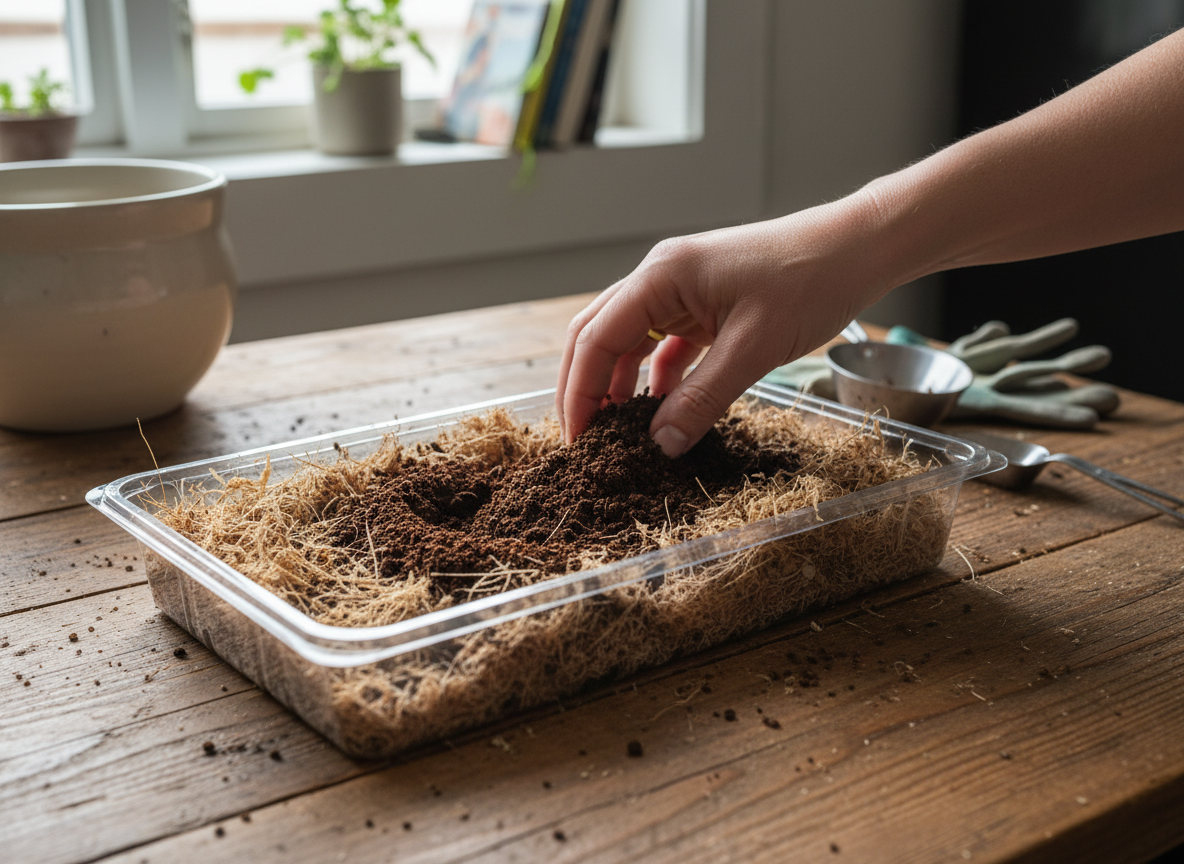
1. The Perfect Mix
We recommend a ratio of 1 part coffee grounds to 3 parts potting soil or coconut coir. This ensures the medium stays fluffy enough for roots to breathe while still benefiting from the coffee’s nutrients. Work the coffee grounds into the top half-inch of your soil to a depth of about 4 inches if using a deep container, though shallow trays only need about an inch of total medium.
2. Tray Preparation
Fill your tray with the mix and level it out. Don’t press down too hard; you want to avoid that compaction we mentioned earlier. If you’re new to the setup, our indoor microgreens setup for beginners can help you choose the right containers.
3. Sowing and Blackout
Sow your seeds thickly across the surface. You don’t need to bury them; a light press into the damp surface is enough. Mist them with a spray bottle and cover the tray with another tray or a damp paper towel. This “blackout period” lasts 2-3 days and mimics the seeds being underground, encouraging them to stretch upward.
4. Lighting and Growth
Once you see sprouts, move them to a spot with 10-12 hours of light. For more detailed instructions on the timeline, refer to our step-by-step microgreen guide.
Best Varieties for Coffee Grounds for Microgreens
Not all microgreens react the same way to coffee. Some are “heavy feeders” that love the nitrogen, while others are a bit more sensitive.
- Radish: These are the champions of the coffee world. They grow fast (7 days) and have strong roots that can push through the coffee-mix easily.
- Broccoli: High in vitamins C and E, broccoli thrives with the extra nitrogen boost.
- Arugula: Its peppery bite isn’t affected by the coffee, and it germinates reliably in a 1:3 mix.
- Kale: A hardy choice that benefits from the trace minerals in the grounds.
- Sunflower: These have larger seeds and need a bit more “grip” in the soil, which the coffee provides.
If you’re just starting out, we suggest checking out the beginner guide to microgreen farming to pair these varieties with the right environment.
Watering and Caring for Coffee Grounds for Microgreens
Watering is where most people trip up. Coffee grounds are like a sponge; they hold water much longer than peat moss or perlite.
- Misting: Use a spray bottle for the first few days to keep the seeds moist without washing them away.
- Bottom Watering: Once the roots are established, pour water into the bottom tray. This keeps the greens dry and prevents mold on the surface of the coffee grounds.
- Light: Aim for at least 6 hours of direct sunlight (a south-facing window is best) or up to 18 hours under grow lights if you’re growing in winter.
- Air Circulation: A small fan can help move air around the trays, which is the best defense against fungal issues.
Troubleshooting Common Issues
Even experts run into trouble. If your “coffee garden” isn’t looking perky, check these common culprits.
- Fungal Growth: If you see white fuzz, you likely overwatered or didn’t dry your grounds enough. Increase air circulation and reduce watering frequency.
- Poor Germination: This could be due to “caffeine burn” from using fresh grounds or the seeds being buried too deep in a compacted coffee layer.
- Yellowing Leaves: While coffee has nitrogen, it might lack other nutrients if the ratio is off. Ensure you are using a high-quality soil base.
- pH Imbalance: If your plants look stunted, the mix might be too acidic. You can add a tiny pinch of garden lime or gypsum to the mix to bring the pH back to a neutral 6.5-7.0.
Frequently Asked Questions about Coffee Grounds for Microgreens
Can you grow microgreens successfully using only coffee grounds?
Technically, yes—but we don’t recommend it. Growing in 100% coffee grounds often leads to root suffocation because the grounds are too fine. Without the structure of soil or coir, the roots can’t get the oxygen they need. It’s much better to use coffee as an amendment (up to 20-35% of the total volume) rather than a total replacement.
Does using coffee grounds affect the taste or nutritional value?
You might be disappointed (or relieved) to hear that your radish microgreens won’t taste like an espresso. Plants absorb minerals and nitrogen, but they don’t absorb the flavor compounds of the coffee. However, the nutritional value may be slightly higher in terms of mineral content because coffee grounds provide a wider array of trace elements than plain seed-starting mix.
What is the difference between fresh and spent coffee grounds?
This is the most important distinction in this guide. Fresh grounds are highly acidic and contain high levels of caffeine, which is naturally “allelopathic”—meaning it’s designed by nature to kill off competing seeds. Spent grounds have had most of the acid and caffeine washed away during the brewing process, making them safe for your delicate microgreens.
Conclusion
At Financelyx, we believe that healthy eating should be as sustainable as it is delicious. Using coffee grounds for microgreens is a perfect example of how kitchen waste can be transformed into a nutrient-dense snack. Whether you’re adding spicy radish sprouts to a sandwich or garnishing a soup with broccoli microgreens, you’re eating something that was grown with care and a bit of recycled “magic.”
As our expert writer Elena Monroe often says, the best ingredients are the ones you grow yourself. By repurposing your morning waste, you’re not just saving money—you’re participating in a cycle of growth that benefits both your health and the planet.
Ready to expand your indoor garden? Don’t forget to explore more safe fertilizers for microgreen growth to keep your harvests coming all year round. Happy growing!
