
Fresh Greens in Under Two Weeks: Why You Should Grow Sunflower Sprouts
Growing sunflower sprouts is one of the fastest ways to add fresh, nutrient-dense greens to your meals — no garden required.
Here’s the quick version if you’re short on time:
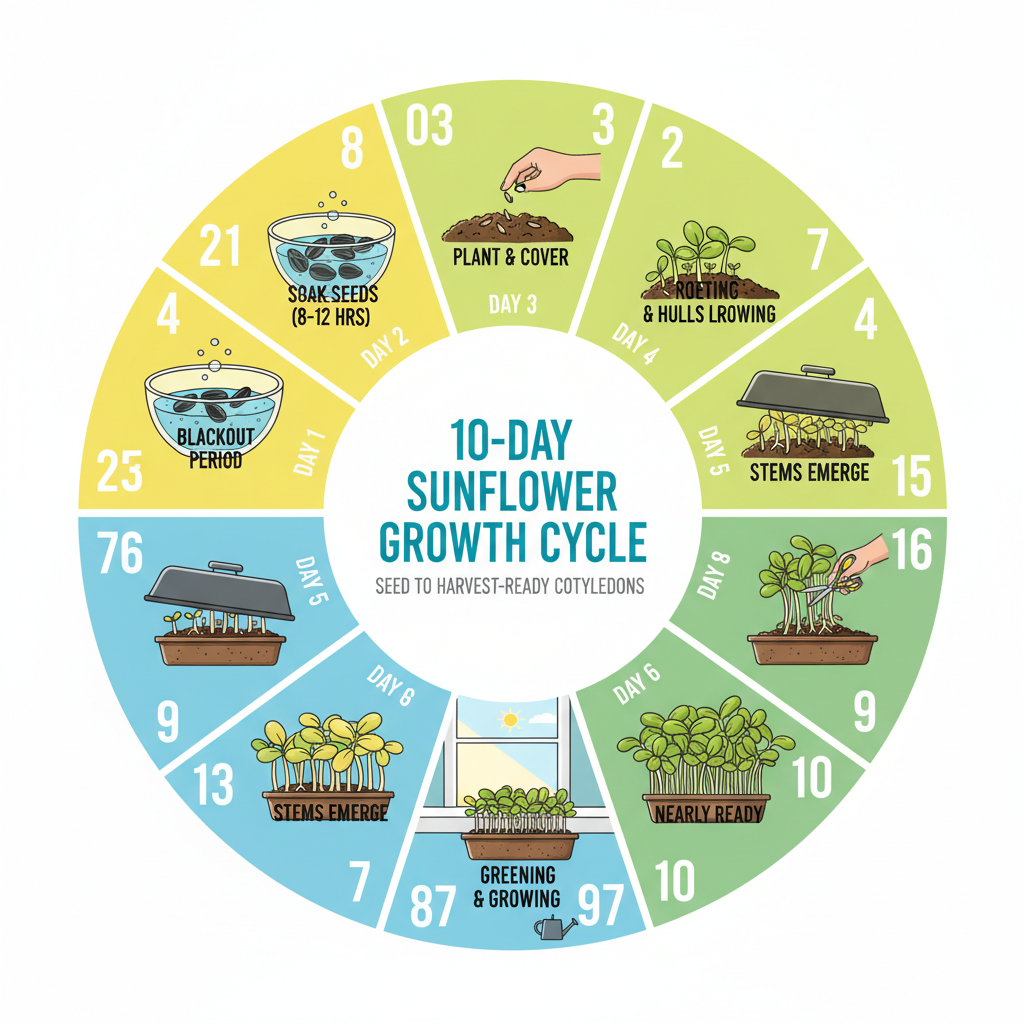
- Soak unhulled black oil sunflower seeds for 8-12 hours
- Plant in 1-2 inches of moist potting mix or coco coir
- Cover with a weighted tray for 3-4 days (the blackout phase)
- Move to light and water from below daily
- Harvest with scissors in 7-14 days when cotyledons are fully open
That’s really it.
Sunflower sprouts have a nutty, spinach-like flavor and a satisfying crunch. One cup of seeds yields roughly 12 cups of sprouts. They pack up to 25% protein along with vitamins A, B, C, D, and E — and they grow happily on a kitchen counter or windowsill year-round.
The one catch? The hulls. Sunflower seeds cling to their shells as they sprout, and those shells need to come off before eating. It sounds annoying, but there are simple tricks to deal with it — and that’s exactly what this guide covers.
Choosing Seeds and Supplies to Grow Sunflower Sprouts
Before we get our hands dirty, we need to talk about the “stuff.” You don’t need a greenhouse or a degree in botany to grow sunflower sprouts, but having the right supplies makes the difference between a tray of crunchy greens and a tray of fuzzy mold.
Best Seeds to Grow Sunflower Sprouts
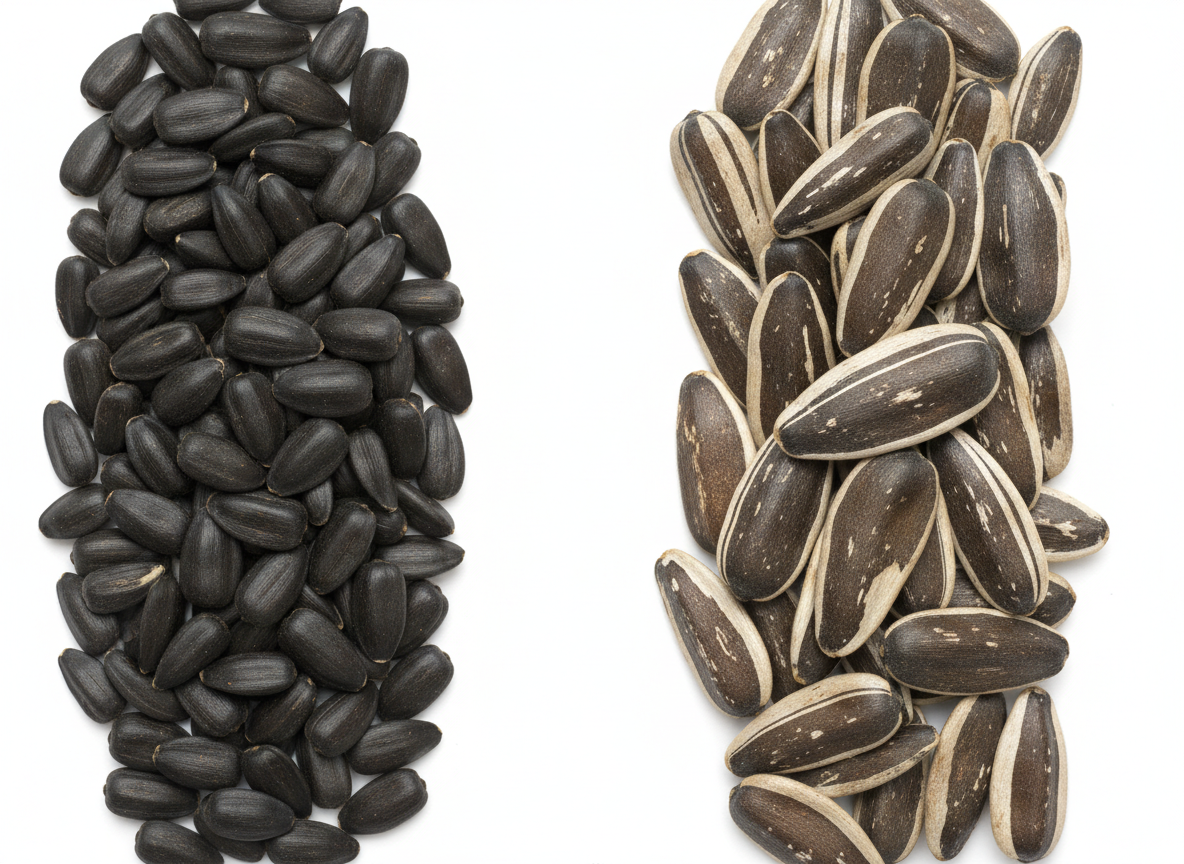
When you start looking for seeds, you’ll likely see two main types: black oil sunflower seeds and striped sunflower seeds.
- Black Oil Sunflower Seeds: These are the gold standard. They have thinner shells, which makes it easier for the sprout to “kick” the hull off. They also have a higher germination rate and a more tender, nutty flavor.
- Striped Sunflower Seeds: These are the ones we usually eat as snacks. While they can be grown, their hulls are much thicker and tougher, leading to more “hull hassle” during harvest.
- Hulled vs. Unhulled: This is a crucial distinction. If you want to grow “sprouts” in a jar (which take only 1–3 days), you use hulled seeds (no shells). However, if you want the big, leafy “sunflower greens” or “shoots” that we’re focusing on today, you must use unhulled seeds.
- Sourcing: We always recommend organic, non-GMO seeds specifically labeled for sprouting or microgreens. While some people use high-quality birdseed, it can sometimes be treated with chemicals or have poor germination rates. For a reliable start, check out this cheap-microgreens-starter-kit to get the basics right.
Essential Equipment for Indoor Success
To grow sunflower sprouts successfully, you’ll need a few key pieces of gear. Don’t worry; most of these are one-time purchases or things you already have in your recycling bin.
- Trays: You’ll want two trays. One with drainage holes to hold the soil and seeds, and one without holes to act as a drip tray (and later, a weight). A standard 10×20 tray is great, but even small repurposed salad containers work for beginners.
- Growing Medium: High-quality potting soil or coco coir is best. Avoid “topsoil” from the garden, as it’s too heavy and might contain pests. If you’re just starting, our guide on indoor-microgreens-setup-for-beginners explains why soil choice matters so much.
- Weights: This sounds weird, but sunflower seeds need resistance. Placing a 5-lb weight (like a brick or a heavy stone) on top of the seeds during the first few days forces the roots deep into the soil and results in thicker, sturdier stems.
- Lighting: While a sunny windowsill can work, grow lights provide the consistency needed for a year-round harvest. Check out our indoor-microgreens-setup-for-beginners-2 for lighting recommendations.
- Spray Bottle: For gentle misting during the early stages.
For a deeper dive into the physical layout, see our steps-to-set-up-a-diy-microgreens-tray.
The Step-by-Step Growing Process
Now that we have our supplies, let’s get into the nitty-gritty of the 10-to-14-day journey.
Step 1: The Soak
We start by measuring out our seeds. For a standard 10×20 tray, we use about 1 to 1.5 cups of seeds. For a smaller 10×10 tray, about 1/2 cup (50 grams) is perfect.
Rinse the seeds thoroughly in cool water to remove dust and debris. Then, submerge them in a jar of room-temperature water. We recommend soaking for 8 to 12 hours. This “wakes up” the seed and signals that it’s time to grow. Some growers even use very warm water for the first few minutes to help loosen the hulls further.
Step 2: Sowing the Seeds
Prepare your tray by adding 1.5 to 2 inches of moist potting soil or coco coir. Level the surface—don’t pack it down too hard, but make sure it’s even.
Spread your soaked seeds across the soil in a dense, single layer. They should be touching but not piled on top of each other. Think of it like a crowded subway car, not a mosh pit. Mist them generously with your spray bottle. For a complete visual walkthrough, our step-by-step-microgreen-guide is a lifesaver.
Step 3: The Blackout and Weight Phase
This is where the magic happens. Place your empty second tray directly on top of the seeds. Place your 5-10 lb weight inside that top tray.
Keep the tray in a dark, warm spot (65-75°F) for 3 to 4 days. This is called the “blackout period.” The weight forces the sprouts to work hard, which actually makes them taste better and grow stronger. You’ll know they’re ready for the next step when the sprouts start literally lifting the weighted tray off the soil! This is one of the most fast-growing-microgreens-at-home.
Step 4: Light and Bottom Watering
Once the sprouts are about an inch tall and looking a bit yellowish, remove the weight and the top tray. Move them into the light. Within hours, they will turn a vibrant, healthy green.
At this stage, stop misting the tops. Instead, use bottom watering. Pour water into the bottom tray (the one without holes) and let the soil tray soak it up. This keeps the leaves dry, which is the best way to prevent mold. We have a detailed guide on the-watering-regimen-for-thriving-microgreens if you’re worried about overdoing it.
Ideal Conditions to Grow Sunflower Sprouts Year-Round
To keep your “Sunnies” happy, aim for these conditions:
- Temperature: 65-75°F is the sweet spot. If it’s too cold, they’ll grow slowly (up to 3 weeks); if it’s too hot, you risk mold.
- Light: 12-16 hours of light per day. If you don’t have a bright window, grow lights are essential. See optimal-lighting-conditions-for-indoor-microgreens for more.
- Airflow: A small fan nearby can prevent stagnant air, which is mold’s best friend. This is a pro-tip from our indoor-microgreens-setup-for-beginners-3.
Harvesting and Hull Removal Techniques
You’ll be ready to harvest in 7 to 14 days. You’re looking for the “cotyledon” stage—when the first two fat, succulent leaves are fully open. Don’t wait for the third “true leaf” to appear, or the sprouts will become bitter and woody.
The Hull Trick: To get rid of those pesky shells, gently run your hand over the tops of the sprouts a day or two before harvest. This “tousling” helps knock them loose.
When it’s time to harvest:
- Use sharp scissors to snip the sprouts just above the soil line.
- Drop them into a large bowl of cool water.
- Swish them around; most remaining hulls will float to the top or sink to the bottom.
- For a final clean, put them in a salad spinner. This is one of the most easy-microgreens-to-grow-indoors.
Troubleshooting: Mold, Hulls, and Poor Germination
Even experts run into trouble sometimes. The most common issue when you grow sunflower sprouts is distinguishing between “good fuzz” and “bad fuzz.”
Root Hairs vs. Mold
New growers often panic when they see white fuzz at the base of their sprouts. 90% of the time, these are root hairs—perfectly normal parts of the plant searching for water.
- Root Hairs: Attached to the root, look like fine silk, and disappear when misted.
- Mold: Looks like spiderwebs or cotton candy, often slimy, has a “funky” smell, and stays visible when wet.
| Feature | Root Hairs | White Mold (Fungus) |
|---|---|---|
| Appearance | Fine, uniform, silky | Web-like, clumpy, “dusty” |
| Location | Base of the stem/root | Anywhere on soil or plant |
| Smell | Fresh, earthy | Musty, sour, or “old” |
| Reaction to Water | Seem to disappear | Stays clumpy and visible |
If you do encounter mold (often called “damping off”), don’t lose heart. You can spray a mixture of 1 teaspoon of 3% hydrogen peroxide in a cup of water onto the affected area. Some growers also sprinkle a little cinnamon on the soil as a natural antifungal.
To prevent future issues, ensure your trays are sanitized between uses and improve your airflow. For more help, check out our beginner-guide-to-microgreen-farming.
Leggy Growth
If your sprouts are tall, thin, and falling over, they are “leggy.” This usually means they are reaching for light. Move your light source closer (6–12 inches above the tray) or increase the duration of light. You can find more fixes for this in easy-microgreens-to-grow-indoors-2.
Nutritional Powerhouse and Recipe Ideas
Why go through the effort to grow sunflower sprouts? Because they are nutritional titans.
The Benefits
Sunflower sprouts are a complete protein source, containing all essential amino acids. They are roughly 20–25% protein by weight. They are also rich in:
- Vitamin E: A powerful antioxidant for skin and heart health.
- Vitamin B Complex: For energy and stress management.
- Minerals: High in Zinc, Selenium, Magnesium, and Calcium.
- Lecithin: Helps break down fatty acids.
In the Kitchen
The nutty flavor of sunflower sprouts makes them incredibly versatile. Unlike some bitter microgreens, kids usually love these because they taste like sunflower seeds!
- Smoothies: Toss a handful into your morning green drink for a protein boost.
- Sandwiches: Use them instead of lettuce for a crunchier, more flavorful experience.
- Stir-fry: Add them at the very last second of cooking so they stay crisp.
- Salads: They provide enough bulk to be the base of a salad, not just a garnish.
For more inspiration, see easy-microgreens-to-grow-indoors-3 and fast-growing-microgreens-at-home-2.
Storage Tips
Sunflower sprouts have a decent shelf life compared to other microgreens. Once harvested and dried (a salad spinner is key!), they will stay fresh in the fridge for 5 to 7 days. Store them in a glass container or a reusable silicone bag with a paper towel to absorb excess moisture.
Frequently Asked Questions about Sunflower Sprouts
Do sunflower sprouts regrow after harvesting?
Unfortunately, no. Sunflower sprouts are a “one and done” crop. Once you snip the stem, the plant will not regrow. You’ll need to compost the spent soil (roots and all) and start a fresh tray. This is why we recommend staggering your planting every 4–5 days so you always have a fresh tray ready to harvest.
Can I grow sunflower sprouts without soil?
You can, but it’s much harder. Sunflowers have large seeds and aggressive root systems that prefer a medium like potting soil or coco coir. While you can use hydroponic mats, soil-grown sunflower sprouts tend to be larger, more flavorful, and less prone to mold. If you want a completely “clean” method, coco coir is a great middle ground.
Why are my sunflower sprouts bitter?
This usually happens for one of two reasons:
- Late Harvest: If you wait until the “true leaves” (the jagged ones) appear, the plant starts sending bitter compounds into the leaves. Harvest when the first two leaves are fat and round.
- Heat Stress: If the growing area is too hot or the plants are underwatered, they can become stressed and bitter.
Conclusion
At Financelyx, we believe that healthy eating shouldn’t be a chore or a luxury. Growing sunflower sprouts at home is a perfect example of how a small investment in time can lead to a massive boost in nutrition. As Elena Monroe often says, the freshest food is the food you grow on your own counter.
Whether you’re looking for a kid-friendly gardening project or a way to level up your meal prep, sunflower sprouts are a clear winner. They are resilient, delicious, and incredibly satisfying to harvest.
Ready to expand your indoor garden? Discover more in our guides for beginners and start your journey toward nutrient-dense, sustainable eating today!
