
Why Choosing the Right Tray Makes or Breaks Your Microgreen Harvest
The best trays for microgreens are shallow, heavy-duty, food-safe plastic trays — and you’ll need two types: one with drainage holes for planting, and one solid-bottom tray underneath for bottom watering.
Quick answer — top tray picks by use case:
| Use Case | Best Tray Size | Key Feature |
|---|---|---|
| Home beginner | 7×14 kit | All-in-one, countertop friendly |
| Small household | 1010 (10×10) | Half-size, fits 2 in a 1020 |
| Larger family / variety | 1020 shallow | Standard size, max growing area |
| Subscriptions / small batches | 5×5 inserts | 8 fit inside one 1020 tray |
| Pea shoots / sunflowers | 1020 deep or mesh | Supports larger roots |
| Commercial growers | Heavy-duty 1020 | 5+ year lifespan, dishwasher safe |
Getting the right tray matters more than most beginners expect. The wrong tray — think flimsy plastic from a big box store — can crack after just a couple of uses, lead to waterlogging, or make harvesting a mess.
The good news? Quality trays are a one-time investment. Heavy-duty options made from thick, food-safe polypropylene plastic can last five years or more, even through dozens of planting and washing cycles.
This guide compares the best reusable microgreen trays across sizes, materials, and growing styles — so you can pick the right setup and spend less time replacing gear and more time growing nutrient-dense greens.
Understanding Tray Sizes: From 1020 to 5×5 Inserts
When you start looking for the best trays for microgreens, you’ll notice a lot of numbers like “1020” or “1010.” These aren’t secret codes; they simply refer to the dimensions in inches. Understanding these sizes is the first step toward a successful harvest.
The 1020 Standard
The 1020 tray is the industry standard. It measures approximately 10 inches by 20 inches. Because it is so common, most grow lights, shelving units, and humidity domes are designed specifically to fit this footprint. If you are growing for a larger family or want to maximize your yield per square foot, the 1020 is your best friend.
The 1010 Half-Size
The 1010 tray is exactly what it sounds like: half the size of a 1020. These are excellent for home growers who want variety. Since two 1010 trays fit perfectly inside one 1020 shallow tray, you can grow two different crops (like spicy radish and mild broccoli) side-by-side while using the same bottom-watering reservoir.
5×5 Inserts for Ultimate Variety
If you really love variety, 5×5 inserts are the way to go. These tiny powerhouses are 1/8 the size of a standard 1020 tray. You can fit eight of them into a single 1020 flat. This setup is perfect for “micro-batching” or if you are running a subscription service where customers want small amounts of multiple varieties.
Choosing the right size also impacts how you manage your space. For those looking to scale up, choosing the right trays for vertical microgreen growth can help you stack your harvests and save room in your kitchen or garage.
The Best Trays for Microgreens: Holes, Mesh, or Solid Bottom?
One of the most common questions we hear is: “Do I really need holes in my trays?” The answer is a resounding yes, but with a catch. To grow successfully, you actually need a system of trays working together.
Trays with Drainage Holes
The tray you put your soil or grow medium in must have holes. For example, high-quality 1020 shallow trays often feature 36 drainage holes. These holes serve two purposes: they allow excess water to escape (preventing the dreaded root rot) and they allow water to enter from the bottom during “bottom watering.”
Solid Bottom Trays
You place your holed tray inside a solid bottom tray (a tray with no holes). This creates a reservoir. Instead of pouring water over the delicate leaves of your microgreens—which can cause mold and soil splashing—you pour water into the bottom tray. The soil then wicks up exactly what it needs.
Mesh Trays: The Specialist Choice
Mesh trays are slightly different. Instead of a few dozen holes, the entire bottom is a fine mesh. These are the best trays for microgreens with large, aggressive root systems like pea shoots, sunflowers, or wheatgrass. Mesh provides superior drainage and air circulation, which is vital for preventing mold in dense crops.
If you’re ready to start your setup, you can find home microgreen planting trays and other essential gear to get the job done right.
Finding the Best Microgreen Trays for Home Growers
For most of us growing on a kitchen counter or a windowsill, a full 1020 tray might be overkill. This is where 7×14 kits shine. These kits are specifically designed for the home environment. They are compact enough to fit on a standard windowsill but large enough to provide a few days’ worth of greens for a small family.
Many of these home-focused kits come with “smart” features, like humidity domes that double as a tray rest during maintenance. If you’re limited on space, choosing the best microgreen trays for your home garden involves balancing yield with the “footprint” the tray takes up in your living space.
Why Heavy-Duty Options are the Best Microgreen Trays for Professionals
If you plan on growing microgreens every week for the foreseeable future, stay away from the flimsy, “disposable” trays found at big box stores. Professional-grade trays are a game-changer.
Commercial growers report that heavy-duty trays can last over 5 years. Many come with 2-year or even 3-year warranties against cracking. While they cost a bit more upfront, they don’t warp under the weight of wet soil, and they won’t shatter when you pick them up. For those serious about their harvest, you can explore professional microgreen tools and supplies to see the difference quality makes.
Material Matters: Why Heavy-Duty Food-Safe Plastic Wins
When it comes to materials, not all plastic is created equal. The best trays for microgreens are made from #5 Polypropylene (PP) plastic.
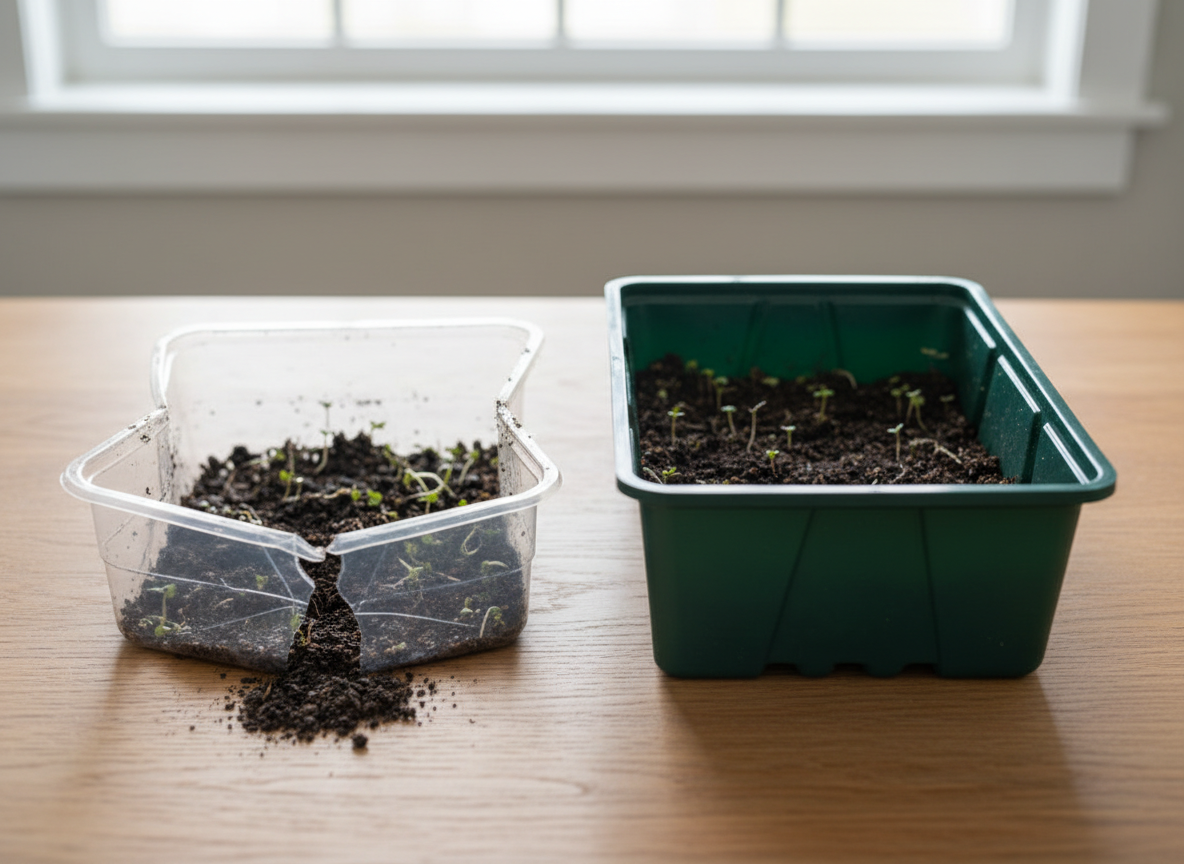
Here is what to look for in a high-quality tray:
- BPA-Free and Food-Safe: Since you are growing food, you want to ensure no nasty chemicals are leaching into your soil.
- Thickness: Look for trays that are 1.8mm to 2.0mm thick. This thickness provides the rigidity needed to carry a tray full of wet soil without it buckling.
- Sustainability: Some modern trays are even made from certified ocean-bound plastics, helping to clean up coastal areas while you grow your garden.
- Longevity: Professional trays are designed to be washed and reused dozens, if not hundreds, of times.
While ceramic or wooden trays might look pretty on a shelf, they are often porous and difficult to sterilize. Plastic, specifically heavy-duty PP, remains the gold standard for hygiene and durability.
Shallow vs. Deep: Choosing the Right Depth for Your Crop
Depth is a detail that many beginners overlook, but it significantly affects your bottom line—both in terms of seed cost and harvesting ease.
| Tray Depth | Best For | Why? |
|---|---|---|
| Shallow (1.25″) | Broccoli, Kale, Radish, Arugula | Saves on soil/medium; makes it easier to cut stems close to the root. |
| Deep (2.5″) | Pea Shoots, Sunflowers, Fodder | Accommodates larger root systems and provides stability for taller crops. |
Shallow trays are generally the best trays for microgreens because they allow you to harvest more of the stem. In a deep tray, the high walls can get in the way of your scissors or knife, forcing you to leave more of the plant behind. Plus, using a shallow tray means you use less growing media (soil or coco coir), which saves money over time.
Maintenance and Cleaning for Reusable Trays
One of the best things about investing in quality trays is that they are easy to maintain. To keep your “crops” healthy and prevent damping-off (a fungal disease), you must clean your trays between every single planting.
- Remove Media: Scrape out the old soil and root mats.
- Wash: Most heavy-duty trays are dishwasher safe (use the top rack and turn off the “heated dry” cycle to prevent warping). Alternatively, use hot soapy water and a good scrub brush.
- Sterilize: For extra protection, spray the trays with a 3% Hydrogen Peroxide (H2O2) solution or a very diluted bleach solution, then rinse thoroughly.
- Dry: Always let your trays air dry completely before stacking them or starting a new grow.
For more tips on keeping your gear in top shape, check out our guide on finding easy-to-clean microgreen trays for your home garden.
Frequently Asked Questions about Microgreen Trays
Do I need both trays with holes and trays without holes?
Yes! As we mentioned earlier, the “nesting” system is the secret to healthy microgreens. The tray with holes holds the soil and the seeds, while the tray without holes acts as a reservoir for bottom watering. This prevents mold, keeps the leaves dry, and ensures even hydration.
Can I reuse microgreen trays and growing media?
You can (and should!) reuse the trays. High-quality trays are designed to last for years. However, you should not reuse the growing media (soil). Once microgreens are harvested, the remaining root mat is prone to mold and has been depleted of the initial nutrients. It’s best to compost the old soil and start fresh.
Are there eco-friendly or sustainable tray options?
Absolutely. Look for trays made from recycled materials or ocean-bound plastics. Because these trays last for 5+ years, they are much more sustainable than “disposable” flimsy trays that end up in a landfill after one or two uses.
Conclusion
At Financelyx, we believe that the journey to healthy eating starts with the right tools. Whether you are following a recipe from Elena Monroe or experimenting with your own nutrient-dense snacks, having a reliable tray system makes the process enjoyable and productive.
Investing in the best trays for microgreens might seem like a small detail, but it’s the foundation of a thriving indoor garden. By choosing heavy-duty, food-safe, and appropriately sized trays, you’re setting yourself up for years of fresh, flavorful harvests. For more advice on the gear you need to succeed, visit our section on tools and supplies. Happy growing!
