
What You Need to Know About How to Grow Microgreens in Water
How to grow microgreens in water is simpler than most people expect. Here’s the quick version:
- Prepare your tray – Place a saturated grow mat (hemp, coir, or jute) in a shallow tray
- Sow seeds – Scatter seeds evenly across the mat surface, about 1mm apart
- Balance your water – Use filtered water adjusted to a pH of 5.5-6.5
- Blackout phase – Cover and keep in darkness for 3-4 days while seeds germinate
- Introduce light – Expose to 12-16 hours of light daily after sprouts emerge
- Bottom water – Add water beneath the mat, never on top of seedlings
- Harvest – Cut at the base after 9-12 days when cotyledons are fully open
Growing your own broccoli microgreens without soil isn’t just a fun kitchen project. It’s one of the fastest ways to add serious nutrition to your meals.
Broccoli microgreens contain up to 40 times more nutrients than their fully grown counterparts. That’s a massive nutritional punch from a tiny plant that fits on your kitchen counter and is ready in under two weeks.
The soil-free (hydroponic) method makes this even more accessible. No dirt. No mess. No complicated equipment. Just water, a tray, a grow mat, and seeds.
Whether you’re short on time, tight on space, or simply want the cleanest possible way to grow food at home, this guide covers everything you need to succeed.

Why Learn How to Grow Microgreens in Water?
If you have ever tried gardening indoors with soil, you know the struggle: bags of dirt in the kitchen, potential fungus gnats, and the inevitable “earthy” mess on your countertops. Learning how to grow microgreens in water—also known as hydroponic growing—eliminates these headaches entirely.
The primary advantage is cleanliness. When we grow without soil, we are essentially practicing “countertop gardening.” It is sterile, efficient, and perfect for urban dwellers with limited space. Beyond the lack of mess, food safety is a major factor. Soil can occasionally harbor bacteria like E. coli or Salmonella; by using a sterile growing medium and filtered water, we significantly reduce these risks.
Speed is another winner. Hydroponic microgreens often reach harvest 2–3 days faster than those grown in soil because their roots have direct, unobstructed access to moisture and oxygen. Most varieties are ready to eat in just 10–12 days.
Furthermore, the nutritional density is staggering. Research, such as studies highlighted by Healthline, shows these tiny greens can have 40 times the nutrient concentration of mature plants. For example, red cabbage microgreens can contain six times more Vitamin C than a full-grown head of cabbage. When you understand soil-vs-hydroponic-trays-for-microgreens-a-comparison, it becomes clear that for the home enthusiast, water-based systems offer the highest “return on investment” for both time and health.
Essential Equipment for Your Hydroponic Setup
You don’t need a laboratory to master how to grow microgreens in water, but having the right tools makes the process foolproof.
- 1020 Trays: These are the industry standard (measuring roughly 10 by 20 inches). You will typically need two: one with drainage holes to hold your growing medium, and one “solid” bottom tray to act as a water reservoir.
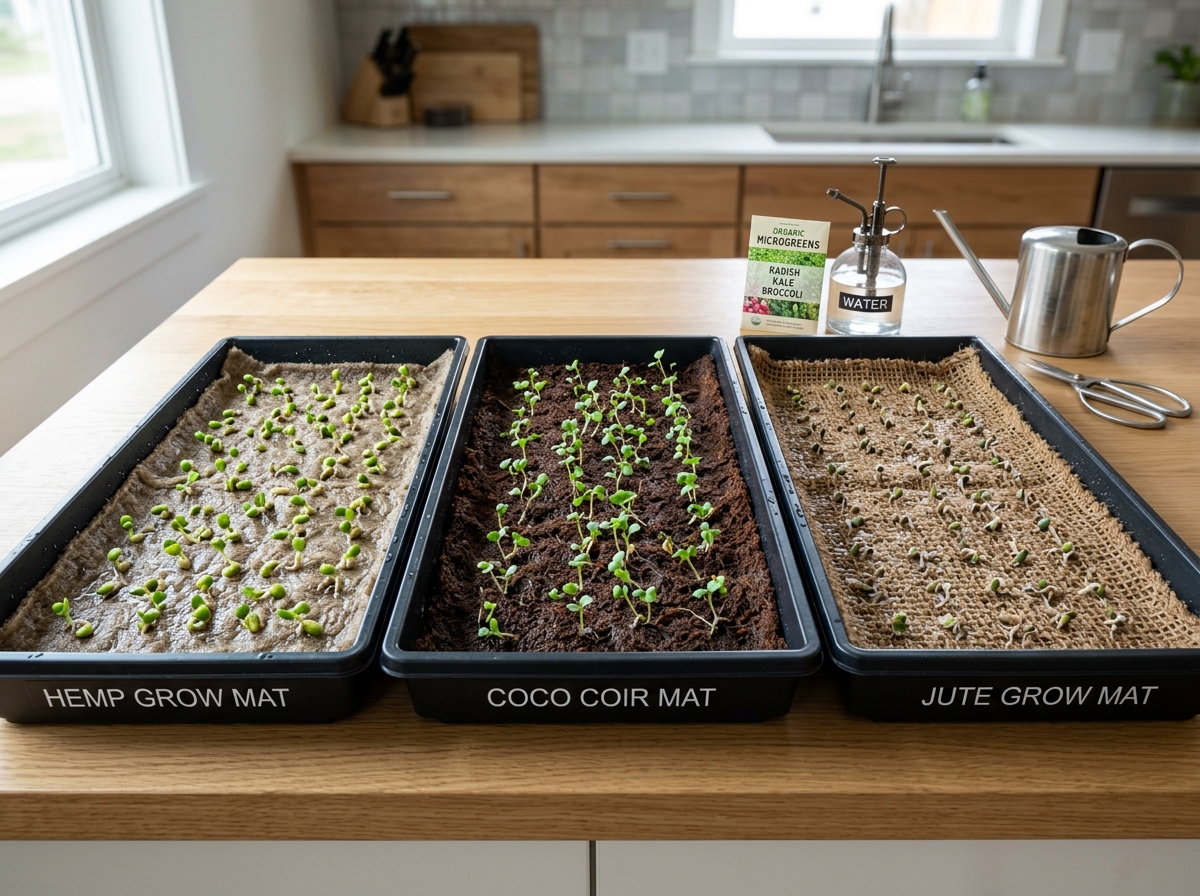
- Growing Medium (Mats): Since there is no soil, the seeds need a “home” to anchor their roots. Popular options include hemp mats, coco coir sheets, jute, or specialized BioStrate.
- pH Testing Kit: Microgreens are picky about their water. We aim for a pH between 5.5 and 6.5. Simple test strips or a digital meter will work perfectly.
- Spray Bottle: Essential for the early stages to keep seeds moist without washing them away.
- LED Grow Lights: While a sunny windowsill can work, a small LED shop light ensures consistent growth and prevents “leggy,” weak stems.
- Mesh Screens: For some water-only methods, a fine mesh screen allows roots to dangle directly into a water reservoir.
To dive deeper into the specific setups available, we recommend understanding-hydroponic-microgreen-kits-and-their-benefits to see which configuration fits your kitchen best.
Selecting the Best Seeds for How to Grow Microgreens in Water
Not all seeds are created equal when it comes to hydroponics. Some thrive in water, while others (like cilantro) can be a bit more temperamental.
- Broccoli: The gold standard for beginners. It germinates quickly and is incredibly hardy.
- Radish: These are the “speed demons” of the microgreen world, often ready in just 7 days. Varieties like China Rose add a beautiful pink hue.
- Pea Shoots: These produce heavy yields and have a delicious, crunchy snap. They do require a 6–12 hour soak before planting.
- Sunflower: A fan favorite for their nutty flavor, though they require a bit more attention to ensure the hulls fall off.
- Mucilaginous Seeds: This is a fancy word for seeds like Basil, Chia, and Arugula that develop a jelly-like coating when wet. These actually prefer water-based growing because soil can become too “clogged” by their natural gel.
If you are just starting out and want to keep things even simpler, you might consider how-to-grow-microgreens-in-jars. While slightly different from tray-based hydroponics, jar growing (sprouting) is another excellent way to get fresh greens fast.
How to Grow Microgreens in Water: A Step-by-Step Guide
Ready to get your hands (slightly) wet? Follow this refined process to ensure a bountiful harvest.
- Water Preparation: Start with filtered water. Tap water often contains chlorine which can stunt tiny seedlings. Test your pH; if it’s too high (alkaline), a few drops of lemon juice or vinegar can bring it down to the sweet spot of 5.5–6.5.
- Saturate the Mat: Place your chosen grow mat into the tray with holes. Pour your pH-balanced water over it until it’s fully saturated—think of it like a “lightly wrung-out sponge.”
- Sowing the Seeds: This is an art. You want to spread the seeds evenly across the surface. For broccoli, aim for about 2–3 tablespoons per 1020 tray. If they are too crowded, you risk mold; too sparse, and you won’t get that lush “carpet” look.
Comparison of Hydroponic Growing Mats
| Mat Type | Material | Pros | Cons |
|---|---|---|---|
| Hemp Mats | Natural Fiber | Highly sustainable, excellent water retention. | Can have a slight “earthy” smell when wet. |
| Jute | Vegetable Fiber | Very affordable, biodegradable. | Fibers can sometimes tangle with roots. |
| BioStrate | Felt-like Blend | Specifically engineered for pH stability. | Generally more expensive; not always compostable. |
| Coco Coir | Coconut Husk | Great aeration, very clean. | Can dry out faster than hemp. |
Sowing and the Blackout Phase for How to Grow Microgreens in Water
Once your seeds are sown, they enter the “Blackout Phase.” This mimics the seeds being buried under soil.
Cover your tray with another inverted tray or a thick lid to block out all light. This phase usually lasts 3–4 days. During this time, the seeds are searching for light, which actually helps them develop longer, stronger stems. Some growers even place a small weight (like a brick or a heavy book) on top of the cover tray. This creates thigmomorphogenesis—a fancy term for physical stress that forces the roots to push deeper into the mat and results in a sturdier crop.
While in the dark, check them daily. If the mat feels dry, give it a light misting with your spray bottle. Keep the temperature between 65–75°F (18–24°C) for optimal germination. For more on the nuances of this stage, see our guide on growing-microgreens-without-soil.
Maintenance, Lighting, and Troubleshooting
After 3–4 days, you’ll see tiny yellow sprouts pushing up. It’s time for their “debut” into the light!
Lighting Requirements: Expose your microgreens to 12–16 hours of light daily. If you’re using a window, make sure it’s a bright, south-facing one. If using LEDs, keep the lights about 6–10 inches above the greens. As they soak up the light, they will transform from pale yellow to a vibrant, healthy green almost overnight.
The “Bottom Watering” Technique: This is the secret to avoiding mold. Once the roots have grown through the mat, stop misting the top. Instead, pour water directly into the bottom (solid) tray. The mat will wick up the moisture from below. This keeps the leaves and stems dry, which is the best defense against rot.
Troubleshooting Mold vs. Root Hairs: New growers often panic when they see white “fuzz” at the base of their plants.
- Root Hairs: These are tiny, microscopic roots. They look like a uniform, white “peach fuzz” and are a sign of a healthy, thirsty plant.
- Mold: This looks like “cobwebs” or slimy patches. It is usually localized in one spot and smells musty.
If you do spot a small patch of mold, a light misting of a 3% hydrogen peroxide solution (diluted with water) can often save the tray. Also, ensure you have a small fan running to provide airflow; stagnant air is the best friend of fungus. If you prefer a different vessel, you can learn about the-function-and-benefits-of-microgreen-sprouting-jars to see how airflow works in a jar environment.
Harvesting and Storing Your Hydroponic Crop
The moment of truth arrives around day 10 to 12. Your broccoli microgreens should be about 2–3 inches tall with fully expanded “cotyledons” (the first set of seed leaves).
How to Harvest: Use a very sharp pair of scissors or a clean kitchen knife. Grasp a small clump of greens and cut about half an inch above the grow mat. It’s best to harvest when the plants are cool and dry—early morning is ideal.
Yield and Commercial Potential: For those looking at this from a business perspective, microgreens are a high-value crop. A single 1020 tray can produce 2–3 lbs of greens. With prices ranging from $2–$3 per ounce, one tray can yield between $64 and $144 in revenue. This makes hydroponic microgreens an incredibly efficient use of vertical space for commercial growers.
Storage Tips:
- Dry is Best: Never wash your microgreens until right before you eat them. Moisture is the enemy of shelf life.
- Airflow: Store them in a glass container or a plastic bag with a dry paper towel to absorb any excess humidity.
- Temperature: Keep them in the crisper drawer of your fridge (around 35–40°F). They should stay fresh and crunchy for 5–7 days.
Frequently Asked Questions about Hydroponic Microgreens
How do I tell the difference between mold and root hairs?
Root hairs are part of the plant; they are usually concentrated at the very base of the stem and look like a consistent, fine “halo” around the root. Mold, on the other hand, looks like messy spider webs that can climb up the stems or bridge the gaps between different plants. If you spray it with a little water and it “disappears” or flattens, it’s likely root hairs. If it stays fuzzy, it might be mold.
Do I need to add nutrients to the water for a 10-day cycle?
For most microgreens, especially broccoli and radish, the answer is no! The seed itself contains all the energy and nutrients the plant needs to reach the cotyledon stage. However, if you are growing “longer” crops like pea shoots or sunflowers that take 14+ days, adding a very diluted hydroponic fertilizer (like ocean minerals or kelp extract) after day 7 can help boost the yield.
Can I reuse my hydroponic grow mats for multiple harvests?
Generally, no. Most mats (like hemp or BioStrate) are designed for single use because the roots become so tightly interwoven with the fibers that it’s impossible to remove them without damaging the mat. However, most of these mats are compostable, so they can go right into your garden bin!
Conclusion
Mastering how to grow microgreens in water is a rewarding journey that brings the garden directly into your kitchen. It is clean, incredibly fast, and provides a level of nutritional density that is hard to find in store-bought produce.
At Financelyx, we believe that healthy eating should be accessible and delicious. Our expert writers, like Elena Monroe, are dedicated to bringing you flavorful, nutrient-dense recipe ideas that make use of these home-grown “superfoods.” Whether you’re tossing a handful of broccoli microgreens into a morning smoothie or using them to add a spicy crunch to your favorite snack, you’re making a powerful choice for your wellness.
Ready to start your first tray? Pick your seeds, balance your water, and watch the magic happen. For more tips on healthy living and nutritious snacks, visit us at https://financelyx.com/. Happy growing!
